




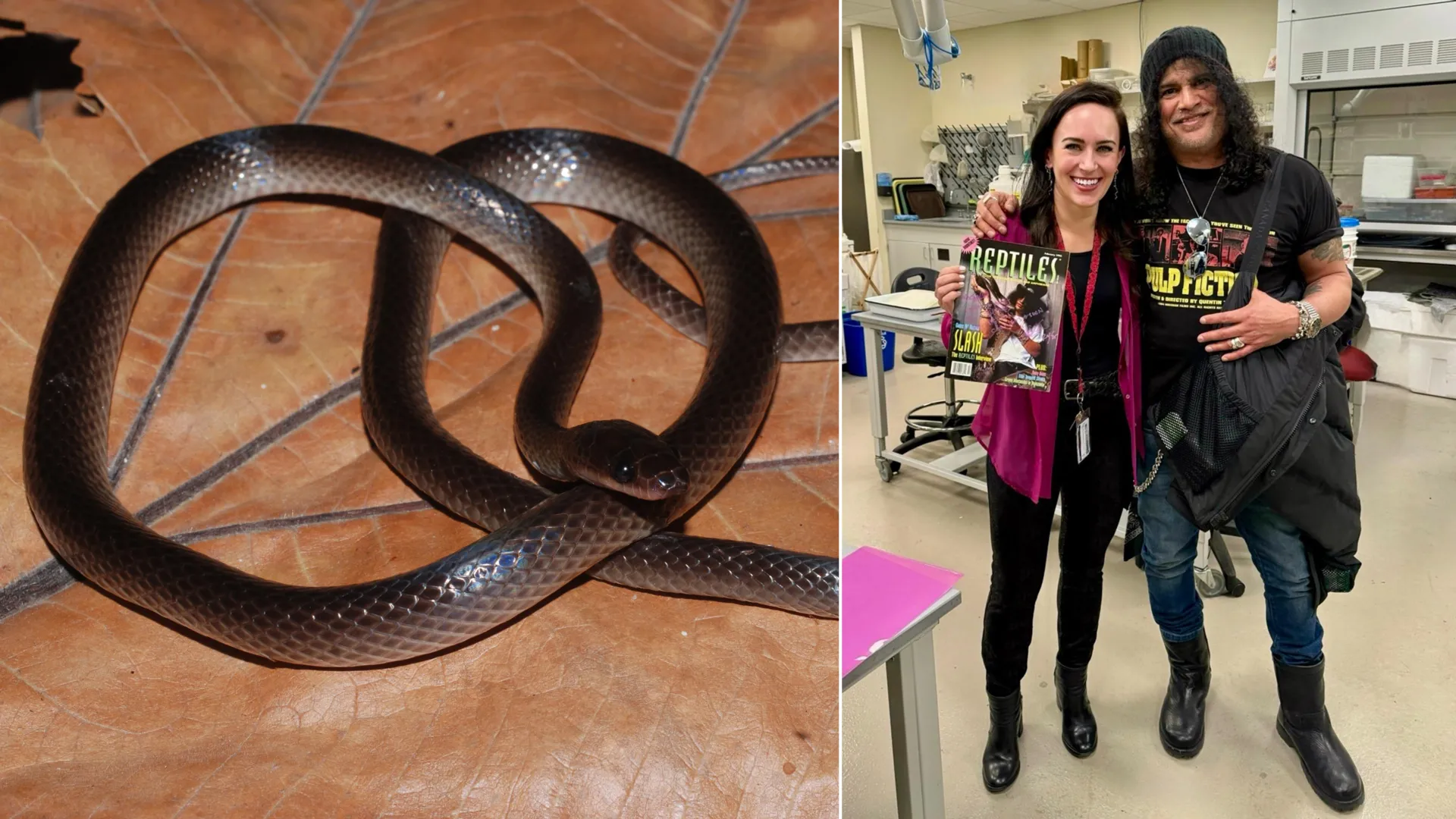
Researchers have identified a new snake species from New Guinea, naming it after musician Slash, the legendary guitarist of the band Guns N’ Roses. The species, designated Lielaphis slashi, or Slash’s groundsnake, reflects the dual interests of the musician, who has long had a fascination with reptiles, as well as his support for natural history institutions.
Scientific Discovery and Recognition
Slash, whose real name is Saul Hudson, expressed his gratitude upon learning of the species’ naming. “As a long-time herpephile, I am extremely honored and humbled to have Lielaphis slashi named after me,” he stated. He described the honor as exciting and acknowledged that he never anticipated such recognition.
Sara Ruane, Associate Curator of Herpetology at the Field Museum and the senior author of a research paper published in the journal Zootaxa, shared a personal connection to Slash’s music from a young age. Ruane stated, “Guns N’ Roses has been one of my favorite bands since I was in first grade,” which influenced her career path toward herpetology. She recalled, “When I was twelve years old and got my copy of Reptiles Magazine… I thought, ‘This guy is so cool.'” Her admiration for Slash’s appreciation of reptiles and nature inspired her decision to name the new species in his honor.
The snake, found in the forests of New Guinea, is a reddish-brown 28-inch-long creature. Ruane and fellow researcher Chris Austin first recognized the snake in 2006 while conducting fieldwork. Austin, a professor at Louisiana State University Museum of Natural Science, noted the challenges of identifying snake species at night due to the presence of several venomous varieties. However, through genetic analyses and ecological modeling, Ruane and her collaborators confirmed that L. slashi is genetically distinct from other known snakes in its genus.
Despite the new species’ identification, much remains unknown about its behavior and ecology. Ruane emphasized that the elusive nature of snakes makes them difficult to study in the wild, posing challenges in observing their habits. However, preliminary observations suggest that Slash’s groundsnake may feed on small lizards and reptile eggs.
While L. slashi is not harmful to humans, its habitat faces significant threats due to human activities such as coffee farming and mining. Ruane highlighted the importance of recognizing species like Slash’s groundsnake to better understand ecological systems and conservation needs. She concluded, “Every species should be recognized in order for us to better understand how ecosystems work.” Identifying these organisms is crucial for awareness and protection as New Guinea’s forests undergo environmental changes.
Why It Matters
This discovery underscores the importance of biodiversity research and the need for conservation efforts in habitats at risk from industrial activities. By naming and studying new species, scientists can enhance knowledge of ecosystems and advocate for the protection of vulnerable wildlife.
