




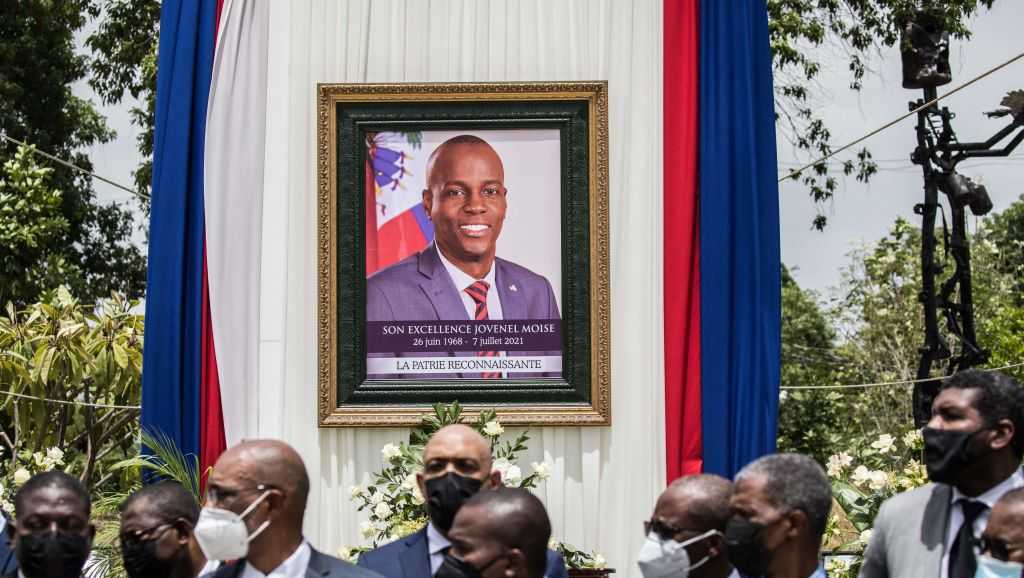
MIAMI — Jury selection commenced on Monday in the federal trial of Christian Emmanuel Sanon, a Palm Beach County resident accused of being a central figure in the assassination of Haitian President Jovenel Moïse in 2021. Sanon, who is a dual citizen of Haiti and the United States, faces eight charges, including conspiracy to kidnap or kill a person outside the United States. He has pleaded not guilty to the charges.
Details of the Case
Opening statements in Sanon’s trial could take place as early as Tuesday. The proceedings attracted members of the Haitian community in South Florida, with some expressing a desire for justice following the tragic events surrounding Moïse’s assassination. One observer shared their emotional connection to the case, stating that the assassination had caused them significant distress.
Federal prosecutors allege that the conspiracy against Moïse began in 2021, with South Florida serving as a critical location for the planning and funding of the operation. According to officials, Sanon initially sought to assume the presidency of Haiti, and to that end, a security firm in South Florida recruited approximately 18 Colombian nationals with military experience to provide protection for him.
As the plot evolved, prosecutors claim the conspirators acquired weapons and body armor. Authorities assert that the group eventually determined that Sanon lacked both the constitutional qualifications and popular support necessary to lead Haiti, leading them to pivot their support towards former Haitian judge Wendelle Coq Thélot.
Moïse was killed in an attack at his home near Port-au-Prince on July 7, 2021. His wife, Martine Moïse, sustained serious injuries during the incident. The conspiracy reportedly drew from funds fraudulently acquired through U.S. COVID-19 relief programs intended to assist businesses.
In May, four of Sanon’s co-defendants were convicted following a nine-week trial related to the assassination plot. Sanon’s trial was previously delayed due to health issues, but this has now led to separate court proceedings. The case expanded last week when 18 additional defendants, including 17 Colombian nationals and Joseph Félix Badio, a former employee of Haiti’s Ministry of Justice, were transferred from Haiti to Miami. They face separate charges connected to the broader conspiracy.
The assassination has contributed to ongoing political turmoil in Haiti, where the absence of a president since Moïse’s death has coincided with a rise in gang violence and instability.
Why It Matters
This trial represents a significant moment in the pursuit of justice connected to the assassination of President Moïse, impacting not only the Haitian community but also the political landscape in Haiti, where it continues to face severe challenges. The outcomes of this trial and the subsequent proceedings for additional defendants may influence international perceptions and involvement in the region’s stability.
