




UK Prime Minister Andy Burnham has publicly raised concerns about potential Russian interference in the Brexit referendum held nearly a decade ago. This announcement marks a significant shift in discourse surrounding the 2016 vote, which resulted in a narrow decision to leave the European Union.
In a recent interview on The Rest Is Politics podcast, Burnham disclosed that he inquired about Russian ties to the Brexit vote upon taking office in July. He claimed to have received a “clear answer” indicating the existence of such links, although he did not present specific evidence to support these assertions. The referendum, conducted in June 2016, showed 52% of voters in favor of leaving the EU, compared to 48% who opted to remain.
Burnham expressed concern over the influence of far-right parties in the UK and Europe, emphasizing the need for voters to be more informed about potential disruptions to democratic processes posed by foreign entities. He remarked, “These things are important now to put clearly on the record,” suggesting that understanding these influences is crucial for voters in Germany and France as well.
During his talks in Berlin this week, Burnham indicated that German Chancellor Friedrich Merz had echoed concerns about the far-right Alternative for Germany (AfD) party, which he believes is financially linked to Russia. Burnham stated, “There is certainly misinformation, disinformation that is emanating from Russia into German politics.”
This comment stands in stark contrast to former Prime Minister Boris Johnson’s stance. Johnson, who led the Brexit campaign, stated in 2020 that there was no evidence of Russian interference affecting the vote. The UK Parliament’s Intelligence and Security Committee has argued that the government failed to adequately assess how Russian media and online accounts may have swayed the referendum.
Intelligence agencies in the UK have indicated that Russia continues to propagate disinformation with the aim of undermining public trust and has also been involved in cyberattacks and espionage. The Kremlin has consistently denied any allegations of meddling in foreign elections.
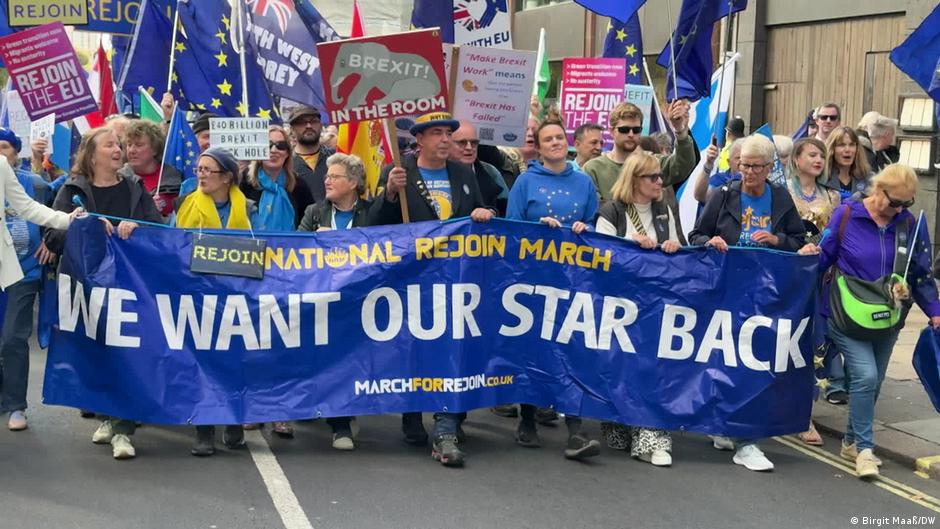
Recent polling data from YouGov suggests that sentiment around Brexit is shifting, with a significant majority of respondents now feeling that leaving the EU was a mistake. As of last month, 60% expressed regret, a record high. In light of these changing attitudes, Burnham has mentioned seeking a political consensus on the future relationship with the EU, hinting at a possible campaign to rejoin the bloc in the upcoming election. This potential shift has been met with cautious optimism from EU officials, particularly from France and Spain.
In a discussion on the complexities involved, some political analysts, such as Professor Iain Begg from the London School of Economics, warned that rejoining the EU could reignite deep political divisions and present significant logistical challenges from both sides.
