




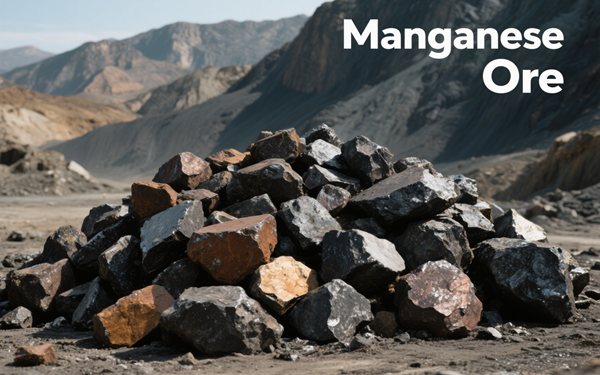
The manganese supply chain is experiencing significant changes as African nations transition from exporting raw ore to domestic processing. This shift disrupts the established model where African ore supply supported Indian smelting, altering relationships among key players in Africa, India, China, and France.
In 2025, South Africa and Gabon were responsible for 97% of India’s imported manganese ore by weight. During that same year, India exported 1.25 million tonnes of silicomanganese, primarily to Italy and Japan. South Africa, the world’s leading manganese producer, also relied on Indian imports for silicomanganese due to ongoing power shortages that limit its smelting capacity.
Electric Metals (USA) Limited, a mineral development company focusing on manganese and silver projects, is developing the Emily Manganese Project in Minnesota. This project hosts North America’s highest-grade manganese deposit and aims to establish domestic production of high-purity manganese for electric vehicle batteries and other technologies. The company’s efforts are positioned to bolster opportunities for U.S. stakeholders amid a lack of local manganese mines.
Recent policy decisions in major manganese-producing nations are reshaping the industry. Gabon has announced a decree banning raw manganese exports starting in January 2029, followed by Ghana’s commitment to process at least half of its manganese and bauxite output locally by the end of 2028. Both countries, along with South Africa, which accounted for approximately 73% of global manganese mine output in 2025, will create competition for Indian alloy producers as they evolve into direct competitors.
Trade dynamics in Europe also complicate the situation. The European Union, in collaboration with the African Union, has supported African industrialization with a €30 million grant aimed at upgrading Gabon’s transportation infrastructure. Meanwhile, the EU has imposed additional duties on Indian silicomanganese imports exceeding specified quotas, though Gabonese silicomanganese remains exempt. This safeguard duty is set to expire on November 17, 2028, shortly before Gabon’s export ban takes effect, potentially impacting investment in local smelting operations.
As stakeholders adjust, midstream players are strategically repositioning. OM Holdings, operating manganese alloy furnaces in Malaysia, divested its stake in South Africa’s Tshipi mine in 2026 but secured a long-term offtake agreement for its production. Additionally, a subsidiary signed a concentrate purchase deal with Australia’s Butcherbird mine, promoting a planned battery-grade manganese refinery. Chinese manufacturers are also expanding their operations, with Inner Mongolia Xinchuang proposing two new alloy plants in Gabon, creating competition for France’s Eramet.
The evolving landscape is producing varied outcomes for different stakeholders. Gabon may benefit from increased local smelting capacity and employment opportunities, while Chinese alloy producers can ensure a consistent supply of raw materials. South African miners remain unconstrained by export bans and can continue selling to the highest bidders globally, placing them in a solid position. Conversely, India faces challenges from diminishing ore availability and competition from former suppliers, while France’s Eramet must invest heavily to maintain its market share.
Despite these shifts, the global manganese market continues to grow, projected to rise from USD 32.26 billion in 2025 to USD 33.62 billion in 2026, and reach USD 41.31 billion by 2031, with a compound annual growth rate of 4.21% between 2026 and 2031. While steel-grade alloys remain the dominant form of demand, segments focused on battery-grade and high-purity manganese are expanding more rapidly. Gabon’s ambitious domestic industrialization drive may not drastically lessen its dependency on international players, and the overall reorganization of the manganese supply chain is ongoing.
