




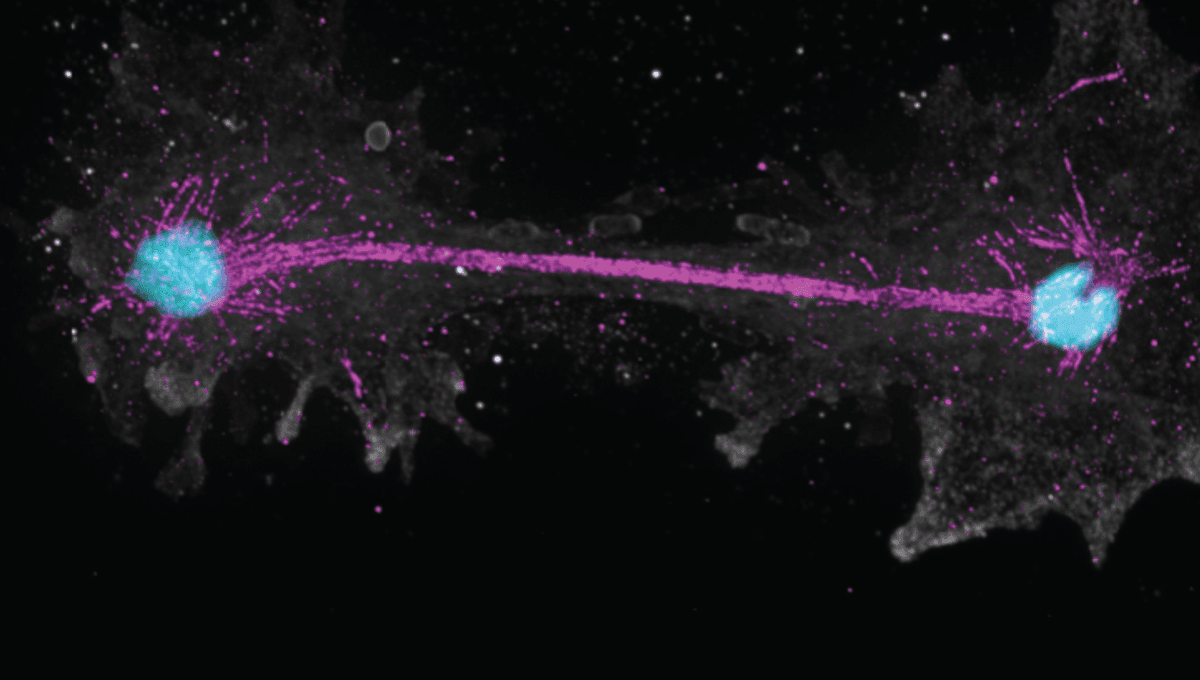
A newly discovered amoeba, named Incendiamoeba cascadensis, has been found thriving in extreme temperatures of up to 63°C (145°F) in a volcanic stream at Lassen Volcanic National Park in California. This finding marks the first instance of a complex organism, defined as one with cells containing a nucleus, replicating in conditions previously believed to be fatal for complex life forms.
New Discoveries in Extreme Environments
Complex organisms have historically been thought to have an upper temperature limit of around 60°C (140°F). While simpler forms of life, such as bacteria and archaea, can withstand temperatures exceeding 100°C (212°F), I. cascadensis challenges prior assumptions about the thermal limits of eukaryotes. Angela Oliverio from Syracuse University, who contributed to the research, expressed excitement over the discovery, suggesting it expands the boundaries of understanding regarding the survival of eukaryotic life in extreme conditions and hints at the potential existence of other heat-tolerant eukaryotes.
The research team noted that most complex life forms, including fungi and red algae, have only been found to live just below the critical threshold of 60°C. To understand the reasons behind these limitations, the researchers analyzed the genome of I. cascadensis and compared it to several amoebae that thrive at lower temperatures. They discovered that over half of the amoeba’s genes are distinct to its lineage, suggesting significant adaptations for its geothermal environment.
In further investigations, the team predicted that the proteins of I. cascadensis maintain structural integrity at approximately 4°C higher than those of its cooler-loving relatives. Above this melting point, protein denaturation can compromise essential biological processes. The study suggested that the amoeba’s proteins are likely composed of more positively charged amino acids, a trait common among high-temperature extremophiles like certain archaea.
At temperatures nearing 70°C (158°F), the amoeba exhibited a protective response, ceasing replication and encasing itself in a protective layer until conditions cooled. However, the future of eukaryotic life flourishing at temperatures comparable to those of some archaea remains uncertain.
Historical context is provided by research from 1887, which documented eukaryotic organisms, specifically flagellates, remaining active and reproducing even as temperatures were gradually raised to 70°C over seven years. This previous study indicates the possibility that under certain conditions, eukaryotes could adapt to survive in even higher temperatures than currently observed in nature.
The findings are detailed in a recent publication in the scientific journal Cell, which emphasizes the significance of minimal biological adaptations expanding the understanding of life’s limits in extreme environments. Oliverio highlighted that just as new records in sports are celebrated, similar achievements in microbiology should also be recognized.
Why It Matters
This discovery not only challenges existing scientific beliefs about temperature limits for complex life but also opens new avenues for research into extremophiles, potentially revealing more about life’s resilience and adaptability in extreme environments.
