




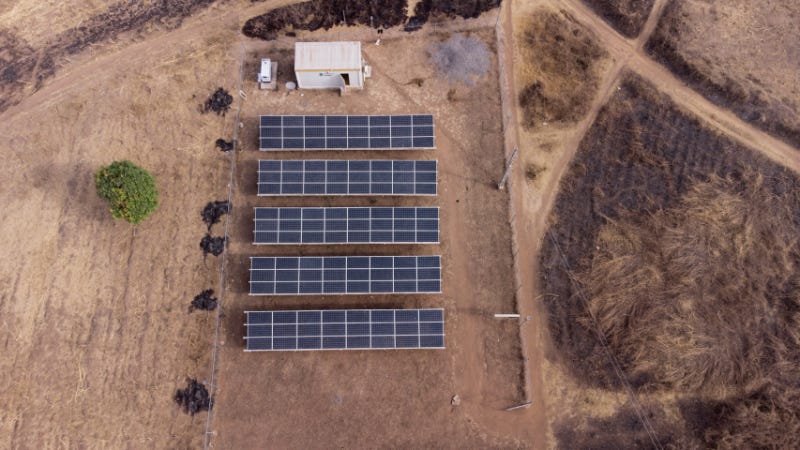
Camco’s Renewable Energy Performance Platform 2 (REPP 2) has provided financial support to Prado Power for the construction and operation of solar mini-grids in Nigeria. This initiative aims to enhance access to electricity in underserved regions, particularly in Benue and Nasarawa states.
Funding for Solar Mini-Grids in Nigeria
The REPP 2 fund, managed by Camco, has offered a senior debt facility for the development of five solar mini-grids, which will feature a total solar photovoltaic capacity of 1.84 megawatts peak (MWp) and 5.2 megawatt-hours (MWh) of battery storage. The project is designed to create more than 12,000 electricity connections for households as well as micro, small, and medium-sized enterprises in the targeted areas.
Prado Power, a renewable energy firm based in Abuja, is spearheading the implementation of these off-grid energy projects. The solar mini-grids aim to provide first-time connections to electricity for off-grid communities, thereby reducing reliance on diesel generators.
Alfred Kudjordji, an investment manager at Camco, commented on the financing: “Financing Prado Power’s mini-grid expansion demonstrates Camco’s commitment to investing in the businesses building Africa’s decentralised energy future. By combining clean energy access with productive agricultural use, this project delivers exactly the kind of integrated, climate-positive impact that REPP 2 was designed to support.”
REPP 2 plays a crucial role in investing in small-scale and distributed renewable energy projects across sub-Saharan Africa. The fund is backed by several investors, including the Green Climate Fund, Norfund, FMO, BIO, Ceniarth, and OeEB, indicating a robust commitment to sustainable energy development in the region.
This financing model aims to stimulate the growth of renewable energy infrastructure in Nigeria and improve energy access for communities that are traditionally reliant on less sustainable energy sources.
Why It Matters: The success of this initiative could pave the way for future investments in renewable energy across Nigeria, addressing energy poverty and contributing to climate goals. Such projects are integral to fostering economic growth and resilience in off-grid communities, ultimately supporting broader sustainable development objectives in the region.
