




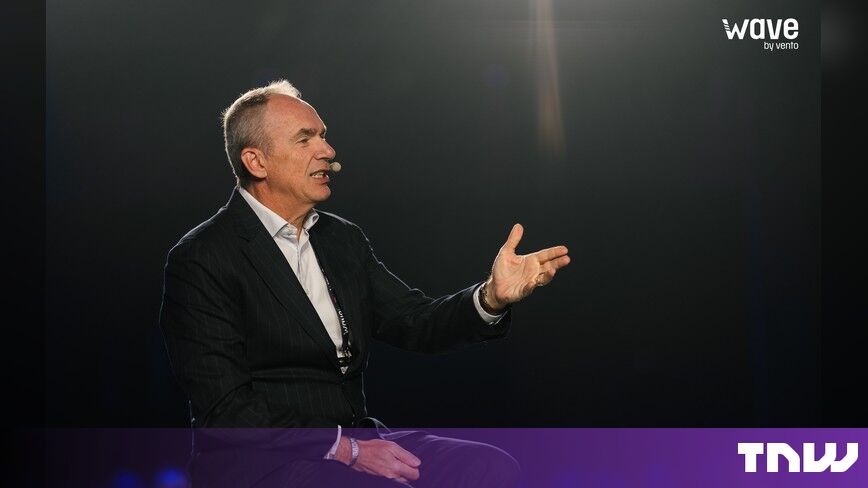
Jean-Christophe Laloux, the incoming chief executive of the European Investment Fund (EIF), emphasized the need for Europe to provide startups with the necessary capital to scale their operations within the continent. Speaking at the Wave by Vento event in Turin on Friday, Laloux articulated that innovation must be coupled with the ability to grow in Europe, which he identified as a key aspect of European sovereignty.
“It’s not enough to innovate in Europe. You also must be able to scale in Europe. And that is really important on the notion of sovereignty,” Laloux said.
Laloux explained that sovereignty should not be confused with protectionism or isolationism. Instead, he argued for providing European alternatives in critical sectors such as raw materials and cyber resilience.
Currently serving as the director general for EU lending and advisory operations at the European Investment Bank (EIB), Laloux will officially take over as head of the EIF on January 1, following an announcement made by the EIF in July. His comments were part of an interview with Ian King of The Times.
Funds big enough to keep companies
Laloux noted that the primary challenge for European startups has shifted from early-stage innovation to scaling, particularly between Series B and C funding stages. The European Tech Champions Initiative, a fund of funds amounting to nearly €4 billion, aims to address this issue. Backed by six member states and the EIB Group, the initiative invests in venture funds with approximately €1 billion, enabling them to provide larger investments that help companies that have completed their Series A and B rounds grow more rapidly while remaining in Europe.
He revealed that the initiative has already supported 12 funds, nearly tripling the number of €1 billion funds available in Europe five years ago, with these funds collectively backing 15 European unicorns.
Laloux indicated that a second version of the initiative is expected to be announced in November, which will include support for funds ranging from €300 million to €500 million. This addition aims to cater to ecosystems that may not have access to larger funds. It will also create a platform allowing institutional and private investors to co-invest with these funds.
Italy’s share
As part of the initiative, Italy has contributed €150 million. Laloux noted that the funds supported by this investment have already invested nearly €600 million in seven Italian companies, with three of those having international partners, demonstrating the appeal of the Italian ecosystem to global investors.
Venture debt and grants
The EIB Group also provides financial support to startups through venture debt, which includes a grace period of five years and typically entails taking warrants or rewards based on the company’s future success rather than imposing high interest rates. Additionally, the EIB Group structures the equity side of the European Innovation Council’s funding for early-stage startups.
Where the money is going
According to Laloux, deep tech in Europe has experienced significant growth, increasing in valuation from approximately €1 trillion five years ago to €4 trillion. Key sectors attracting investment include climate, security and defense, space, and biotechnology. He highlighted Isar Aerospace, a company backed by funds receiving EIB support, which successfully launched its Spectrum rocket from Norway.
In the past year, capital and valuations in the security and defense sectors, especially cybersecurity, have seen the most substantial growth. The EIF plans to concentrate its efforts in four specific areas where Europe maintains a competitive edge: artificial intelligence (AI), health and biotechnology, security and defense, and cleantech. Laloux emphasized the importance of remaining competitive in AI, citing its potential to enhance productivity while calling for balanced regulation.
The EIB has allocated €3 billion for the EU’s AI gigafactories, underlining its commitment to keeping Europe at the forefront of innovative technologies.
