




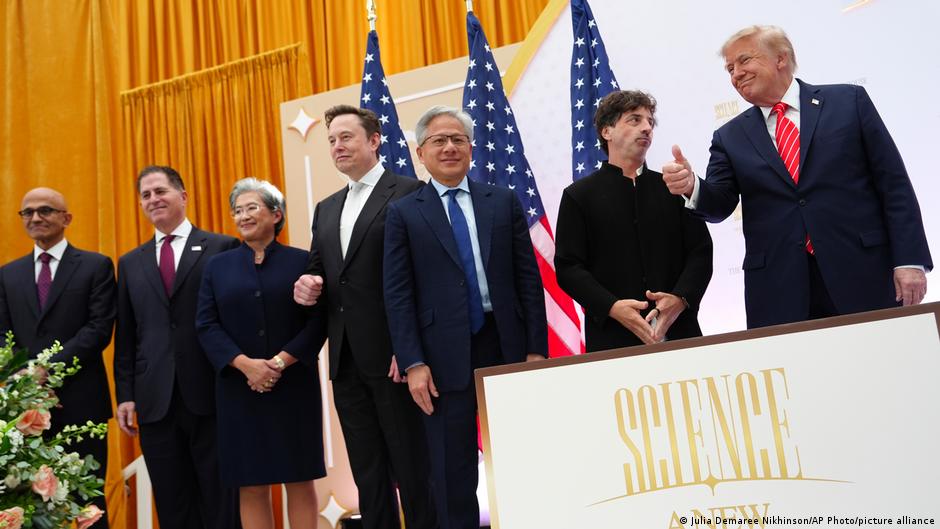
At a recent technology summit, President Donald Trump proclaimed a new “golden age” for science in the United States, introducing what he described as the most ambitious set of science initiatives in decades. He emphasized new “national missions” aimed at inspiring the American public and positioning the country as a leader in technological innovation.
During the event, Trump recognized prominent figures from the information technology sector, promoting the administration’s focus on advancements in various scientific fields. However, concerns have been raised regarding the administration’s approach to funding science programs. AI developer Gary McGraw stated that recent cuts to science funding have compromised the future of research in the United States, suggesting that the government’s financial strategies might hinder progress.
Trump’s announcement comes amid growing competition in technology and innovation from other nations. The president’s call for leadership in technology is seen as an effort to galvanize support for future scientific endeavors and initiatives. The specifics of how these new missions will be funded and implemented remain unclear, sparking questions about the allocation of resources in light of previous funding cuts.
The summit highlighted a broader conversation about the importance of sustained investment in research and development to maintain the U.S. position on the global stage. Details regarding the timeline and budget for these national missions are expected to be outlined in upcoming government communications.
