



The United Auto Workers (UAW) is actively campaigning to enhance its political influence in Michigan as the midterm elections approach on November 3. This initiative comes amidst visible internal divisions and challenges in restoring trust within its ranks.
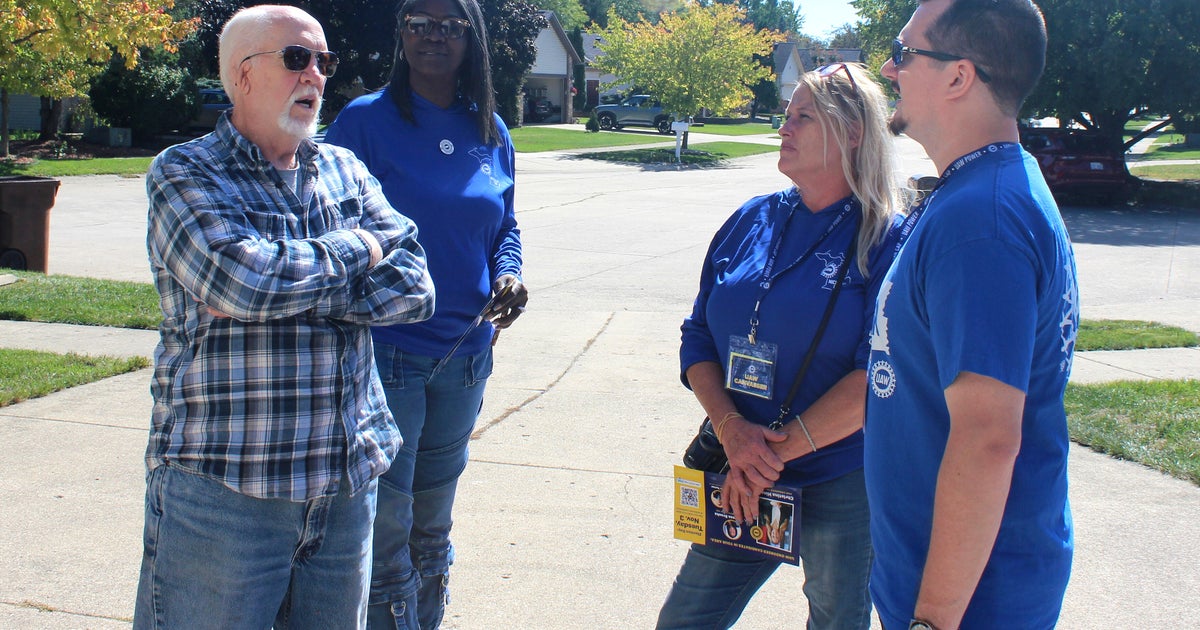
On a recent Saturday in Macomb County, canvassers approached residents, including retired member Walter Usakowski, who expressed his unwavering support for the union’s slate of Democratic candidates. Despite his commitment, Usakowski noted uncertainty among his former colleagues at Ford Motor Co., many of whom supported Republican candidates, including former President Trump.
The UAW’s efforts are intensified by a complicated political landscape, as Michigan has been identified as a crucial battleground. While the union typically endorses Democratic candidates, many members remain divided regarding which party aligns best with their interests. Factors such as past corruption scandals, declining membership, and a perceived lack of transparency have further complicated these political dynamics.
Internal divisions and distrust pose challenges
JJ Jewell, a member of the UAW’s Community Action Program, acknowledged the slow progress ahead. “Even if this election goes fantastically, that’s not mission accomplished,” he stated. As UAW canvassers spoke with locals, they found a mix of views. Some retirees prioritized the cost of living but disagreed sharply about which party would address their concerns effectively.
One resident, blaming billionaires for various issues, leaned toward voting Democratic, while another couple openly supported Trump and declined UAW materials.
The union’s traditional Democratic support has been tested, with Trump appealing directly to union voters through promises to revamp trade agreements. A recent election in 2024 saw a split among union-affiliated voters, with more than half backing Democratic nominee Kamala Harris and 44% supporting Trump.
Member Betty Anderson expressed frustration with those who voted for Trump, suggesting they prioritize upward mobility over collective interests. She voiced concerns that these dynamics hinder unity within the union.
Leaders hope to rebuild trust with transparency
Corruption remains a significant issue for the UAW. Since 2017, over ten UAW officials have admitted guilt in a scandal involving the misappropriation of union funds. Many members criticize prior leadership for their opaque contract negotiation processes, undermining confidence in the organization.
Newly elected UAW President Shawn Fain, who advocates for transparency, aims to rejuvenate member support following recent victories in labor negotiations. On Friday, Fain announced his reelection for another four-year term, pending certification of the results.
Mark DePaoli, a regional director for the UAW, noted efforts to engage members through candidate forums and has highlighted the decision to endorse progressive Democrat Abdul El-Sayed in the U.S. Senate primary, despite backlash from established candidates.
El-Sayed’s campaign emphasized universal healthcare and transparency in politics, with officials citing UAW support as instrumental in his primary success despite financial disadvantages.
His opponent, former U.S. Rep. Mike Rogers, has focused on opposing federal regulations that potentially threaten job security for autoworkers, framing himself as a candidate dedicated to addressing their concerns.
Mobilization is key for UAW’s future
Robert Bruno, a professor at the University of Illinois Urbana-Champaign, underscored the importance of voter mobilization for the UAW’s political strength. “You don’t win campaigns off of your endorsements,” he noted, emphasizing grassroots engagement as critical.
Currently, UAW membership in Michigan stands at approximately 350,000, down from over 600,000 in the 1980s. Still, the union remains the largest in the state.
Recent initiatives, including a strong primary turnout with approximately 113,000 early votes, reflect the union’s commitment to reestablishing its political relevance. UAW leaders are determined to keep members focused on essential issues, with Fain affirming their commitment to active involvement leading up to the elections.
