




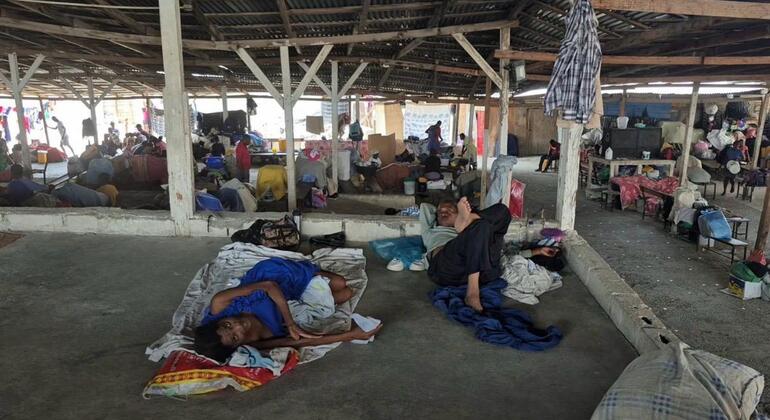
On Wednesday, the United Nations Security Council renewed sanctions aimed at combating gang violence in Haiti, where approximately 1.5 million people, or 12 percent of the population, have been displaced from their homes. Despite Haiti’s lack of domestic production of firearms and ammunition, gangs continue to operate with impunity, suggesting an ongoing influx of illicit supplies.
Details of the Sanctions
Initially established in 2022, the Security Council’s Haiti sanctions committee employs three key enforcement measures: an arms embargo, a travel ban, and an asset freeze. The arms embargo specifically targets the flow of weapons and ammunition to armed factions, while the travel restrictions and asset freeze are aimed at individuals and entities that exacerbate the ongoing insecurity.
Currently, nine individuals and two organizations are subject to these sanctions. The need for such measures is underscored by the grave consequences of gang violence, which has resulted in over 3,000 deaths and more than 1,500 injuries from October of last year through April of this year, according to reports.
In addition to the death toll, a UN partner reported that more than 2,400 survivors of sexual violence were treated in Port-au-Prince between January and May, with a significant proportion of these victims being women and girls, including minors as young as eight. Gangs are also known to recruit children.
Enforcement Challenges
Enforcement of the sanctions primarily relies on the cooperation of various governments at ports, borders, and financial institutions. Recent efforts by Haitian authorities have resulted in the interception of several illegal shipments. Additionally, US authorities have acted to intercept firearms and ammunition destined for Haiti and have initiated trafficking investigations.
However, the UN human rights office estimates that between 270,000 and 500,000 illegal firearms are currently circulating in Haiti. Notably, the arms embargo is frequently violated, according to a panel of independent experts tasked with monitoring compliance. These experts have observed that some firearms have been diverted from police stockpiles and that banks have been slow to act on the asset freeze, with only two sanctioned accounts reported to be frozen.
The panel notes that while there were no confirmed violations of the travel ban, there are concerns about fraudulent documents enabling sanctioned individuals to travel under aliases. They have also pointed out that targeting gang leaders without addressing the broader networks that support them may prove ineffective.
Future Considerations
Despite existing sanctions, gangs in Haiti have continued to expand their influence, emphasizing the importance of robust enforcement. During Wednesday’s Security Council meeting, representatives from member states reiterated the need to dismantle the financial frameworks supporting gangs and to enhance accountability for those involved.
The council has extended the work of the sanctions committee for an additional 13 months. While welcomed by Haitian authorities, there was a cautionary note that sanctions alone are insufficient to restore security. For the Haitian population enduring gang violence, the effectiveness of the sanctions committee’s work and the broader regional efforts will ultimately determine the safety of their communities and access to essential services.
