




Bilahari Kausikan, a prominent diplomat and former Permanent Secretary of the Singapore Ministry of Foreign Affairs, has articulated a perspective that the Korean Peninsula may play a pivotal role in a forthcoming fourth shift in East Asian geopolitics, which he describes as potentially nuclear in nature. Kausikan explains that this transformative shift could surpass previous geopolitical changes that shaped the region.
In his analysis, Kausikan emphasizes that historical events associated with the Korean Peninsula—such as the Sino-Japanese Wars and the Korean War—have long influenced the regional order in East Asia. He asserts that while Korea has exercised agency at various junctures throughout its history, it has generally been more of an arena in which larger powers clash than an active agent itself. However, he argues that both South Korea (ROK) and North Korea (DPRK) now have the potential to emerge as significant actors in this evolving landscape.
Two primary factors underpin this anticipated shift. First, Kausikan observes a transition in the United States’ global strategic posture from direct military involvement to offshore balancing, wherein America opts to influence events from a distance rather than engaging directly on the ground. This model has already been evident in U.S. policy towards the Middle East, and it may soon apply to Europe as well.
Secondly, he notes the implications of North Korea’s advancements in nuclear weapons and missile technology, as well as China’s nuclear modernization efforts. Kausikan warns that while the U.S. may redefine its style of engagement, it is unlikely to retreat from its global commitments. He cautions that the absence of an existential threat may lead American policymakers to reconsider their approach to international alliances.
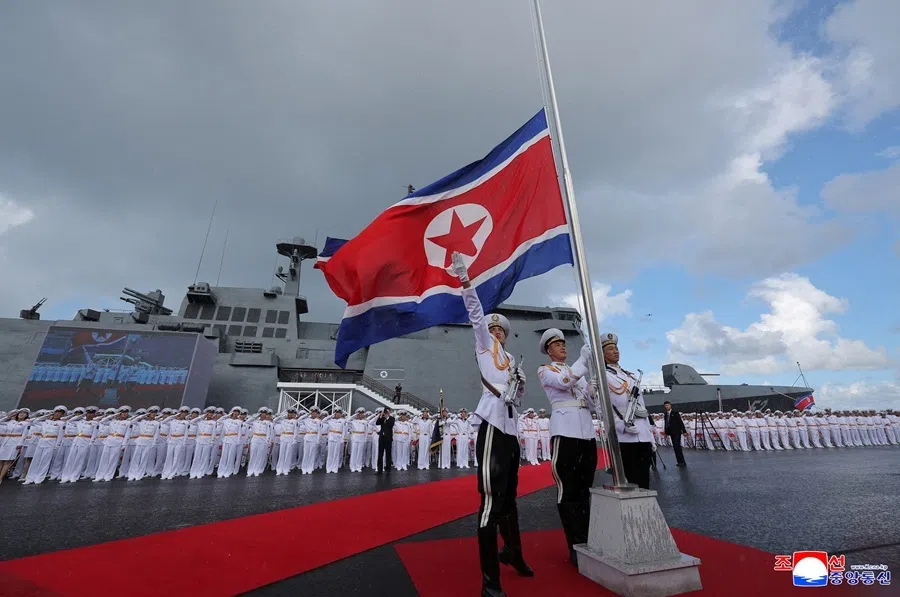
North Korea’s status has shifted into that of a de facto nuclear state, complicating efforts toward denuclearization. Kausikan believes that this alteration has led to a fundamental restructuring of diplomatic expectations. He posits that meaningful diplomacy must now acknowledge this nuclear reality and shift towards deterrence strategies rather than reliance on disarmament.
Compounding these challenges is the dynamic between South Korea and Japan, which must navigate historical grievances that could obstruct their cooperation in addressing shared security threats posed by North Korea and China. Kausikan advocates for a pragmatic approach, suggesting that both nations consider establishing independent nuclear deterrents to enhance their security in a landscape marked by deteriorating confidence in U.S. commitments.
As this geopolitical reconfiguration unfolds, Kausikan highlights the necessity for East Asian countries to act collaboratively to mitigate the influence of larger powers while nurturing their own agency. He urges a re-evaluation of past grievances in favor of a united front against contemporary challenges.
Looking ahead, Kausikan warns that the actual development of a stable East Asian order will require overcoming lingering historical tensions and fostering cooperation among regional powers. The evolving nuclear dynamics on the Korean Peninsula will undoubtedly remain a critical focal point of this strategic landscape.
