




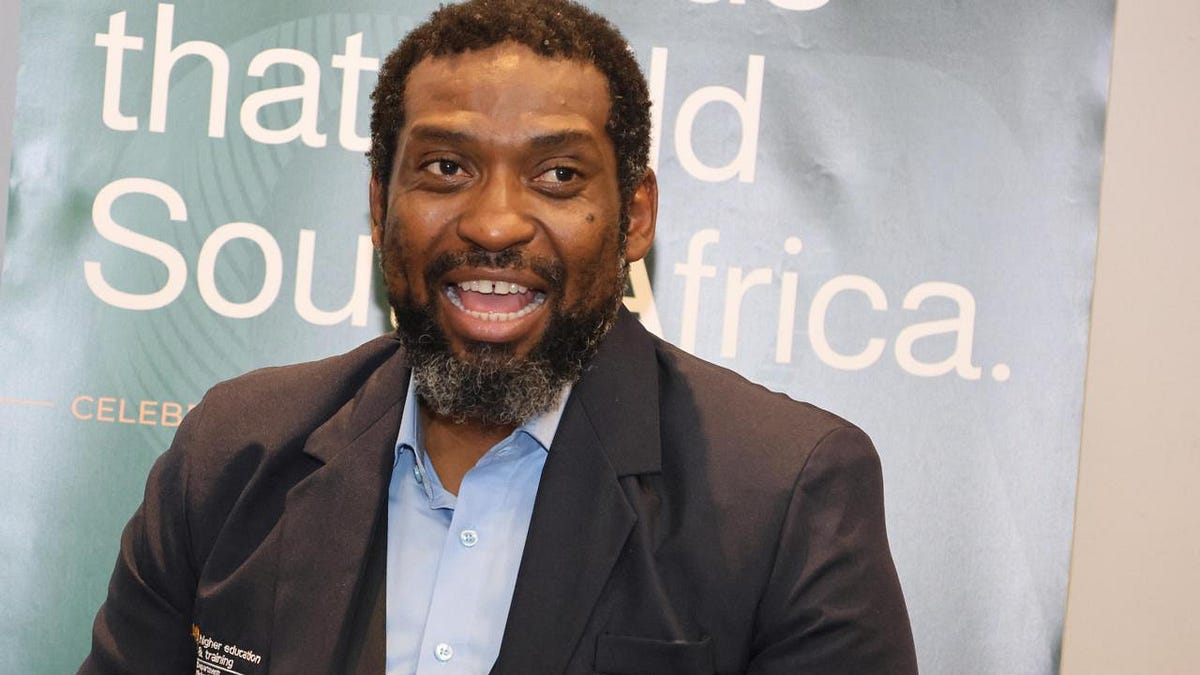
South Africa’s higher education system faces significant challenges in finance, student access, and sustainability, which, according to Minister of Higher Education and Training Buti Manamela, overshadow discussions about the direction universities should take in response to societal needs. Manamela spoke at a recent webinar hosted by Nelson Mandela University in collaboration with Higher Education Media Services.
The webinar featured several prominent educational figures, including Professor Sibongile Muthwa, Vice-Chancellor of Nelson Mandela University; Professor Linda Meyer, President of Rosebank International; and Professor Hester Klopper, Vice-Chancellor of the University of the Free State, with Professor Andre Keet facilitating the discussion.
During his keynote address, Manamela emphasized the need for universities to adapt to the rapidly changing socio-economic landscape. “We’ve become accustomed to discussing universities through the crisis of the moment,” he said. “But it is equally important to focus on the kind of universities South Africa needs in the emerging world.”
He highlighted the role of universities in generating knowledge that extends beyond academic settings to tackle pressing issues such as water and energy security, failing infrastructure, and unemployment. Manamela stated that South Africa requires a diverse higher education system rather than “26 copies of the same university.” He called for collaboration among institutions to enhance quality while minimizing redundancy.
Manamela also stressed the importance of both fundamental research and community engagement, urging universities to connect various forms of knowledge, including scientific and indigenous, to address local challenges. He pointed out that the effects of the global crisis are evident in South African communities, and universities must play an effective role in resolving these issues.
Technological advancements, particularly generative artificial intelligence (AI), pose another challenge for higher education, prompting the need for a reevaluation of learning and assessment methods. Manamela noted that while AI can enhance teaching and research, it can also perpetuate biases and misinformation. He stressed the importance of equipping students with critical thinking skills to differentiate between AI-generated responses and factual information.
Professor Klopper supported this view, stating that the Arts and Humanities are essential for fostering ethical understanding as technology evolves. She argued that these disciplines should receive equal funding compared to Science, Technology, Engineering, and Mathematics (STEM) fields.
Professor Muthwa echoed the sentiment, linking the minister’s call for intellectual engagement to the legacy of Nelson Mandela, which inspires efforts toward freedom and social justice. She emphasized the necessity for students not only to gain admission but to feel a sense of belonging and empowerment in educational institutions.
Addressing access to higher education, Professor Meyer pointed out that over 600,000 young South Africans qualify for higher education, yet only about 230,000 spaces are available across universities, mostly through UNISA. She called for transformative efforts to expand access to ensure that all potential students have opportunities to succeed. Meyer also highlighted the potential of micro-credentialing programs to enhance lifelong learning and align education with labor market needs.
