




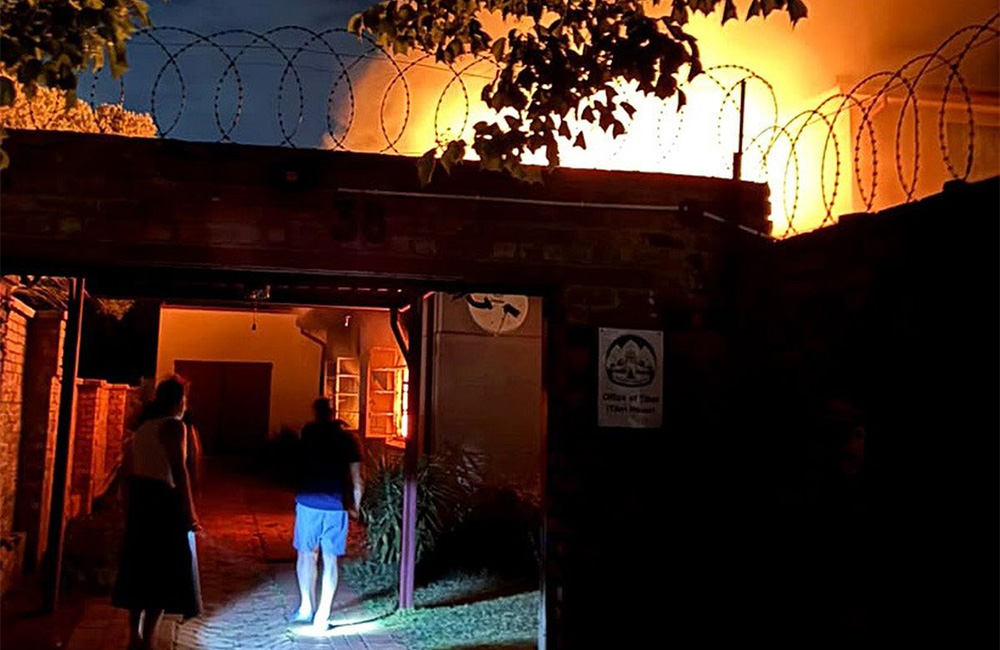
Authorities in South Africa are being urged to investigate a recent arson attack that severely damaged the Office of Tibet in Pretoria. The incident, which occurred on October 14, is the second of its kind, with a previous attack reported on July 6, 2026. The Desmond & Leah Tutu Legacy Foundation has joined several groups in calling for a thorough inquiry into both attacks, citing concerns about potential links to China’s ongoing repression of Tibetan culture and autonomy.
In a statement on October 16, the International Campaign for Tibet (ICT), based in Washington, condemned the attacks as direct violations of the rights guaranteed to the Office of Tibet and its staff under the South African Constitution. The group backed the call for an immediate and comprehensive investigation by the South African Police Service to identify those responsible and explore the possibility of third-country involvement.
Dhundup Gyalpo, the Representative of His Holiness the Dalai Lama, survived the petrol-bomb attack but expressed concerns about what he described as “larger political forces” at play, although he did not provide specific details. Meanwhile, Students for a Free Tibet (SFT) has accused the Chinese Communist Party of orchestrating the violence as part of a broader strategy of transnational repression against Tibetans. The group has also urged South African authorities to ensure that the investigation accounts for potential political motivations behind the attacks.
The South African foreign ministry has refrained from commenting on the incidents, stating that they are a matter for local law enforcement. The Office of Tibet was established in 1997 at the request of the Dalai Lama and received approval from then-President Nelson Mandela, with a mission to foster cultural and educational exchanges between Tibetans and South Africans. However, reports indicate that Beijing has pressured the South African government regarding Tibetan representation, leading to instances where official visits by the Dalai Lama were denied.
Free Tibet, a supportive organization, remarked on the historical context of diplomatic relations, noting that South Africa shifted its recognition from Taiwan to China in January 1998. The group highlighted that China is now South Africa’s largest trading partner and expressed concern about how this relationship may affect Tibetans’ safety in the country.
The recent attacks have raised alarms about the increasingly perilous environment for Tibetan representatives in South Africa amidst a global landscape marked by intensified repression from the Chinese government. The investigation into these incidents is expected to garner attention in the coming days as calls for accountability continue.
