




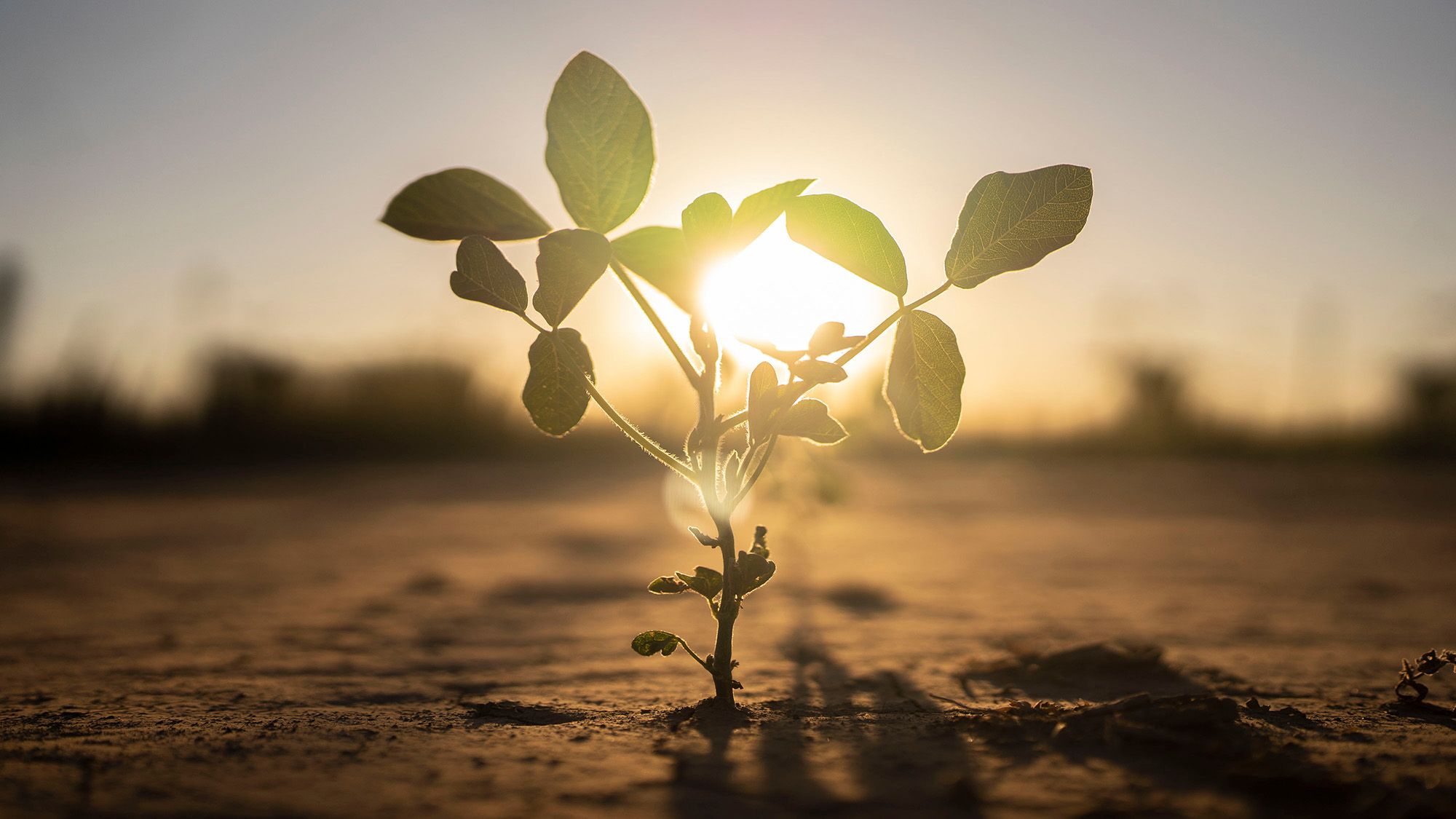
Research into the resilience of plants following catastrophic climate changes, particularly during the Permian-Triassic mass extinction, is shedding light on how current species may survive future environmental upheaval. The extinction event, also known as the “Great Dying,” occurred around 251 million years ago due to extensive volcanic activity, resulting in a significant rise in global temperatures and ocean acidification. This catastrophic change led to the extinction of over 90% of marine life and 70% of terrestrial species.
In response to these events, some areas, including parts of present-day China, served as refuges where pollen-producing plants thrived, providing a haven for surviving animal species. Scientists suggest that these plants exhibited remarkable resilience and may have had a better chance of survival compared to other forms of life suffering from the severe environmental conditions.
Chris Thomas, an ecologist at the University of York, noted that plants possess resilience due to their inability to move. This limitation has led many species to evolve survival mechanisms that allow them to endure adverse conditions. As climate change continues to impact ecosystems, experts agree that these adaptive traits will play a crucial role in determining which species thrive or face extinction.
Many plants feature developmental plasticity, allowing them to adapt their growth in response to the environment. For example, species with modular body plans can regenerate limbs and adjust to changing conditions. Botanist Amy Angert from the University of British Columbia pointed out that plants can often sprout new growth in response to environmental signals, giving them a unique advantage.
Plants also employ strategies such as underground seed storage to survive adverse conditions. Living seeds can remain dormant in the soil until conditions improve, providing a reservoir of genetic variation. Daniel Anstett, an evolutionary ecologist at Cornell University, emphasized that this genetic diversity enhances a population’s ability to adapt and survive environmental changes.
The researchers highlight several innovative adaptations among plants. Species such as the Snow Gum have protective insulating bark, while others like stinging nettles can bury their buds underground to shield them from extremes. These adaptations reflect a broad toolkit of survival strategies that plants can utilize amid changing climates.
As climate conditions proliferate in complexity, the hope for plant resilience may also hinge on “luck,” according to experts. Many species have specific adaptations, and their survival can depend on which traits are advantageous in given circumstances. Increasing genetic diversity through connected populations can potentially enhance the capability of plant species to adapt to changing environments.
With the knowledge gained from past extinction events, researchers are advocating for the protection of larger, interconnected plant populations. Maintaining such connectivity may bolster the genetic toolkit available to plants, therefore increasing their likelihood of survival in the face of ongoing climate change.
