




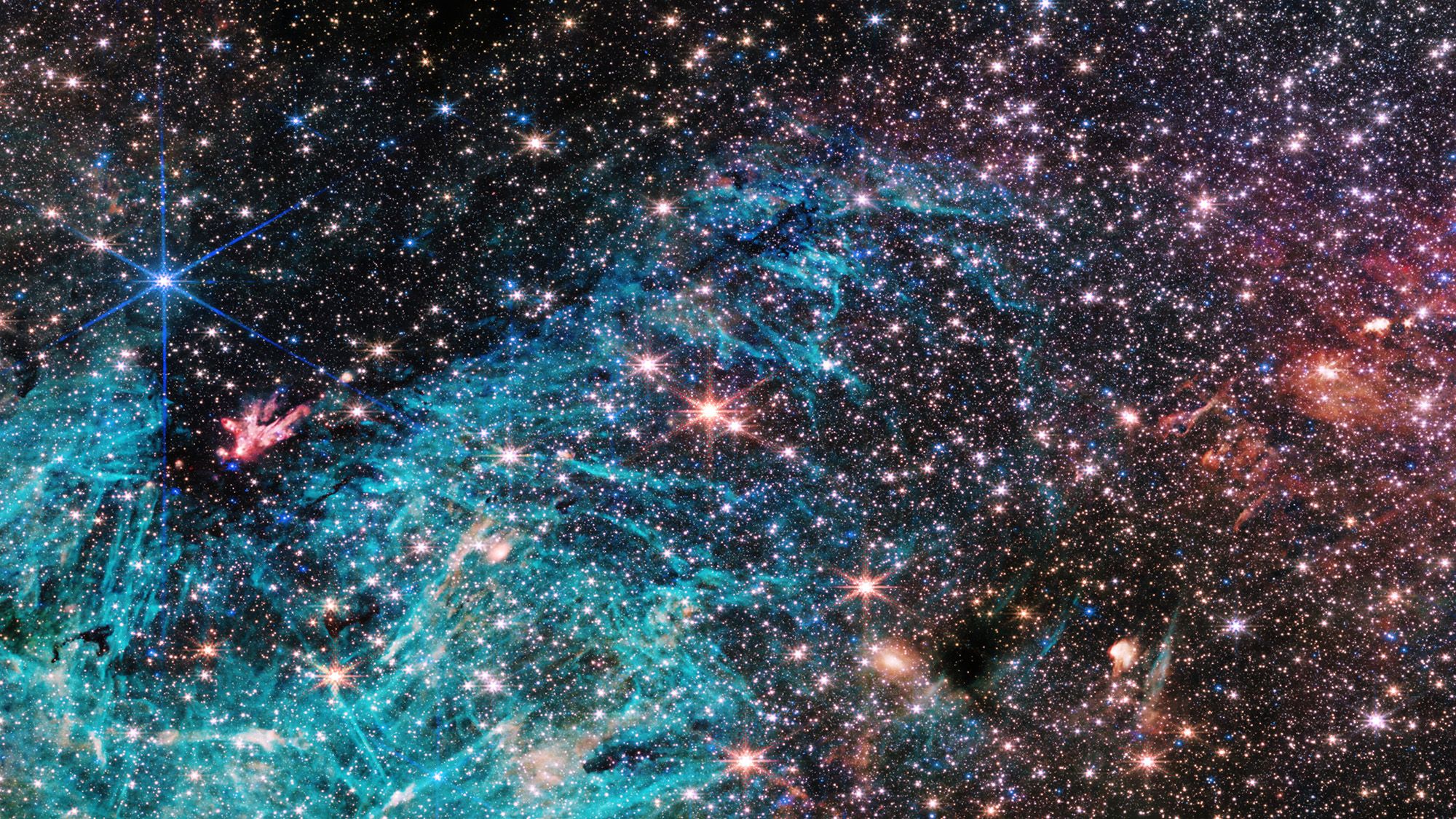
The James Webb Space Telescope (JWST) has detected a significant amount of heavy metals in the vicinity of the Milky Way’s supermassive black hole, Sagittarius A*, which is prompting further investigation into the origins of these elements. The findings were reported in a paper published on October 19 in The Astronomical Journal.
Researchers believe that the heavy metals, which include elements like oxygen, carbon, iron, and gold, likely emerged from supernova explosions that occurred in the region around Sagittarius A*. These elements, produced through nuclear fusion at the cores of dying stars, contribute to the complexity of the material surrounding the black hole.
The gas detected by JWST exhibits a composition that closely matches several nearby stars, suggesting that both the stars and the gas were formed around the same time. Nicole Ford, a doctoral student in astrophysics at McGill University and the paper’s lead author, noted the unique environment of Sagittarius A*, which appears to consume less material compared to other supermassive black holes. She stated, “Part of understanding why this is happening means looking at the properties of the materials available for it to consume, including gas, dust, and the stars orbiting around it.”
JWST was able to identify the heat signatures of gas clouds near Sagittarius A*, revealing their metallic content. The analysis indicates that the presence of these metals can influence the cooling rates of gases, subsequently affecting how easily gas can fall into the black hole.
A previous study published in The Astrophysical Journal in May had pointed out that gas emissions near Sagittarius A* are influenced by the conditions of local clouds, complicating the interpretation of the black hole’s activity over time.
The implications of these findings extend beyond the Milky Way, potentially enhancing our understanding of metal distribution in supermassive black holes across different galaxies and shedding light on how elements were supplied to Earth.
As research continues, scientists hope to further explore the dynamics and materials surrounding supermassive black holes, enhancing our comprehension of these fascinating cosmic phenomena.
