




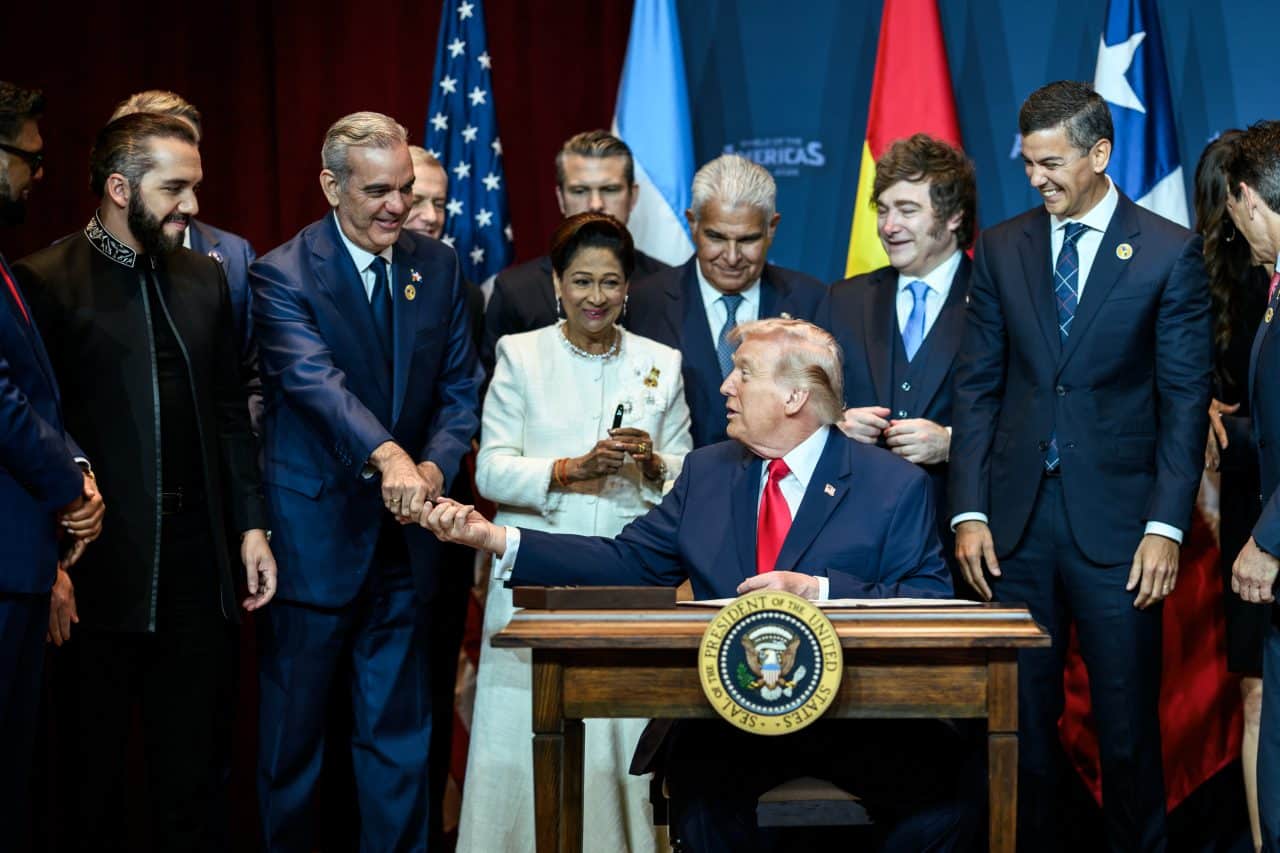
On August 24, the Dominican Republic officially adopted the International Holocaust Remembrance Alliance (IHRA) working definition of antisemitism. President Luis Abinader made the announcement in Santo Domingo during an event hosted by the U.S. organization Combat Antisemitism Movement. The Dominican Foreign Ministry later explained the decision, citing a historical commitment to combat hate and discrimination, referencing the country’s asylum of Jewish refugees during World War II.
Despite this historical context, critics point to significant political parallels. Observers note the adoption of the IHRA definition reflects broader shifts among Latin American governments toward right-wing policies, echoing past authoritarian practices. Abinader’s regime has faced scrutiny over its historical narrative, particularly regarding its handling of slavery and relations with the Haitian community, including a controversial deportation policy. Critics argue this is reminiscent of policies under the former Trujillo dictatorship, particularly considering its historical treatment of migrant populations.
The Dominican government has also cultivated stronger ties with Israel, engaging in agreements related to water management and military cooperation. Abinader’s administration has renewed its arsenal with weapons manufactured in Israel and the United States. These actions occur amid ongoing humanitarian concerns in Gaza, prompting allegations that the government is using the IHRA definition to suppress criticism of Israel and silence expressions of solidarity with Palestine.
Legal experts have raised concerns about the implications of adopting the IHRA definition, suggesting it could lead to increased censorship and the erosion of democratic freedoms in the Dominican Republic. Jaime Rodríguez, a Dominican legal scholar, emphasized that while the endorsement of the definition is not yet legally binding, it carries potential risks for free expression. The Dominican government has already faced criticism for its use of surveillance technology against journalists, further raising alarms about democratic integrity.
In the realm of broader regional politics, several right-wing governments across Latin America have also adopted the IHRA definition, aligning themselves closely with Israeli foreign policy. Governments in Argentina, Colombia, Costa Rica, Panama, Guatemala, and Uruguay have similarly followed suit. The IHRA definition has been described as a tool for criminalizing solidarity with Palestine, emphasizing opposition to Israel as a form of antisemitism.
As the regional political landscape continues to evolve, experts are closely monitoring the Dominican Republic’s alignment with Israeli policies and the implications for its domestic governance and civil liberties.
