




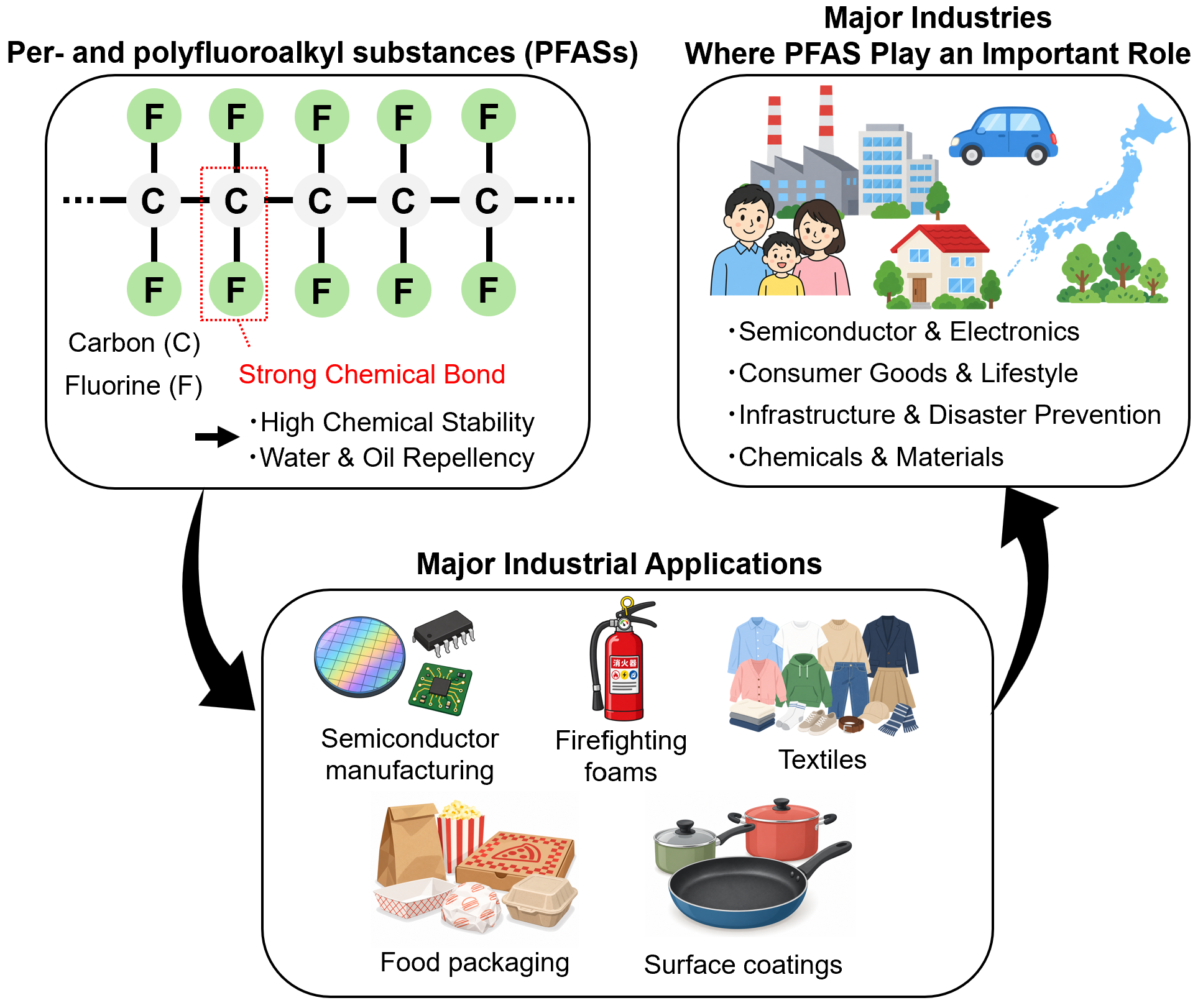
A recent review by researchers from Tohoku University highlights crucial molecular characteristics that could enhance the effectiveness of materials designed to remove per- and polyfluoroalkyl substances (PFAS) from water. PFAS are widely used in various industries, including semiconductor manufacturing, firefighting, textiles, and food packaging, due to their chemical stability and water-repelling properties. However, rising health concerns about these substances underline the urgent need for effective removal methods.
One promising solution is the use of adsorption, where PFAS molecules adhere to the surface of a material known as an adsorbent. By customizing these materials to interact with specific types of PFAS, researchers aim to improve their capability to capture these persistent pollutants from water. The research team, led by Associate Professor Kouki Oka at Tohoku University’s Institute of Multidisciplinary Research for Advanced Materials, conducted a comprehensive review of current advancements in PFAS adsorption.
The review focuses on well-known PFAS compounds, such as perfluorooctanesulfonic acid (PFOS) and perfluorooctanoic acid (PFOA), and other PFAS substances monitored by regulatory bodies in the European Union (EU) and Canada. The researchers identified essential principles for designing high-performance adsorbents that can effectively target a broader spectrum of PFAS.
A key finding of the review is that successful adsorbent design requires insight into the diverse components of PFAS molecules. For instance, both PFOS and PFOA feature a fluorinated carbon chain and a terminal group that typically carries a charge in water. These components possess different chemical properties, influencing how they interact with adsorbent materials.
By developing adsorbents that form strong interactions with these distinct structural elements, researchers hope to enhance adsorption performance. Instead of treating PFAS as a uniform target, this new approach focuses on the individual parts of PFAS molecules to inform the selection and creation of effective adsorbents.
“As the range of PFAS subject to regulation continues to expand, we need adsorbents that can effectively target a wider variety of these compounds,” Oka stated. “By understanding how different parts of PFAS molecules interact with adsorbent materials, we can establish clearer design principles for developing more effective removal technologies.”
The demand for such materials is increasing as governments implement stricter PFAS monitoring and regulations. In the EU, drinking water standards limit the combined concentration of 20 PFAS to 100 nanograms per liter (ng/L), while environmental quality standards set an annual average limit of 4.4 ng/L for 25 PFAS in surface waters, expressed as PFOA equivalents to account for variations in toxicity. Canada has established an objective of 30 ng/L for the combined concentration of 25 PFAS.
As regulatory scrutiny on PFAS intensifies, removal technologies must address a diverse array of molecular structures. The design principles discussed in this review lay the groundwork for creating adsorbents tailored to different PFAS, potentially enhancing water treatment efforts and assisting industries in managing these challenging contaminants.
The research team plans to proceed by applying these principles to develop higher-performance adsorbents specifically designed for targeted PFAS removal.
