




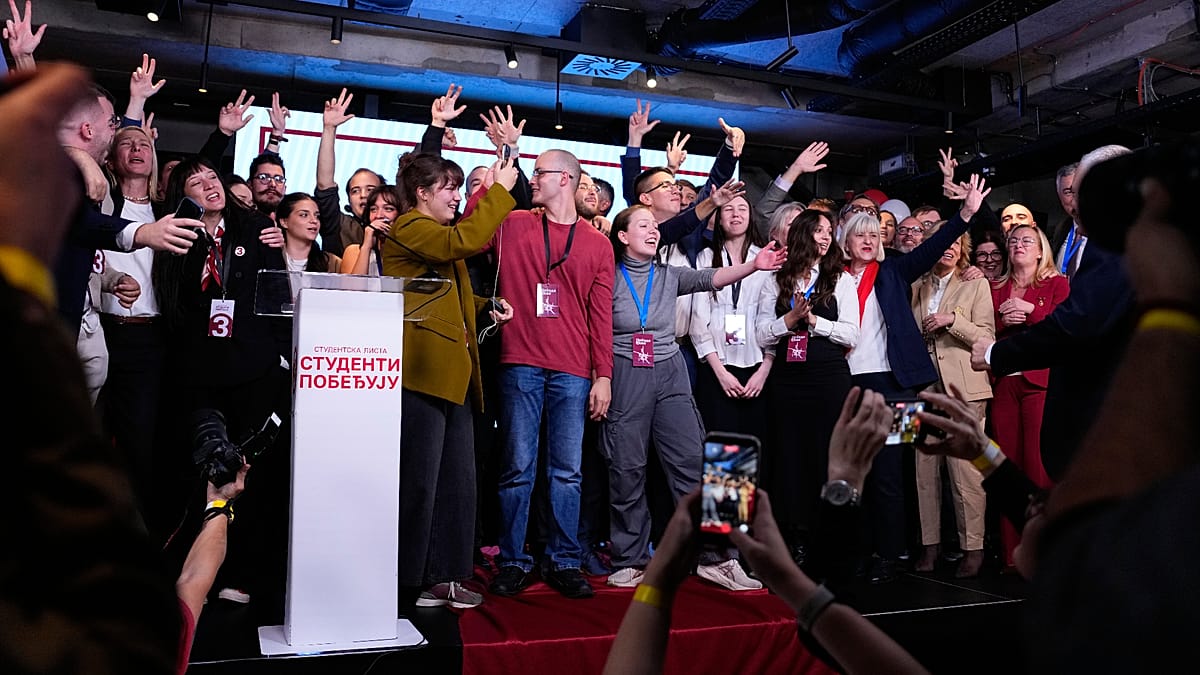
Serbia’s recent elections have marked a significant political shift as the Student List emerged victorious, securing 140 of the 250 parliamentary seats and establishing an outright majority. This election has shifted the balance of power, pushing the Serbian Progressive Party (SNS) into opposition for the first time in nearly 14 years, as they garnered 104 seats.
This change signifies more than just a new government; it represents a collapse of the political order established since 2012. The SNS, under President Aleksandar Vučić, had maintained nearly absolute control over Serbia’s politics. For over a decade, it dominated the executive branch, held substantial parliamentary majorities, and shaped the political landscape through extensive alliances.
Remarkably, the SNS was not dethroned by traditional opposition parties but by the Student List, which evolved from months of protests into a major political entity. This newly formed group succeeded where others had failed, breaking Vučić’s political dominance and presenting the election outcome as a referendum on 14 years of SNS governance.
The electorate’s choice reflected widespread dissatisfaction with a governing model marked by centralized power, manipulation of institutions, and media control. The Student List united various grievances, promoting demands for accountability and political transformation.
Even more dramatic is that no minor parties crossed the three-percent threshold in the elections, leading to a stark political landscape dominated by the Student List and the SNS. This outcome indicates a significant reconfiguration of Serbia’s political alliances, particularly among ethnic minority communities, who had historically been allies of the SNS.
For instance, the Alliance of Vojvodina Hungarians (SVM), a once-reliable partner of the SNS, managed to win only three out of five potential seats, reflecting a notable shift in sentiment within the Hungarian community. Similarly, the Bosniak community secured only two parliamentary representatives, indicating a departure from established patterns of political loyalty.
The elections drew international attention with congratulations directed at the Student List from prominent European officials, including European Council head Antonio Kosta and European Commission President Ursula von der Leyen. Their reactions suggest a shift in how Serbia might engage with the European Union following this political upheaval.
Vučić’s initial response included a warning about potential sanctions against Russia if the new government adopts a pro-EU stance, marking a significant policy shift. Additionally, he cautioned that the election results might create investor uncertainty, potentially jeopardizing Serbia’s appeal as a stable economic destination.
Professor Dejan Šoškić, affiliated with the Student List, articulated the historic importance of the election, emphasizing the movement’s potential to foster a more democratic society. Following their victory, candidate Radomir Saičić affirmed that the real work of building a new Serbia begins now.
However, the transition from a protest movement to a governing body presents substantial challenges for the Student List. They will need to structure a functional government, establish institutions, and craft policies on various critical issues, including foreign relations and the rule of law.
Meanwhile, the SNS bears the burden of redefining its role in opposition, testing its strength without the executive power it has held for over a decade. The political ramifications of this election extend beyond parliamentary control, fundamentally altering the dynamics within Serbian politics.
