




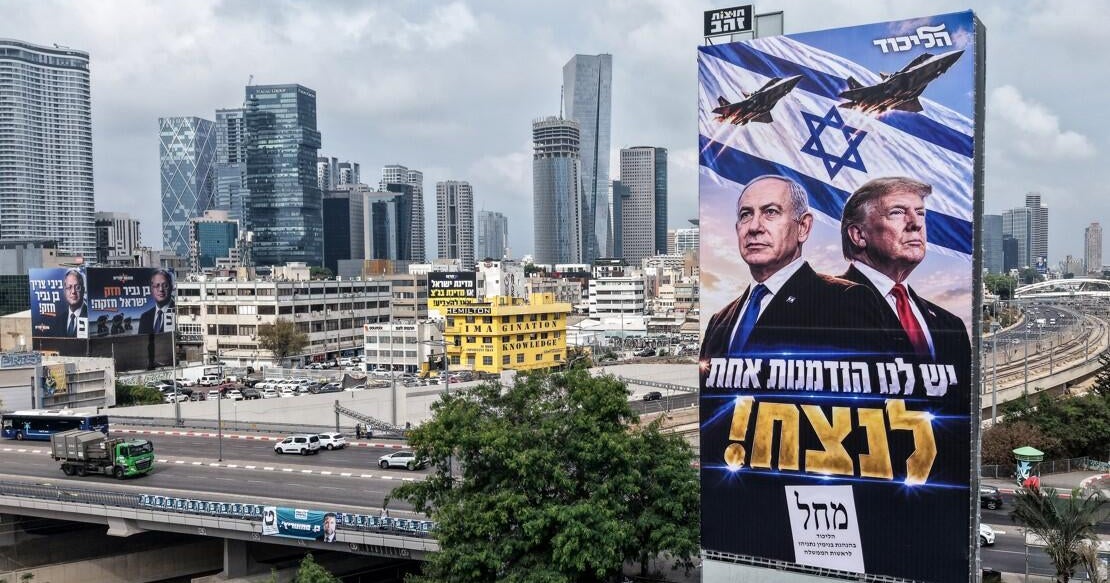
Tel Aviv — Israelis have begun casting their votes in a tightly contested election that could significantly influence the country’s political landscape. Prime Minister Benjamin Netanyahu is fighting to retain his position amid what polls suggest is a highly competitive race, with no clear outcome for either him or his opponents.
Polling results reveal a stark divide, with right-leaning surveys favoring Netanyahu’s right-wing and religious bloc, while left-leaning polls suggest an edge for the opposing change bloc. Most forecasts indicate that neither faction is likely to secure a decisive majority in the Knesset, Israel’s parliament, where 120 seats are contested. This could result in a political stalemate leading to prolonged coalition negotiations or even a new election.
“It looks like an indecisive outcome is the most likely outcome,” Yohanan Plesner, president of the Israel Democracy Institute, said.
This election marks the first since the October 7, 2023, attacks by Hamas, described by authorities as Israel’s most significant security failure since its establishment in 1948. Israeli voters head to the polls during ongoing conflicts in Gaza, Lebanon, and Syria, with tensions heightened following confrontations involving Iran.
The Netanyahu camp
Netanyahu, leader of the Likud party and Israel’s longest-serving prime minister, is seeking to recreate a coalition similar to his current government, reliant on ultranationalist and religious allies. He emphasizes two key messages to voters: his capacity to govern without the support of Arab parties and the need for continuity in military actions against threats in Gaza, Lebanon, and Iran.
Former President Donald Trump recently endorsed Netanyahu, underscoring the importance of his leadership in ongoing military operations against Iran. Trump warned that America might withdraw support if Netanyahu loses power, stating, “If Israel has the wrong Leader, which would be anyone other than Bibi, America will have to do this work ourselves.”
Netanyahu’s campaign slogan highlights his focus on security: “Either right wing or Palestine, either right wing or a nuclear bomb.” He has even shared AI-generated images stressing the perceived threat from Iran.
Supporters regard Netanyahu as a capable leader on the global stage, with one Tel Aviv restaurant owner stating, “Bibi can handle the whole world. He’s the king of Israel.”
The change bloc
Opposing Netanyahu is a coalition known as the “change bloc,” comprising a mix of parties across the political spectrum united in their desire to oust him. Former military chief Gadi Eisenkot, head of the centrist Yashar party, is the leading candidate for this alternative coalition. Eisenkot has personal ties to the conflict, having lost family members during military operations in Gaza.
Eisenkot portrays himself as a unifying figure and criticizes Netanyahu’s fear-based campaign tactics. He has pledged to investigate the intelligence failures surrounding the Hamas attacks, an inquiry Netanyahu has previously resisted.
Public sentiment towards Eisenkot appears positive, with some voters expressing hope for his leadership in contrast to Netanyahu’s. “Eisenkot is straight and honest. He’s the kind of leader who will take care of us,” said Uzi Aharoni, a Tel Aviv engineer.
Potential Influencing Factors
Analysts suggest several factors could sway the election’s outcome. Voter turnout, particularly among Arab Israelis, will be critical, as their participation could significantly impact Netanyahu’s chances. Comprising around 20% of the population, Arab voters are motivated by a desire to prevent Netanyahu from furthering alliances with far-right parties. Jehad Abomoch, a cafe owner in an Arab city, noted, “The last four years were a real catastrophe.”
Additionally, two new parties focused on the inclusion of ultra-Orthodox citizens in mandatory military service may also gain traction and influence coalition dynamics.
If neither bloc achieves a substantial majority, various scenarios could unfold, including coalition negotiations or a possible repeat election. Plesner indicated that should commitments to campaign promises hold, Israel could face another election cycle.
