




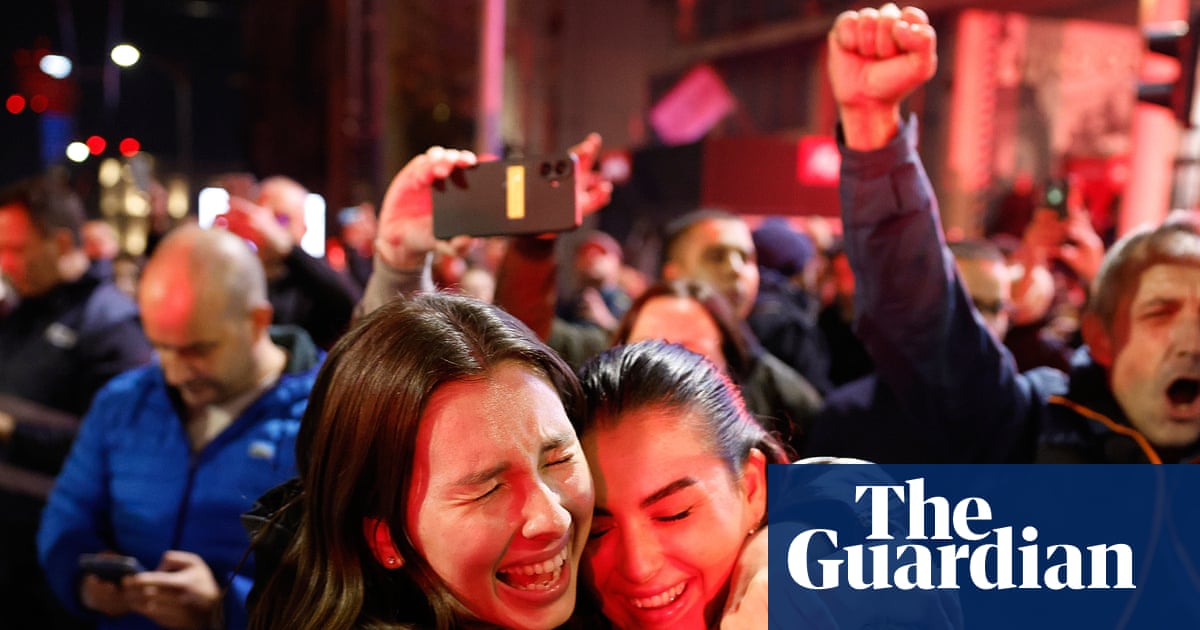
In a significant election outcome, Serbia’s student-led movement has secured over 50% of the votes, leading to the ousting of the long-serving president, Aleksandar Vučić. This marked the highest voter turnout in Serbia since the breakup of Yugoslavia in 1992 and has been lauded as a transformative moment for the country’s political landscape.
The election, held on October 25, follows a year of protests sparked by a deadly roof collapse at Novi Sad’s main railway station. Students from the city embarked on a 13-day bicycle journey to Strasbourg, France, last April, to raise awareness of their struggle for democratic values. In an open letter addressed to French President Emmanuel Macron, the students stated, “Serbia needs Europe’s support,” emphasizing their intent was not to flee but to restore democratic integrity in their home country.
Following the election, joyous celebrations erupted across Serbia as tens of thousands took to the streets, highlighting a stark contrast to the scenes they experienced during the police crackdowns on previous protests. One student activist, Sara, reflected on their journey, stating, “It’s very strange that on the very streets where the police beat us, we are now standing here as the victors.”
The newly elected coalition, which includes a diverse slate of candidates chosen through student assemblies, won 140 out of 250 parliamentary seats. The movement now faces the challenge of governing without a clear leader, a significant departure from Vučić’s tightly controlled political strategy that had dominated Serbia for over a decade.
Postdoctoral researcher Aleksandar Matković highlighted the implications of this election, urging that the situation should be closely monitored as it may signal the emergence of a new political paradigm in Serbia. The student coalition is moving forward with an 11-point plan aimed at addressing issues such as corruption, media independence, and judicial reform, alongside improving healthcare access.
As the coalition prepares to form a government, analysts have noted their focus on “social and psychological detoxification” of the country as a priority. The coalition’s agenda also includes a commitment to putting Serbia’s future European Union membership to a referendum, in a bid to revive stalled accession talks that had been ongoing since Serbia applied to join the EU in 2009.
European Commission President Ursula von der Leyen and EU Enlargement Commissioner Marta Kos expressed optimism regarding the election results. Von der Leyen assured support for Serbia’s reforms, while Kos stated, “A new chapter can begin for Serbia. The door to the EU is open, and we are ready to move forward together.”
With the prospect of engaging in meaningful progress on democratic institutions, this election outcome offers renewed hope for the students and citizens of Serbia who have fought for change amidst considerable challenges over the past two years.
