




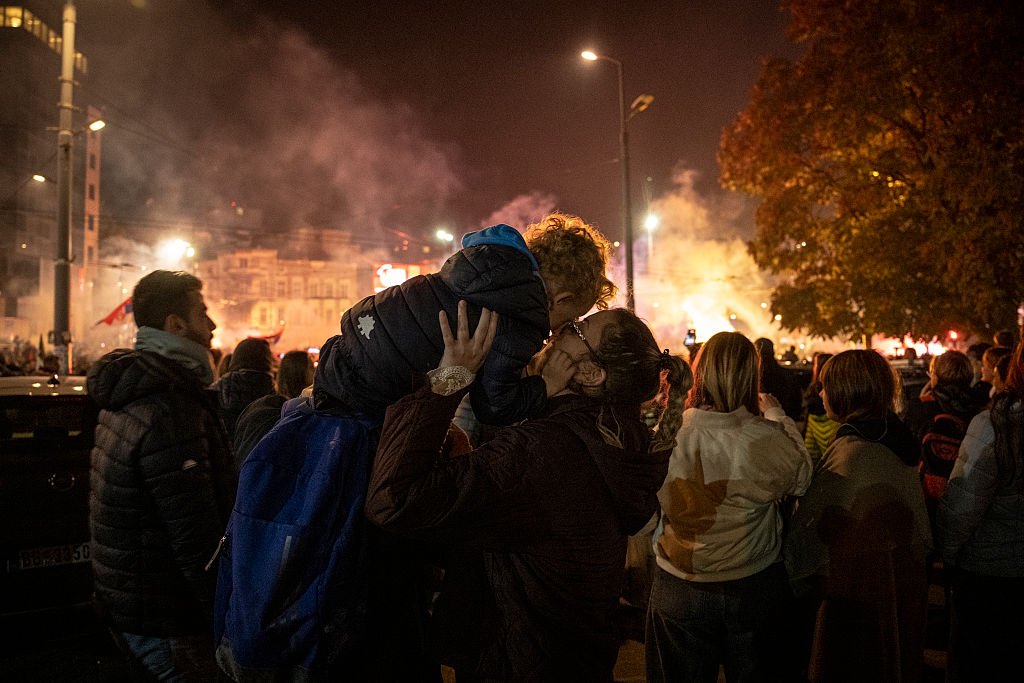
In a significant shift in European politics, a student-led movement in Serbia has successfully unseated the long-standing right-wing government led by Prime Minister Aleksandar Vucic. The movement, known as Student List, gained a majority during the snap parliamentary elections held recently, marking the end of a 14-year rule characterized by government corruption.
Student List, comprised of a diverse group including lawyers, former celebrities, doctors, and artists, celebrated their victory with protests in the streets of Belgrade over the weekend. This change represents a historic moment for many young Serbians, including one student who said, “For the first time in my adult life, I’m seeing a change of government. After so many years under the same leadership, I’m happy that I’ll finally get to live in a free, normal country.”
This development in Serbia is part of a broader trend of youth-led activism across Europe. Young people across the continent are voicing growing dissatisfaction regarding critical issues such as education, housing, military spending, climate change, and healthcare. A sociologist cited in El País noted that Generation Z has been shaped by several crises, including austerity measures, climate change, and the COVID-19 pandemic, which has fueled their political engagement. In Italy, this generation has even been dubbed the “Gaza Generation” due to their political activism in response to international conflicts.
Similarly, youth movements are rising in nations like France, Germany, Spain, Portugal, Italy, Belgium, Albania, and Greece, focusing on the uncertain future facing young people today. The growing unrest and calls for change reflect a collective sentiment among Europe’s youth, who are demanding action on various social and political fronts.
In the United States, scholars have begun questioning the current state of youth activism, particularly asking where the American equivalent of this powerful movement exists. American Gen Zers are actively engaging in politics by marching, running for office, and protesting to address issues affecting their lives. However, some experts argue that the entrenched two-party system in the U.S. could impede the powerful grassroots movements seen in Europe.
As the political landscape evolves, the implications of these youth movements in Europe may serve to inspire similar efforts in the United States, especially as young Americans seek to address the challenges they face in an ever-changing world.
