




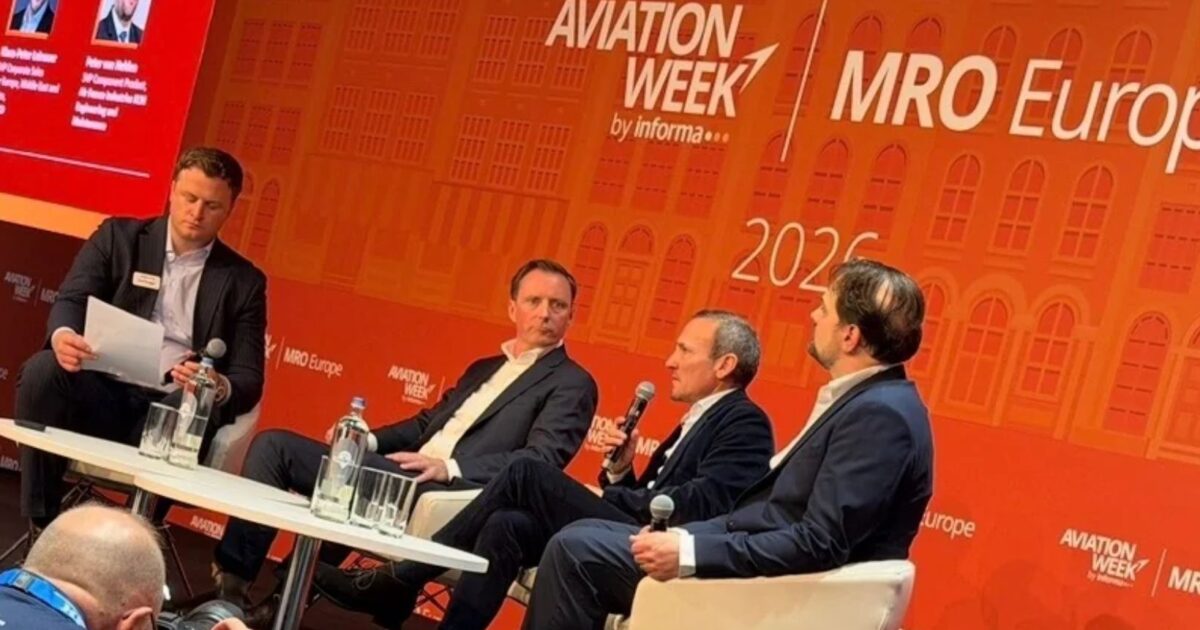
Industry leaders have stressed the need for European maintenance, repair, and overhaul (MRO) providers to bolster local supply chains and technical capabilities, while also maintaining crucial international partnerships. This message emerged during a panel discussion at the MRO Europe 2026 conference in Amsterdam.
The panel, titled “Beyond the Hangar: How MRO is Taking Flight in Europe Toward Strategic Sovereignty,” featured executives from Lufthansa Technik, HAECO, and AFI KLM E&M. They explored how geopolitical uncertainties, trade restrictions, and ongoing capacity pressures are reshaping the MRO landscape.
David Doyle, vice president of corporate strategy at Lufthansa Technik, highlighted the industry’s reliance on global component supply chains, particularly in engine maintenance, which constitutes around half of the MRO market. “MRO is a global business with millions of parts circulating every day,” he noted, cautioning that disruptions to established trade flows could significantly impact operators and maintenance providers.
He pointed out increasing challenges in sourcing particular engine components and called for European manufacturers to enhance their capabilities in response to supply shortages. Additionally, geopolitical developments and customs challenges have led Lufthansa Technik to reevaluate its logistics strategy, including the establishment of dedicated parts pools within the European Union.
Klaus-Peter Leinauer, senior vice president of corporate sales for Europe, the Middle East, and Africa at HAECO, echoed Doyle’s sentiments, identifying tariffs as a considerable hurdle. However, he underscored the aviation industry’s resilience in finding solutions to navigate complex trading conditions.
Peter van Helden, senior vice president of component product at AFI KLM E&M, explained how the company’s international repair network mitigates disruption by positioning capabilities closer to clients, thereby minimizing unnecessary component movements. He emphasized expanding regional capacities and maintaining effective logistics as vital to fulfilling maintenance commitments.
Despite a strong demand for maintenance services, the panel acknowledged ongoing capacity constraints and component shortages affecting the industry’s ability to support airline operations. “Demand is there and we need to make sure the slots are available,” van Helden remarked, describing the current market as a “golden age” for organizations with available spare parts.
Investment in facilities, new technologies, and artificial intelligence are beginning to yield improvements, although Doyle indicated that current supply chain limitations are more pressing than workforce recruitment issues. Lufthansa Technik is focusing on enhancing tooling, technical knowledge, and apprenticeship programs to develop talent while retaining experienced personnel to pass on expertise.
The discussion also addressed how Europe can enhance its competitiveness without jeopardizing crucial international relationships within the MRO sector. Doyle cited Lufthansa Technik’s new facility in Portugal as a prime example of Europe’s strengths, particularly its access to skilled labor and established apprenticeship programs. However, he noted that investment decisions must remain balanced across global markets.
Leinauer stated that quality, safety, and operational efficiency are becoming more significant than cost when determining the establishment of maintenance facilities. Doyle suggested that MRO’s strategic importance should be recognized more by policymakers, noting the lack of a unified representative organization in the sector akin to others in aviation.
Environmental performance is also gaining traction, with the executives agreeing that sustainability is becoming increasingly important to customers and maintenance providers alike. Van Helden advocated for deeper component repairs to extend asset life, presenting the case for sustainability from both environmental and commercial perspectives. Doyle called for greater consistency in sustainability requirements to foster industry-wide progress.
Additionally, the panel discussed the implications of mergers and acquisitions, including Lufthansa Technik’s proposed investment of 44.9% in TAP Air Portugal. Doyle confirmed that the transaction had not yet finalized and emphasized that the minority stake will not grant operational control, necessitating a larger ownership for closer integration.
The session underscored the critical need for European MRO providers to strengthen their capabilities while preserving the global networks and partnerships necessary for effective operation in the aviation industry.
