




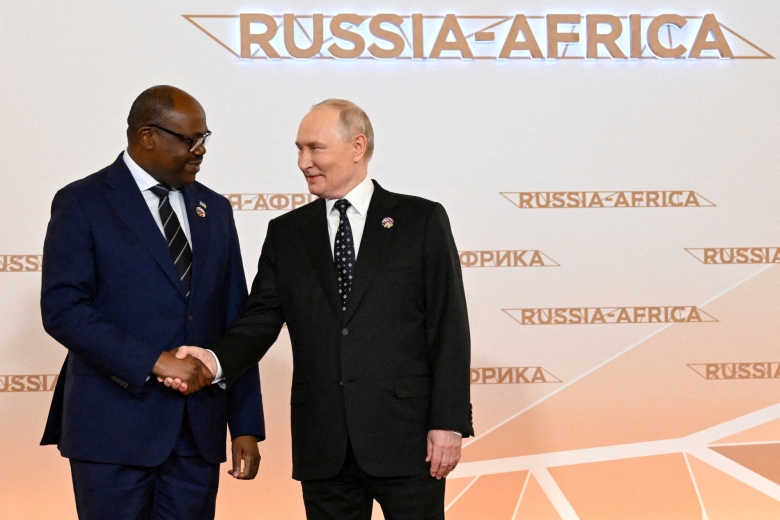
The third Russia-Africa Summit opened this week in Moscow, aiming to strengthen economic ties between Russia and African nations. This summit builds on previous meetings held in Sochi in 2019 and St. Petersburg in 2023, where significant agreements were reached, including 161 contracts totaling $12.5 billion. The Kremlin has announced plans to sign additional intergovernmental agreements and commercial contracts during this event.
Russia’s ambition is to expand its influence in Africa, particularly as African countries seek to diversify their financing sources and technological partnerships. The summit’s agenda includes discussions on trade, investment, nuclear energy, payment systems, food security, and digital technology.
According to Russian data, trade with African nations reached approximately $27 billion in 2025, accounting for nearly 4% of Russia’s total foreign trade. The total foreign trade value stood at $697.3 billion, with exports to Africa valued at $22.7 billion and imports from the continent at $4.4 billion. The Russian government is focused on increasing exports of grain, fertilizers, and energy products to meet the growing demand for expertise in nuclear power and infrastructure development in Africa.
Russian Foreign Minister Sergei Lavrov noted that 84% of Russia-Africa trade settlements in the first ten months of 2025 were conducted in roubles. However, the move to enhance these currency mechanisms is hindered by challenges such as limited banking infrastructure, potential secondary sanctions, and currency convertibility issues.
Food security is a top priority for many African states, and Russian agricultural exports, which were valued at $7 billion in 2024—an increase of 19% from 2023—play a significant role. Russian companies are looking to partner with African nations to establish local storage and processing facilities and expand fertilizer production.
Cooperation in the energy sector is also a central focus of the summit. Projects include Egypt’s El Dabaa nuclear power plant, which is backed by a $25 billion Russian loan. Additional nuclear initiatives are being developed in Ethiopia, Niger, and Rwanda, including the establishment of nuclear science facilities and solar power projects in Mali.
For African countries, the economic benefits of these partnerships hinge on expanding productive capacity, reducing energy costs, and generating employment. Collaboration that fosters local processing, manufacturing, and skill development is considered vital for enhancing domestic revenues and stabilizing supply chains.
