




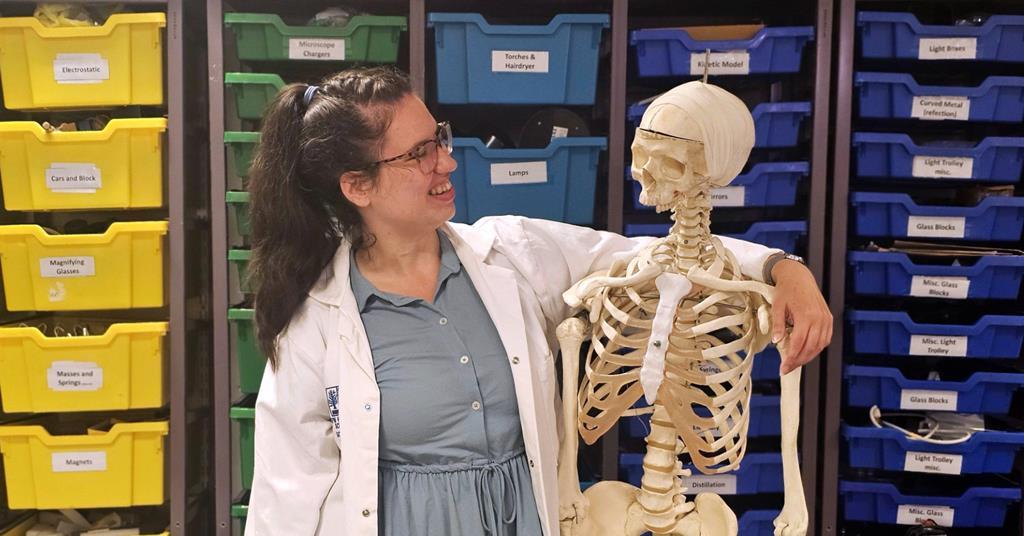
Rebecca Watkins serves as the science technician at Cefn Hengoed Community School in Swansea, drawing from her previous experience as a science teacher to enhance her current role. With an understanding of the intricate demands involved in science instruction, she knows that effective technical support is crucial for successful practical work in the classroom.
Watkins enjoys devising new experiments and encourages her department to explore her innovative ideas. Recently, she revived forgotten resources, creating a project dubbed “Rebecca’s Rockin’ Rocks,” inspired by mineral rocks she unearthed in an old cupboard. This project included a circus-themed task aimed at enriching students’ understanding of mining.
In addition to her in-class contributions, Watkins leads a weekly STEM club where students guide the activities. She ensures the materials box is well-stocked, allowing students to engage in creative projects with recycled and reused items.
A passionate reader, Watkins favors a variety of genres, notably science fiction and fantasy. Her bookshelf includes titles like Jurassic Park and The Meg, reflecting her interest in science. She participates in a departmental book club where colleagues share recommendations and read selections together, often featuring fantastical themes.
She recalls a memorable moment when a student affectionately referred to her as the “science ninja,” citing her ability to discreetly manage classroom needs. Regarding her role, Watkins feels dependent on her live online booking sheet, which organizes teacher requests for practicals, ensuring effective communication within the lab. If budget constraints were eased, she would prioritize fume hoods for each lab, as their absence limits the range of exhibition science that could inspire students, particularly those aged 11 to 14.
Outside of her professional duties, Watkins enjoys unwinding with a good book and her cat, valuing quiet evenings to offset the busy school environment. She advises fellow technicians to regularly audit their resources, which helps maintain organization and revitalize forgotten materials. In regards to teachers, she stresses the importance of early booking to facilitate smoother lab operations.
Watkins admires Sir David Attenborough, recognizing the profound influence he has had on her approach to science education. She fondly remembers her childhood experiences of eagerly watching his documentaries, which transported her to fascinating worlds.
In a collaborative spirit, she looks forward to supporting her fellow educators and technicians in their ongoing efforts to enhance science education. There is an invitation for suggestions on future interviews, signaling continued engagement within the educational community.
