




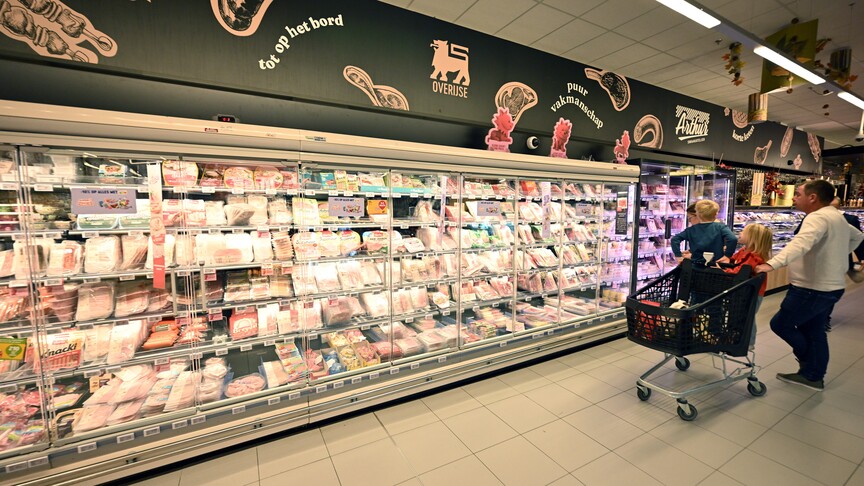
Suspected cyberattacks on refrigeration systems have disrupted food businesses across several European countries, with incidents emerging from Germany, Greece, and Italy on Tuesday after similar reports surfaced in eight other nations the previous day. Hackers are believed to have manipulated temperature controls, leading to significant food losses.
In Germany, hackers switched refrigeration systems from cooling to heating at supermarkets in North Rhine-Westphalia and Bavaria overnight, according to broadcaster Tagesschau. A regional manager at the Workers’ Welfare Association, which operates CAP supermarkets, confirmed to the German Press Agency that one attack resulted in large quantities of food being discarded. The attack reportedly targeted the company responsible for remotely maintaining the refrigeration systems. Additionally, police in Lower Bavaria are investigating an incident at an Edeka store in Reisbach, focusing on suspicions of data manipulation and espionage.
In Greece, a butcher shop located in Athens’ Kifisia district reported that hackers accessed its refrigeration control system, setting the temperature to 150°C (302°F), as detailed by local daily Capital. The shop owner, Giorgos Boumpas, stated that they were unable to intervene manually due to the system lockdown and that a technician took two hours to restore control. Boumpas noted that similar attacks had been reported at two nearby businesses, prompting the shop to disable its Wi-Fi connection as a precaution.
Italian authorities announced an investigation into supermarket refrigeration disruptions that resulted in food spoilage. Conad, one of the country’s largest supermarket chains, confirmed that five of its stores, including two in Veneto and three in Sicily, were affected. The company deployed technical teams to limit the losses. Following discussions with intelligence officials and the National Cybersecurity Agency, the Italian government indicated that the overall impact was limited, although it noted that some stores were still using outdated equipment with vulnerabilities. Italy’s Postal Police have also opened an investigation.
Earlier Disruptions Across Europe
The incidents reported on Monday impacted businesses in Sweden, Belgium, Estonia, Luxembourg, the Netherlands, Ireland, and Denmark. In Sweden, several ICA stores and six Coop outlets were affected, with one manager at an ICA store in Öland discovering a freezer temperature reading of 55°C (131°F) and water covering the floor. ICA clarified that the affected connections were outside its central network, while Coop confirmed that unauthorized manipulations had occurred. Belgian supermarkets, including Delhaize, Carrefour, and Spar, also reported disruptions, prompting prosecutors to initiate a criminal investigation. Installer Sabcobel noted that the attackers remotely switched evaporators to defrost mode, with one shopkeeper estimating food losses of at least €60,000 (over $67,000).
Carrefour confirmed that 15 of its stores were targeted, and IKEA reported an incident at its Mons location. Other retailers, including Colruyt and Intermarché, faced refrigeration issues without confirming cyberattacks. In Ireland, 13 SuperValu stores were affected by a suspected cyberattack, though parent company Musgrave later stated that all stores resumed normal operations. A Danish food producer was also targeted, with its supplier reportedly halting the attack.
In the Netherlands, at least 17 businesses were affected, with Danfoss indicating that systems used default passwords and were not secure. Several stores operated by Kesko in Finland reported irregularities, while a Selver supermarket in Estonia experienced similar tampering with its refrigeration controls. The UK meat processing industry has also faced cyberattacks, according to security officials.
EU Agriculture and Food Commissioner Christophe Hansen described the attacks as a deliberate effort to disrupt European food security, although he reassured that food safety was not at risk and called for coordinated efforts to bolster supply chain resilience.
