




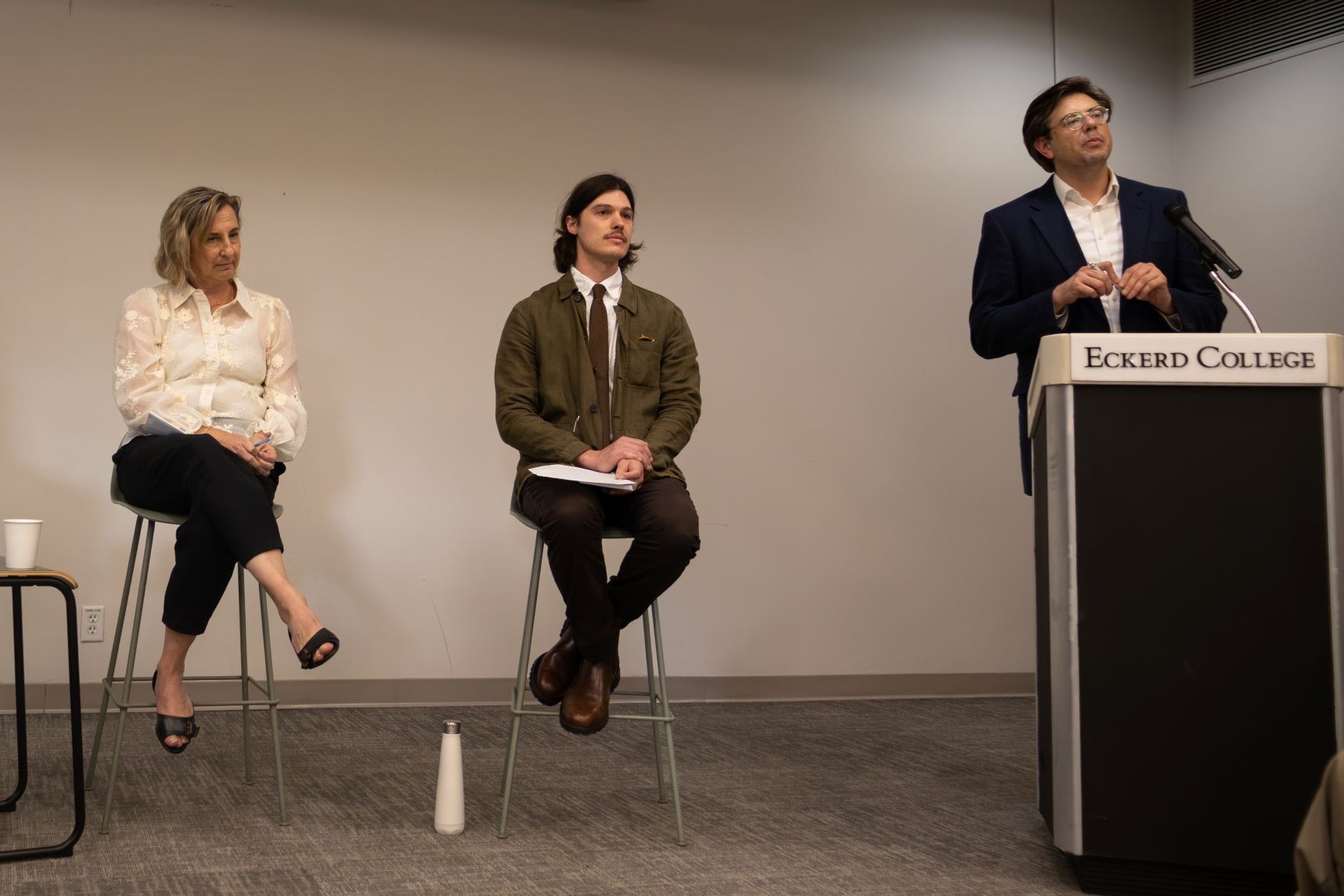
Scholars from Northwestern University and Washington University engaged in a thought-provoking discussion on the intersections of religion, politics, and public life. The conversation highlighted the nuanced ways in which religious beliefs permeate various aspects of American culture.
Lexi, a participant in the dialogue, emphasized the importance of reevaluating the conventional definitions of religion. “If we can discern these tiny bits of religion in everyday American culture, what will that tell us about America?” she asked, underscoring her interest in uncovering hidden connections between religion and culture.
Jasmine, an anthropology major, shared her perspective on the complexity of understanding religion. She noted, “We like to say that religion and government are separate, but they are so intertwined.” This insight reflects a broader theme in the discussion regarding the influence of religious ideologies on political structures and societal norms.
Facilitator McCrary encouraged the students to adopt new questions and perspectives to examine the religious ideas that shape political discourse. He pointed out that these ideas are evident across the political spectrum, ranging from Christian nationalists on the right to progressive seminarian candidates aiming to influence Texas’ political landscape.
“If you don’t really know what you’re looking for, you’ll miss it. And I would like people to start looking for it and stop missing it,” McCrary stated, reinforcing the necessity of awareness in recognizing the subtle but significant role of religion in public life.
The ongoing discussions at the universities suggest a growing interest in the implications of religious beliefs in contemporary politics. Future dialogues are anticipated as students and faculty continue to explore these pivotal relationships.
