




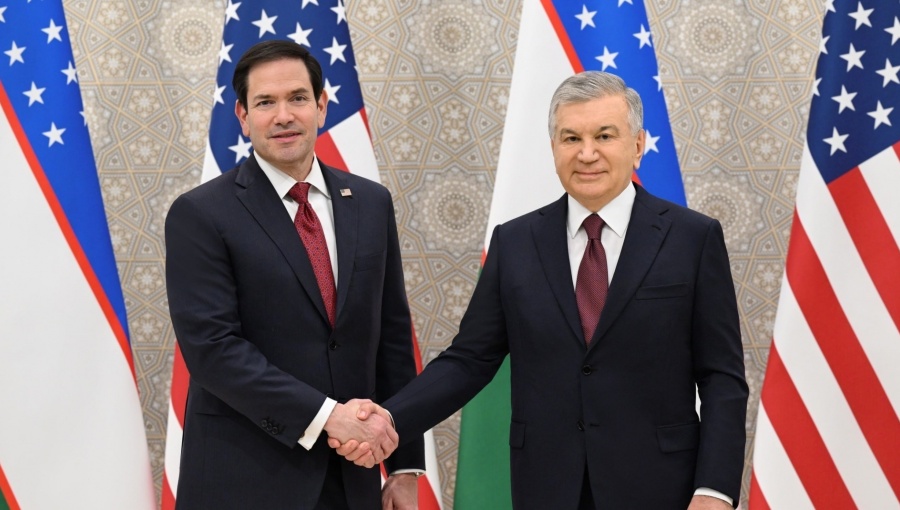
US Secretary of State Marco Rubio’s recent visit to Uzbekistan and participation in the C5+1 ministerial in Samarkand have highlighted Central Asia’s ongoing efforts to secure Western investment. However, the impact of these investments is closely tied to financial structuring, commercial agreements, and the execution of specific projects, rather than solely the origin of the investors.
A review of various commercial engagements in Kazakhstan, Uzbekistan, Kyrgyzstan, and Tajikistan suggests that expanding the pool of international investors can enhance a nation’s negotiating leverage in investment discussions. Efforts by the EU and the US show differing approaches to commercial involvement in the region. While the EU is a key importer of Kazakhstan’s energy-based exports, trade with the US is comparatively smaller. However, this trade metric does not fully represent the depth of US corporate investment or technological partnerships.
Foreign Direct Investment (FDI) flows can vary significantly, reflecting distinct project timelines and economic realities. For example, both Uzbekistan and Kyrgyzstan saw greater net inflows in 2025 compared to 2024, while Tajikistan’s inflows decreased. Conversely, Kazakhstan reported negative FDI figures last year. This variation indicates that regional diplomatic and economic advances should not be interpreted as a uniform surge in investment activity.
Renewable energy projects are gaining prominence in the region, particularly in Uzbekistan where companies like ACWA, Masdar, and Voltalia are successfully running wind and solar plants. These initiatives not only increase electricity generation but also support broader economic activities.
A closer examination reveals a diversity of project stages across the Central Asian economies. Of twelve reviewed investments, only four — including solar and wind projects in Uzbekistan — are currently operational. Others are either in construction or in preliminary agreement stages. This complexity underscores the necessity of assessing the actual economic impact rather than simply project size or potential investment announcements.
For instance, financing dynamics play a crucial role in project viability. The Cove project has announced potential financing of $1.6 billion, while Mirny has already secured $930 million in agreements. Initial impressions might suggest Cove’s larger ambition, but committed funding is essential for true impact. Investment effectiveness hinges on actual financial commitments and the realization of economic benefits.
Moreover, the terms of commercial agreements can shift economic control in favor of host nations even with decreased ownership shares. An example is the Nurlikum uranium project in Uzbekistan, which allows local partners to dictate production shares despite lower equity stakes. Various roles in foreign investment projects typically see stakeholders from multiple countries collaborating, showcasing the intricacies of international finance in the region.
As Central Asian nations navigate these investments, considerations extend to regional projects like Kambarata-1 in Kyrgyzstan and Rogun in Tajikistan. Both projects face challenges from financing to operational coordination among neighboring countries. Successful realization depends on completion and effective management of resources and economic returns.
Overall, this evolving landscape reflects that a robust competitive environment drawing in Western investments may assist Central Asian states in renegotiating terms beneficially, without inherently suggesting a superiority of Western over Chinese or Russian investments. The capacity for effective negotiation remains a significant advantage in attracting more diverse investment opportunities.
Ivan Tchakarov is a partner for the Caucasus and Central Asia at GlobalSource Partners.
