




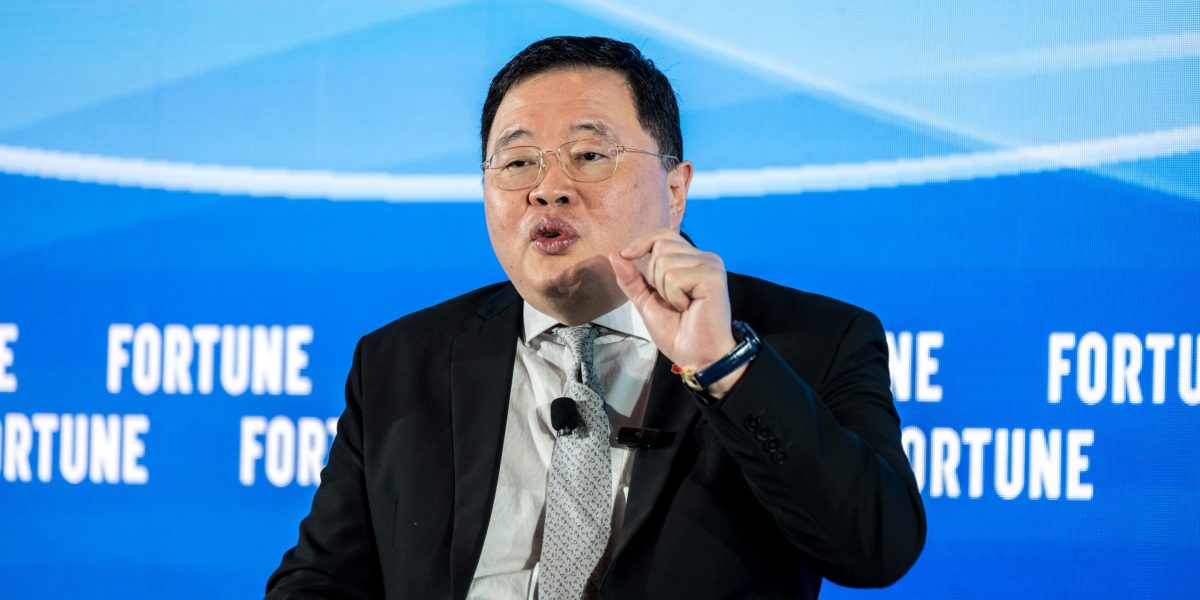
Thammasak Sethaudom, president and CEO of Siam Cement Group (SCG), has acknowledged that overcapacity in China is an ongoing challenge for manufacturers in Southeast Asia. Speaking at the Fortune Southeast Asia 500 Summit in Ho Chi Minh City on November 3, he emphasized the need for regional producers to scale their operations to remain competitive.
“If you look at the current situation, we are facing overcapacity from mainland China,” Thammasak said, highlighting the influx of competitively priced products from China affecting the market dynamics in Southeast Asia. He stated, “To SCG, this is a fact of life, and we have to adjust.” Overcapacity situations arise when factories produce more goods than the market demands. In the petrochemical sector, China’s rapid production growth has significantly impacted producers in other countries, creating a competitive squeeze.
Industry research firm ICIS reported that China’s exports of polypropylene, a key plastic material, are set to rise from 1.3 million tonnes in 2022 to an estimated 3.1 million tonnes by 2025. Analysts predict if current trends continue, exports could hit about 5.1 million tonnes in 2026. Thammasak noted that no individual Southeast Asian market is large enough to absorb this surplus. “The scale that produces only for Vietnam may not be enough,” he said. “You need to build the scale that produces for the whole ASEAN.”
To address the challenges posed by overcapacity, SCG has begun replacing old smaller factories with larger facilities, such as a new ceramic plant in Vietnam, which he described as “much bigger than the one in the past.”
In a bid to strengthen its position, SCG Chemicals announced on October 28 a proposal to merge its olefins and polyolefins business with PTT Global Chemical, Thailand’s largest petrochemical company. This deal, which values the combined entities at approximately 187 billion Thai baht ($5.5 billion), is expected to be voted on by shareholders on December 3. Thammasak acknowledged that the global olefins and polyolefins industry is becoming increasingly competitive, which is placing pressure on profit margins and operating rates.
During the summit, Thammasak debunked the notion that automation in manufacturing is solely aimed at reducing labor costs. He argued that automation’s primary advantage lies in improving product quality, citing the precision of robotic systems compared to human labor.
‘Out of the middle income trap’
Panelists at the summit expressed optimism about Southeast Asia’s potential to move up the value chain. Salil Chari, regional president for Asia-Pacific at FedEx, shared insights from a recent visit to a customer in Vietnam, highlighting a shift from traditional industrial goods to advanced products like fiber-optic cables for data centers. FedEx currently operates 42 flights in and out of Vietnam, driven largely by demand from small and medium-sized enterprises.
Liher Urbizu, president and managing director of SAP Southeast Asia, discussed the importance of research spending in aiding Southeast Asia’s economic ascent. He pointed out that while countries like South Korea invest about 5% of their GDP in research and development, the rest of ASEAN generally invests 1% or lower. SAP is expanding its R&D presence in Southeast Asia, including a Ho Chi Minh City lab that employs 500 developers working globally.
As AI adoption accelerates among Southeast Asian SMEs, Urbizu noted that the belief in AI’s ability to drive business results is growing year by year. In this competitive landscape, Thammasak emphasized that SCG cannot match China’s R&D funding, underscoring the necessity of strategic investment. “We need to be smart,” he stated.
