




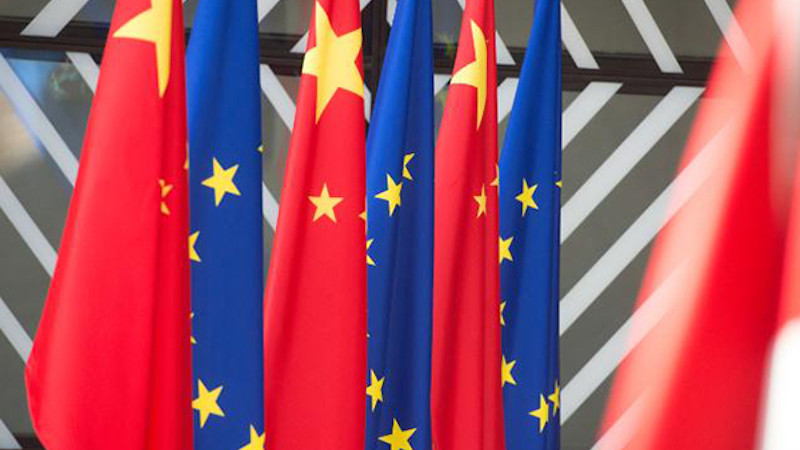
Trade relations between China and Europe continue to face significant challenges, including ongoing frictions over trade imbalances, subsidies, and market access. Recent discussions have led to limited outcomes, such as China’s announcement to cut the export value-added tax rebate for new energy vehicles from 13% to 9%, effective April 1, 2027.
Experts suggest that achieving a durable balance in trade requires revised World Trade Organization (WTO) rules addressing digital and green trade, as well as increased two-way investment and cooperation on third-country markets and climate technologies. Concerns have been raised that domestic pressures in Europe related to rising living costs could lead to politicized trade disputes, with a warning that such tensions might spark a new trade war.
During the Two Sessions in March, Chinese Foreign Minister Wang Yi emphasized the complementary nature of China-Europe relations, noting that a dynamic balance is achievable. On June 29, a trade and investment consultation meeting was held in Brussels, co-chaired by Chinese Minister of Commerce Wang Wentao and European Trade Commissioner Maroš Šefčovič. Both parties expressed a commitment to managing bilateral challenges through constructive dialogue.
As high-level discussions continue, recent meetings in Beijing have yielded agreements on hybrid and electric vehicle trade issues. However, deeper issues such as trade imbalances and industrial subsidies remain unresolved, posing a challenge to both economies. In his recent speech at Peking University, German President Frank-Walter Steinmeier stressed the importance of mutual benefit in their economic relationship, stating, “A win-win must not turn into a win-lose.”
The geopolitical landscape is shifting, and effective policy decisions require careful consideration of their impact on both EU interests and China’s realities. Moving forward, both sides are encouraged to prioritize dialogue and seek manageable commitments that could pave the way for broader cooperation.
Addressing the widening trade imbalance is crucial, as it has become a significant barrier in the relationship. German leaders, including President Steinmeier, took the opportunity during recent visits to gain insight into China’s evolving business environment. The persistent public dissatisfaction in Europe, exacerbated by issues such as rising unemployment and living costs, places additional pressure on policymakers as they engage in negotiations with China.
In conclusion, experts advocate for a balanced approach in China-Europe relations that emphasizes economic cooperation and strategic alignment. Continued dialogue and collaboration on both sides are seen as essential for navigating the complexities of current global trade challenges.
