




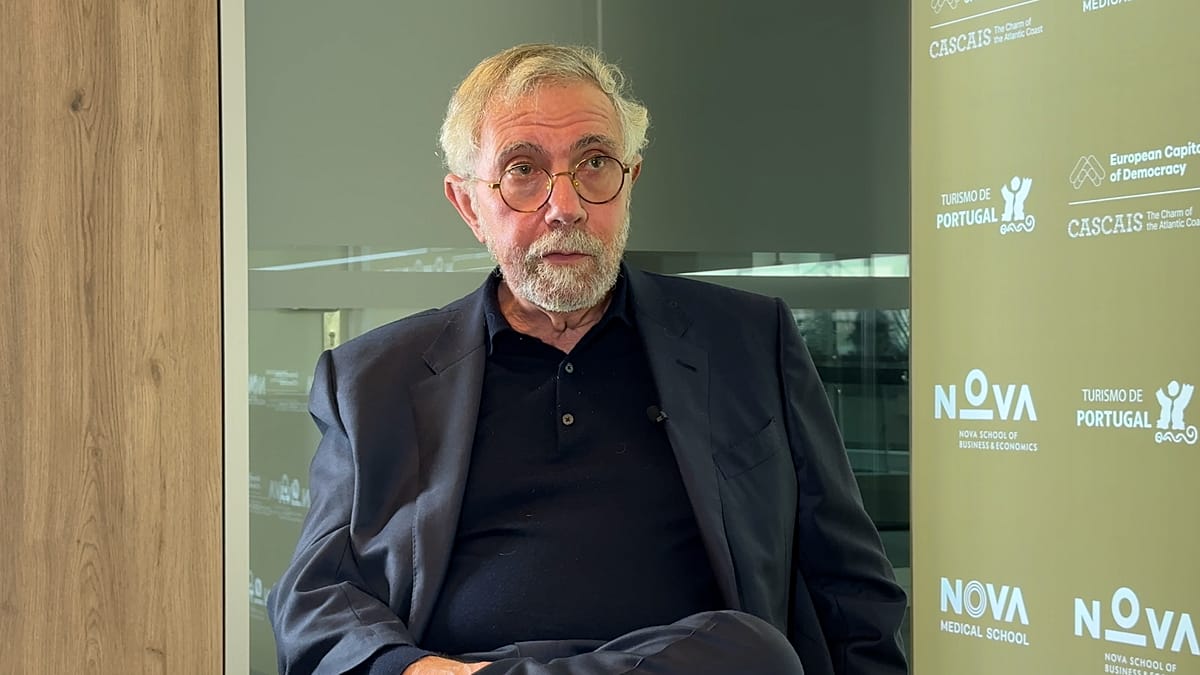
Paul Krugman, the Nobel laureate economist, has come out in favor of implementing temporary rent caps across Europe to tackle rampant housing speculation amid rising living costs. His support comes as social unrest has surged in multiple countries, fueled by escalating housing expenses that have disproportionately affected younger citizens.
Protests have erupted from Albania to Spain, as many young people express frustration over soaring rent prices. In Rome, for instance, the cost of renting a single room has reached €1,200, according to a 21-year-old university student quoted by AFP during a recent demonstration.
Despite the right to housing being recognized in the Universal Declaration of Human Rights, the European Commission only introduced a legislative proposal to address housing issues last September. Krugman stated that the situation is not limited to Europe and advocated for rent caps as a short-term solution to curb speculation. He emphasized that the key to resolving the crisis lies in increasing housing supply and reducing regulatory barriers to construction.
Krugman noted that in areas where building regulations are relaxed, property prices have declined significantly. He described the current housing market as “impossible” for many, suggesting that second-generation rent stabilization models could provide immediate relief. He pointed to New York City’s approach, where rent stabilization initiatives coexist with incentives for developers to build more housing units.
The economist highlighted that New York’s program limits annual rent increases and provides tax exemptions lasting up to 40 years for developers who agree to maintain rent regulation on a portion of new units. Similarly, the rent-control model in Berlin caps rent increases for new leases at 10% above the local average, exempting homes first rented after October 2014.
Although Krugman acknowledges that such schemes aren’t perfect, he believes they are necessary in the short term and can quickly yield benefits. He suggested that they could be utilized for just a few years while addressing the urgent need for new construction in European cities.
As these rental challenges persist, the European Students’ Union has raised concerns that escalating housing costs could exclude many young individuals from pursuing higher education. Currently, students living independently spend nearly 40% of their income on housing, according to the European University Association.
In addition to the housing crisis, Krugman warned of broader economic vulnerabilities in Europe, particularly regarding France’s public debt, which stands at 119% of its GDP. He cautioned that should France face financial difficulties, it could have catastrophic implications for the entire eurozone, considering France’s status as the second-largest economy in Europe.
As Europe grapples with these intertwined issues of housing affordability and economic stability, officials will need to navigate careful solutions to address both immediate and long-term challenges in the region.
