




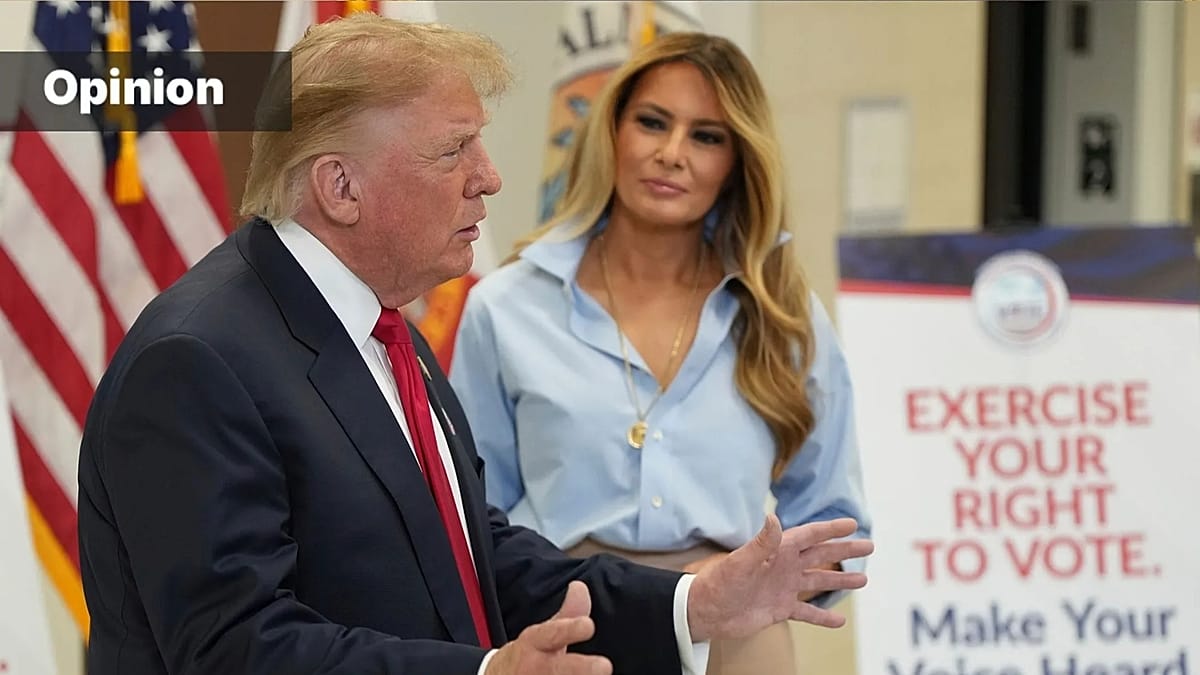
Following the midterm elections, Donald Trump’s diminished influence within U.S. domestic politics may lead him to assert greater power in foreign, trade, and security policies. With Congress likely to swing toward Democratic control, analysts suggest Trump may leverage international issues to showcase his leadership, particularly as he faces increased limitations at home.
The midterm elections reveal a clear shift toward the Democrats, with significant implications for Trump’s second term. Despite the setbacks for his party, Trump’s defeat does not necessarily mean he will be politically immobilized. Instead, it may embolden him to pursue more aggressive foreign policy strategies as a response to domestic opposition.
Congressional Dynamics and Foreign Policy
A Democratic majority in Congress could hinder Trump’s legislative agenda, as it allows for blocking legislation, influencing budget allocations, and initiating investigations. This shift signals the end of unimpeded Republican governance, which may prompt Trump to seek more visible accomplishments abroad.
The U.S. system’s checks and balances often constrain a president more in domestic matters than in foreign affairs, potentially incentivizing Trump to assert dominance on the global stage. Analysts warn that while this does not guarantee a new military conflict, it could lead to heightened international posturing as he compensates for his reduced power at home.
Economic Leverage and Trade Policies
Trump’s approach to economic policy traditionally emphasizes tariffs as tools for political leverage rather than simple economic measures. Europe has already experienced this dynamic following trade agreements that impose significant tariffs on various imports. For example, Trump increased tariffs on vehicles and linked them to production incentives in the United States.
Such policies indicate that Trump’s strategy could pressure European companies to relocate investments to the U.S., reinforcing his narrative of trade toughness to demonstrate his capability to act decisively in the face of domestic challenges.
Geopolitical Strategies: NATO and Ukraine
Europe faces additional risks regarding U.S. involvement in NATO and its support for Ukraine. Trump has questioned America’s commitment to NATO and may leverage this relationship to impose terms that reflect a transactional view of alliances. Such a perspective contrasts sharply with the European approach, which emphasizes shared values and security commitments.
The ongoing conflict in Iran also presents a potential flashpoint. With no resolution in sight six months after the outbreak of hostilities, Trump’s emboldened foreign policy could exacerbate tensions, impacting global energy prices and prompting further instability in Europe.
Preparing for Future Challenges
The political landscape is evolving as the Republican Party prepares for future elections, with figures like Vice President JD Vance and Secretary of State Marco Rubio emerging as potential contenders for the 2028 presidential race. Their differing approaches reflect the party’s internal debates regarding foreign policy and its relationship with Europe.
In this environment, European nations must recalibrate their strategies. Rather than counting on a weakened Trump, they should prepare for a more assertive U.S. presence on the world stage. This may involve enhancing economic resilience against U.S. tariffs, fostering military autonomy within NATO, and collaborating to counteract divisions that could be exploited by the U.S. administration.
The previous electoral outcome serves as a reminder for Europe that stability in U.S. politics does not equate to reduced engagement on the global front. As the continent navigates this complex terrain, it must seek unity and robustness in facing the challenges that lie ahead.
