




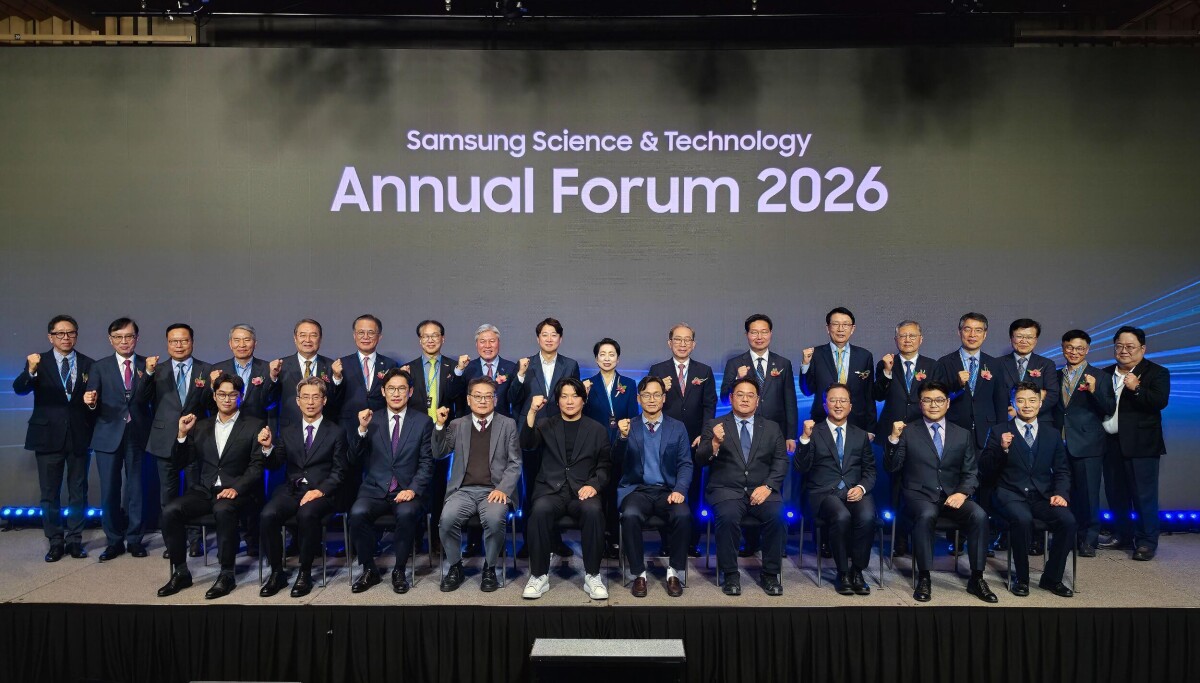
Samsung Electronics honored ten exceptional researchers in basic science, materials, and information and communication technology (ICT) at its annual Future Technology Development Program forum held on November 5 at the Westin Seoul Parnas in Gangnam District, Seoul. This marks the first time the company has recognized individual researchers since the initiative’s launch in 2014.
The honorees were selected from a pool of 644 research projects supported by Samsung’s flagship corporate social responsibility program, which funds ambitious scientific endeavors aimed at advancing technology and contributing to sustainable development. A panel of academic experts evaluated the candidates over four months, considering the quality, impact, scalability, and growth potential of their research.
The recipients of the honors in basic science include:
- Oh Sung-jin, Professor at the University of California, Berkeley, and the Korea Institute for Advanced Study, recognized for his work in mathematics;
- Lee Hyun-woo from Postech, noted for his research in physics;
- Park Jung-won of Seoul National University, honored for his contributions to chemistry;
- Chung Won-suk of KAIST, acknowledged for his work in life sciences.
In the materials and ICT categories, the selected researchers are:
- Kim Bong-soo of Unist, recognized for his work in electronic materials;
- Yoo Chang-sik from Sungkyunkwan University, esteemed for his research in electronic devices;
- Choi Jang-wook of Seoul National University, honored for his contributions to energy and environment;
- Yoo Hong-ki of KAIST, recognized in the field of biomedicine;
- Kim Jang-woo from Seoul National University, noted for his work in communications and computing;
- Hwang Sung-ju of KAIST, acknowledged for his research in AI robotics.
Kuk Yang, chairman of the Samsung Science and Technology Foundation, emphasized the significance of supporting creative research. “Over the past 14 years, the accumulated efforts of researchers pursuing creative and ambitious ideas have yielded meaningful achievements that are helping propel Korean science and technology forward,” he stated. He also affirmed the foundation’s commitment to providing ongoing support for researchers exploring new possibilities.
Since its inception, the Future Technology Development Program has allocated 1.2 trillion won (approximately $894 million) to 916 projects, aiding close to 17,000 researchers, including professors, postdoctoral fellows, and graduate students. In addition to research funding, Samsung provides expert mentoring and assistance in commercializing promising technologies, leading to the establishment of startups like Proteina, an AI-powered antibody drug discovery platform, and MangoBoost, an AI infrastructure company focused on optimizing data management in AI data centers.
