




Engaging Science Experiments for Young Learners
Parents and educators looking for interactive ways to introduce children to science can utilize two simple experiments: balloon transportation and popsicle stick catapults. Both activities offer hands-on learning opportunities to explore basic physics principles.
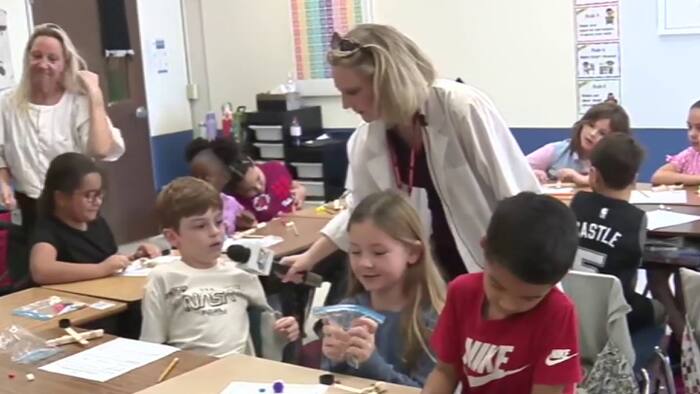
These experiments are featured on GMSA@9, where Meteorologist Sarah Spivey demonstrates the science behind them. The experiments can be completed with easily accessible materials.
Required Materials
For the Popsicle Stick Catapult:
- 10 jumbo popsicle sticks
- Rubber bands
- A plastic bottle cap
- Glue dots
- Various soft items for launching, such as pom poms, cotton balls, mini marshmallows, or pencil topper erasers
For the Balloon-Straw Transportation:
- A balloon
- Double-sided tape
- Ribbon
- Two chairs
Balloons and Straws: A Simple Transportation Method
Instructions:
- Thread a straw with a long piece of string.
- Use tape to secure the string between two chairs.
- Blow up a balloon without tying it off.
- Tape the balloon to the straw with double-sided tape and release it to see it travel along the string.
Constructing the Popsicle Stick Catapult
Instructions:
- Cut notches into two of the popsicle sticks.
- Stack the remaining eight popsicle sticks together and secure them with rubber bands on both sides.
- Insert one notched stick through the bottom and place the other notched stick on top, binding them together.
- Attach the bottle cap to the top of the catapult using a glue dot. Optionally, secure additional rubber bands for reinforcement.
- Launch the soft items to observe which ones fly the farthest.
These activities not only help to reinforce lessons about simple machines but also encourage creativity and experimentation. For schools interested in having Sarah Spivey demonstrate these experiments, more information is available online.
