




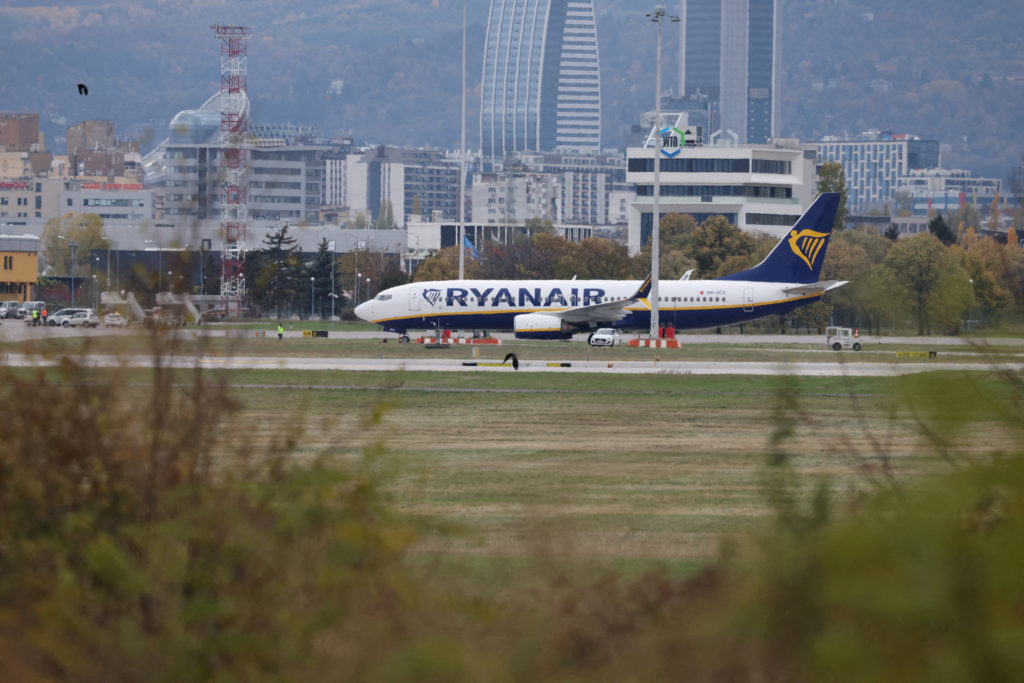
LONDON — In recent days, several flights across Europe have been diverted or escorted by military forces due to a series of bomb threats that officials classified as malicious hoaxes. The exact source of these threats remains unknown, coinciding with rising tensions involving Russia and suspicions of hybrid attacks in Europe.
Threat Assessment Protocols
When bomb threats are received, they are first assessed for credibility, according to Joji Waites, director of flight safety, policy, and regulation for the British Airline Pilots’ Association. If a threat is determined to be credible, the flight crew is immediately informed, and the captain is responsible for making decisions guided by a specific safety checklist. Evacuations are mandated if the aircraft is on the ground, while in-flight situations prioritize safe landings as soon as possible.
“Pilots are highly trained professionals, and their expertise is crucial in ensuring passenger safety,” Waites stated.
Airlines, airport operators, and law enforcement agencies generally adhere to guidelines set by the European Union Aviation Safety Agency and the International Civil Aviation Organization, which conducts audits to enforce compliance. Flight crews undergo training that includes live exercises to prepare for various threats, including the detection of explosives.
Financial Implications of Diversions
According to aviation security expert Philip Baum, when threats are called in, staff are instructed to keep the caller on the line and gather essential information. This week, many threats were relayed via email, prompting authorities to mandate inspections of affected aircraft. Baum noted that diversions due to threats or unruly passengers can cost airlines up to $250,000. However, disruptions from the recent threats may incur lower costs, as many dealt with short-haul flights less likely to require overnight delays.
Impacts on Security and Coordination
Jacob Funk Kirkegaard, a senior fellow at the Bruegel think tank in Brussels, remarked that the intent behind these threats seems aimed at creating chaos and uncertainty regarding air traffic reliability across Europe. He suggested that the actions may also serve to evaluate the response times and coordination among different nations’ authorities, potentially exposing vulnerabilities for future threats. “Do the authorities in Poland respond as quickly and with the same urgency as those in Italy?” Kirkegaard questioned, likening the situation to a stress test of the security systems in place.
