




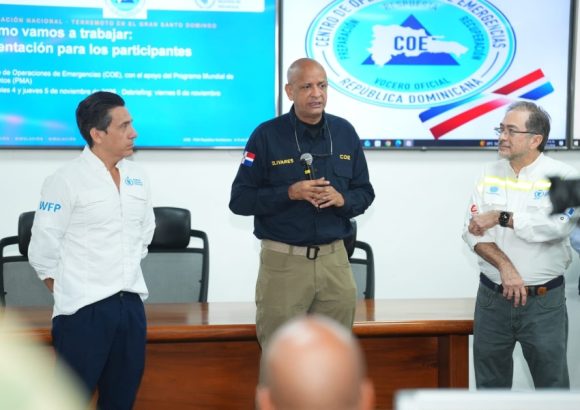
Santo Domingo. The Emergency Operations Center (COE), in collaboration with the United Nations World Food Programme (WFP), conducted a simulation exercise on Thursday aimed at improving the Dominican Republic’s preparedness for earthquakes. This drill centered around a significant earthquake impacting Greater Santo Domingo and involved various institutions that form part of the National Response System.
The exercise assessed key procedures outlined in the National Earthquake Contingency Plan, focusing on critical areas such as activation, coordination, communication, resource mobilization, information sharing, and decision-making capabilities during emergencies.
COE director Colonel Erdwin Olivares Luciano emphasized that a successful disaster response relies on proactive measures including thorough planning, regular training, and effective collaboration among institutions prior to any emergency. “Effective disaster response begins long before an emergency occurs,” he noted.
During the simulation, participants identified both strengths and areas needing improvement, validating existing response protocols and evaluating the institutions’ teamwork under a large-scale disaster scenario.
According to Alex Robayo, the WFP representative in the Dominican Republic, such simulation exercises are vital for enhancing emergency preparedness. They enable authorities to assess their capabilities, affirm protocols, and refine coordination efforts before a real emergency arises.
Technical support for the exercise came from the WFP and funding was provided by the United States Government through the Resilient Basin project, which aims to bolster disaster preparedness and mitigate impacts on vulnerable communities. The COE plans to utilize the findings from this simulation to enhance response protocols, refine coordination mechanisms, and bolster the operational readiness of emergency response institutions in the country.
