




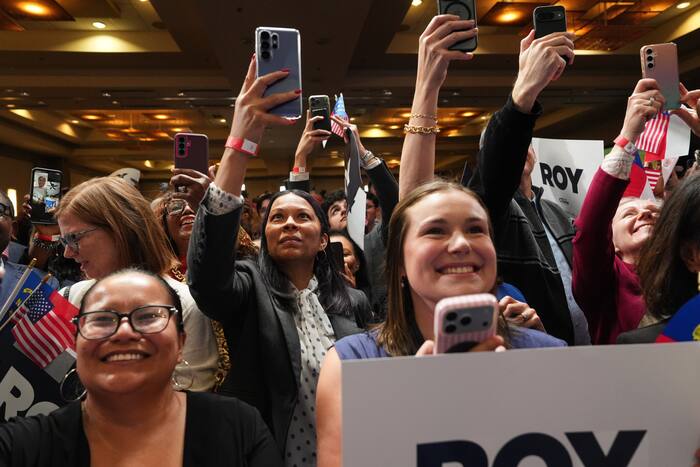
WASHINGTON – A significant trend emerged during the recent midterm elections, with young voters overwhelmingly supporting Democratic candidates. Many of these voters, previously indifferent or skeptical about politics, participated due to dissatisfaction with the economy and foreign policy under President Donald Trump.
Andy Soma, 24, a North Carolina State University Ph.D. student in mathematics, remarked that he felt compelled to vote for the first time this year, citing disappointment with economic conditions and Trump’s conflicts abroad as motivating factors. Soma cast his ballot for Democratic candidate Roy Cooper, reflecting a broader shift among voters under 30 who leaned significantly left in major Senate races.
According to the AP Voter Poll, which surveyed over 100,000 midterm voters, approximately three-quarters of those under 30 supported their local Democratic candidate, while around one-quarter voted Republican. This marked an increase in support for Democrats compared to both the 2018 midterms and the 2024 presidential election, where young voters were nearly evenly divided between Trump and his Democratic challenger, Kamala Harris.
Corey Herzog, 28, from Celina, Ohio, shared his struggles of working multiple jobs to stay afloat, which influenced his decision to align with Democratic candidates. “I’m trying to save money and buy a house, but it’s difficult right now,” he said.
Polling expert John Della Volpe noted that the fluctuation in young voters’ support indicates they do not firmly belong to one party. “They’re up for grabs,” he stated, indicating that issues like the economy could greatly influence their voting behavior in the future.
Young voters’ discontent with Trump’s presidency appeared prominent, with only about one-quarter expressing confidence in his leadership, down significantly from the previous election, when nearly half viewed him favorably. Many voters under 30 expressed anger towards the current administration, particularly regarding the cost of living and public opinion on military interventions.
Statements from youth political groups highlighted this dissatisfaction, pointing fingers at the Trump administration for failing to meet the expectations of young Republicans. The College Republican Patriot Coalition stated that the recent election results represented one of the most significant Republican defeats since 1974, attributing the loss to Trump’s policies.
While the recent election brought hope to left-leaning young voters, experts caution that this support is tenuous. Dakota Hall of the Alliance for Youth Action warned that if Congress does not address pressing issues such as living costs and regulation of artificial intelligence, young voters might veer back toward conservative candidates in future elections. “If you do not deliver, ’28 will be a rough road ahead,” Hall noted.
