




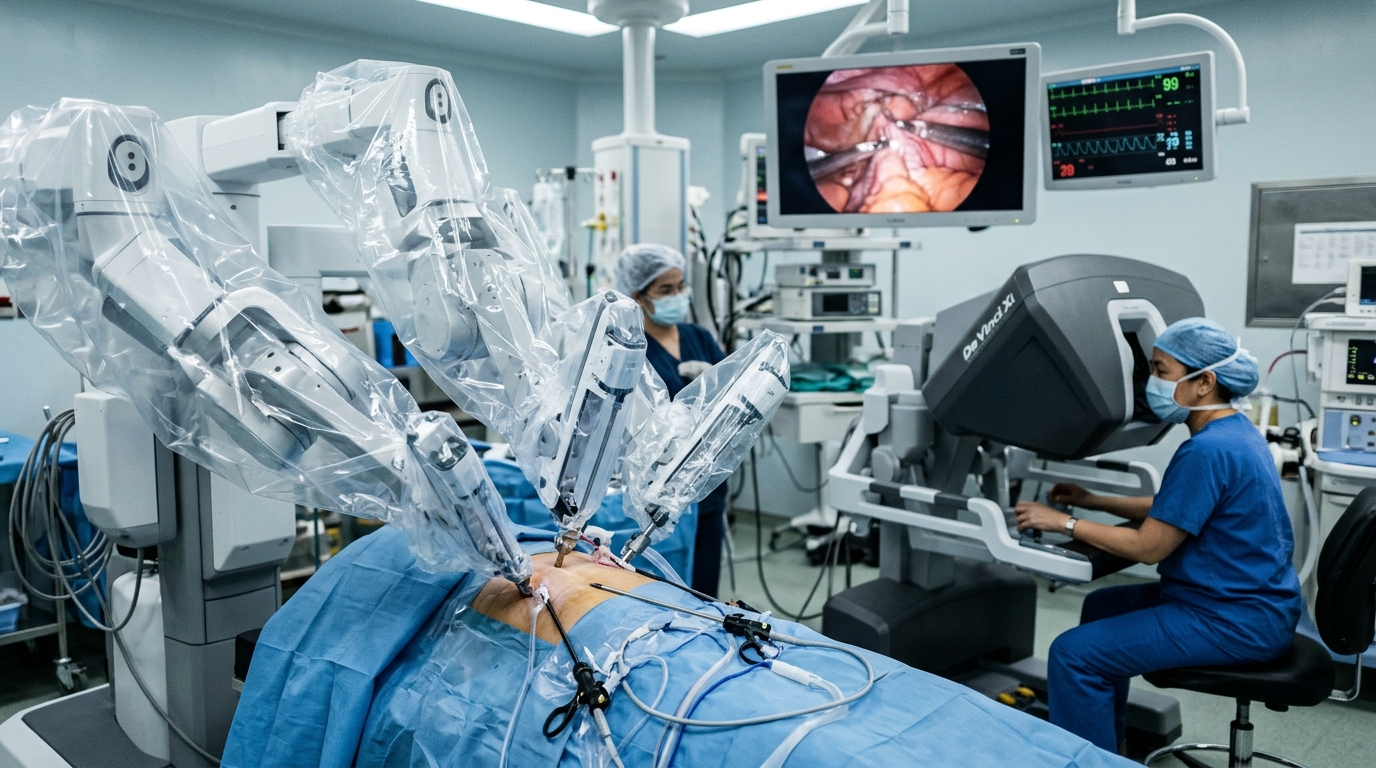
Robotic surgery for treating esophagogastric cancers is evolving in Asian healthcare systems, focusing on technical improvements in dissection and nerve preservation. However, challenges like long-term oncological effectiveness and equal access remain. A recent narrative review in the Annals of Gastroenterological Surgery highlights significant advancements in surgical strategies over the past 30 years, transitioning from open surgery to minimally invasive techniques and increasingly towards robotic-assisted platforms.
Countries such as Japan, South Korea, and China are pivotal in this transition, given the high incidence of upper gastrointestinal cancers in East Asia. The introduction of robotic systems, notably the Da Vinci Surgical System approved for use in 2000, addresses limitations found in conventional minimally invasive approaches, including two-dimensional visualization and ergonomic constraints.
In South Korea, clinical validation of robotic gastrectomy has progressed through a variety of studies. Investigations conducted between 2005 and 2009 demonstrated the feasibility of robotic distal subtotal gastrectomy, with an average recovery of 41.8 lymph nodes and a five-year overall survival rate of 92.8 percent. In a multicenter study by Kim and colleagues, complications differed slightly between robotic and laparoscopic methods, though robotic surgery took longer and incurred higher costs. Extensive experience at Severance Hospital from 2005 to 2019 achieved low complication rates and high survival chances.
Research from Japanese and Chinese centers indicates that robotic gastrectomy offers reduced short-term morbidity compared to laparoscopic techniques. A Japanese study involving 330 patients found complication rates significantly lower in robotic cases, while a Chinese trial reported quicker recoveries and lower morbidity rates following robotic procedures.
The technical advantages of robotic systems are particularly evident during complex surgeries, such as lymphadenectomy in the suprapancreatic area. A Chinese multicenter study found robotic gastrectomy retrieved more lymph nodes than its laparoscopic counterpart. Additionally, a randomized trial measured technical execution errors, demonstrating fewer overall errors with robotic techniques.
However, long-term benefits remain uncertain. Studies in Japan and Korea reported mixed results regarding survival advantages, with varying data suggesting similar five-year survival rates between robotic and laparoscopic gastrectomy. The MONA LISA study, currently underway in Japan, aims to address these gaps and provide clearer evidence on the efficacy of robotic-assisted surgeries.
In terms of esophageal cancer, the advantages of robot-assisted minimally invasive esophagectomy have been shown, with trials indicating lower complication rates compared to open surgery. Nevertheless, comparisons with conventional laparoscopic methods are critical, with recent studies in China showing improved lymph node yields and reduced operation times in robotic procedures.
Economic and infrastructural challenges pose significant barriers to the widespread adoption of robotic surgery across Asia. High costs associated with robotic systems limit access primarily to tertiary academic centers. Future developments in artificial intelligence and telesurgery are on the horizon, though overcoming regulatory and financial hurdles will be essential for equitable implementation.
As ongoing trials like MONA LISA and RAMIE progress, the surgical community anticipates that emerging data will further clarify the benefits and viability of robotic systems in treating esophagogastric malignancies in Asia.
