




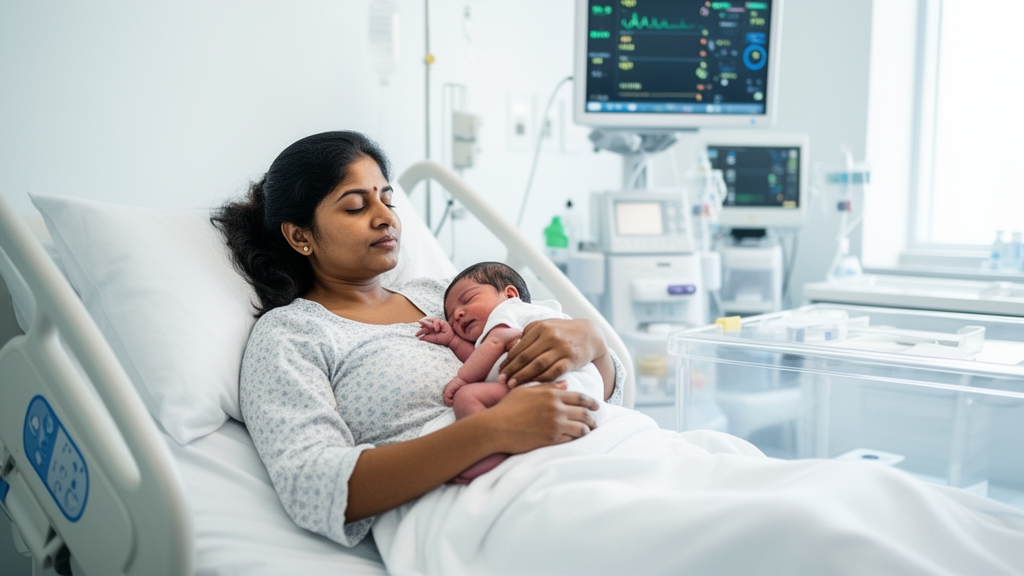
A recent study exploring maternal healthcare in five South Asian nations found significant disparities in facility-based childbirth rates, strongly influenced by socioeconomic status and education. The research, published in Research in Health Services and Regions, reveals that over half of surveyed mothers delivered in medical facilities, with rates varying from 68.8 percent in Pakistan to just 40.6 percent in Myanmar. The study analyzed data from nearly 39,000 women to examine factors affecting access to institutional delivery care.
The investigation, which pooled data from Demographic and Health Surveys in Afghanistan, Bangladesh, Nepal, Myanmar, and Pakistan, highlights the urgent need for improved maternal health services. According to the World Health Organization, preventable complications during childbirth led to approximately 800 maternal deaths daily in 2020, with lower-middle-income countries, particularly in Southern Asia, accounting for over 80 percent of the global maternal mortality burden.
Researchers found that facility-based births, managed by trained professionals, are critical for reducing maternal and infant mortality rates. The study noted that around 33 percent of serious complications linked to childbirth are associated with unsafe home deliveries. Ensuring access to qualified healthcare providers during delivery is considered a key strategy to mitigate these risks.
The study’s findings indicate that various demographic, economic, and behavioral factors significantly influence maternity care choices. For example, facility delivery was more common among women aged 20 and older, with rates showing that educated women had an 86.7 percent likelihood of delivering in medical facilities compared to lower rates among their less educated counterparts. In urban areas, institutional delivery rates were also higher than in rural regions.
Models used in the analysis demonstrated pronounced differences in delivery rates based on a mother’s country of origin, education level, and household wealth. Women in Pakistan had 2.24 times the crude odds of delivering in a facility compared to those in Bangladesh. After adjusting for various factors, mothers in Pakistan remained four times more likely to use institutional services than those in Bangladesh, while Afghanistan and Nepal also showed higher usage rates relative to Bangladesh.
Socioeconomic disadvantages were evident across the surveyed populations. More than half of the mothers interviewed had given birth as adolescents, with a substantial portion having no formal education. The analysis indicated that 41.4 percent of respondents were classified as poor, and a significant number lived in rural areas where access to healthcare facilities was limited.
Other influential factors included access to mass media, which increased the likelihood of institutional deliveries by 33 percent, and antenatal care from skilled providers, which significantly improved outcomes. However, maternal disempowerment was found to negatively impact healthcare utilization, as women without autonomy in decision-making were less likely to deliver in healthcare institutions.
These findings point to critical gaps in maternal health services across the region and underscore the importance of targeted policies to address socioeconomic disparities, enhance media awareness, and improve access to healthcare in rural communities. Continued efforts are essential to advance maternal health outcomes in line with Sustainable Development Goals.
Study Reference: Soni, S. M., et al. (2025). Factors associated with institutional delivery in south Asian countries: evidence from five recent demographic and health surveys. Research in Health Services & Regions, 4(1), Article 11. https://doi.org/10.1007/s43999-025-00071-3
