




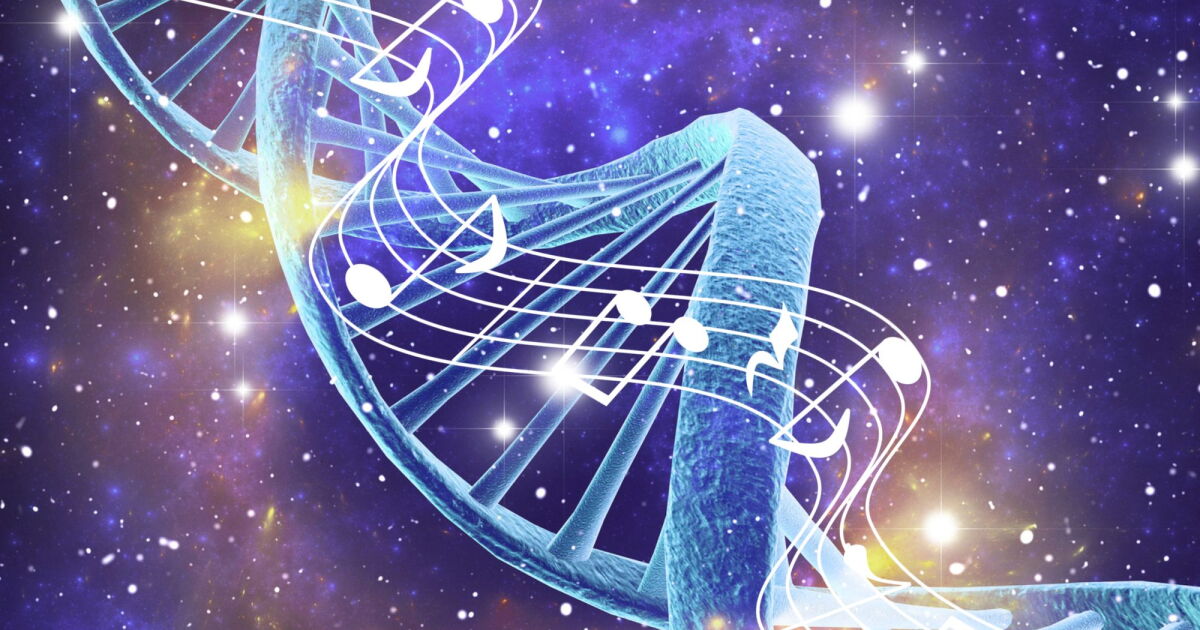
Researchers from the University of Texas at Dallas and the University of California, San Diego have successfully encoded 272 characters of the Beatles’ song “Let It Be” into DNA, using a revolutionary method that involves storing data within living human cells. The data is encrypted, enhancing security against unauthorized access.
The study demonstrates the potential of DNA as a medium for long-term information storage, even though its data access speed is significantly slower compared to traditional digital methods. The researchers housed the song excerpt within the chromosomes of a lab-grown human kidney cell line, allowing it to be copied as the cells divided.
Lead author Taek Kang, a bioengineer at the University of Texas at Dallas, highlighted the fundamental questions guiding the research: “Can we store information inside living cells, and can we control how a person accesses it and reads it?”
DNA offers substantial storage capabilities, with estimates suggesting that just one gram can hold hundreds of millions of gigabytes of data. The research team took advantage of this capacity while ensuring the integrity of the data through the natural replication mechanisms of the cells.
In prior experiments, researchers successfully inscribed Shakespeare’s sonnets and a portion of Martin Luther King Jr.’s famous speech into synthetic DNA. A later development known as DNA Fountain encoded over 2 megabytes of data, illustrating the evolving complexity of storing information in biological forms.
The latest system, termed DNA CODEC (Compressed Obfuscated DNA Encoding in Cells), employs CRISPR technology to introduce compressed text into chromosomes. This method blends cells containing the song’s excerpt with those holding similar-looking DNA, creating a mixture that complicates the extraction of the true data unless accessed with a specific “key.”
In a follow-up experiment, the researchers increased the stored data to 907 characters, tracking its stability for approximately 15 days. While this is still a modest amount of information, the team plans to enhance their methods for better error correction and to increase storage capacity in future developments.
The initial applications of this research could be seen in laboratory settings, as the storage of data related to engineered cell lines would provide a record of their origin and modifications. This innovative approach potentially offers a practical solution to managing and preserving biological data without raising speculative dystopian scenarios.
This research was published in Nature Communications.
