




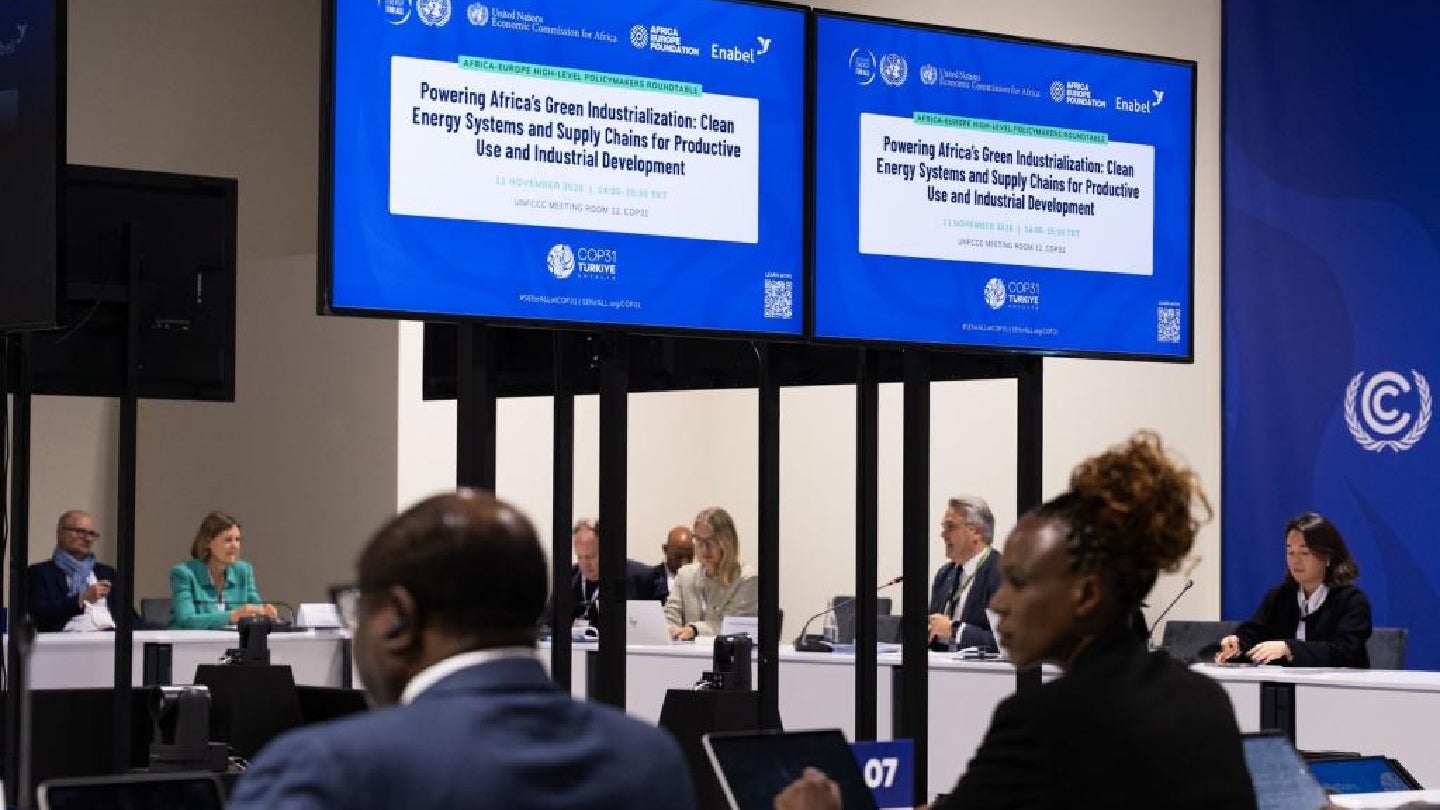

Leaders from Africa and Europe gathered at COP31 in Antalya, Türkiye, to advocate for increased investment in clean energy and manufacturing. This initiative aims to harness Africa’s renewable resources and critical minerals to create jobs and stimulate industrial growth.
The call for investment comes as at least 13 African countries have imposed restrictions on raw mineral exports since 2023, aiming to encourage domestic processing of these resources.
The roundtable included policymakers, representatives from the private sector, development finance institutions, and international organizations. Co-chairs Damilola Ogunbiyi, CEO of Sustainable Energy for All, and Mattias Frumerie, Sweden’s Climate Ambassador, facilitated discussions focused on integrating energy access with job creation and industrialization to support socio-economic development across Africa.
A central theme of the discussions highlighted the global electricity access gap, with approximately 655 million individuals lacking power, over 80% of whom are in Africa. Speakers emphasized that addressing this issue, particularly in the context of Sustainable Development Goal 7, is crucial for advancing economic conditions and ensuring energy reliability and affordability for industries and businesses.
Key topics included the dual focus on first-time electrification for underserved populations and end-use electrification for industrial, transport, and building sectors. Participants noted that addressing these priorities collectively could lead to enhanced job creation and local economic development.
Africa’s vast potential for wind, solar, hydro, and geothermal energy, along with its critical mineral resources, was identified as a foundation for developing clean technologies and competitive industrial value chains.
The event also reviewed frameworks such as Mission 300, which aims to connect 300 million Africans to electricity by 2030. Other initiatives include the African Single Electricity Market and the Continental Power System Master Plan, alongside the Africa-EU Green Energy Initiative, which seeks to add 50GW of renewable energy capacity and increase electricity access for 100 million Africans by 2030.
Speakers reiterated that continued progress hinges on addressing fundamental infrastructure and reliability challenges. They highlighted the role of carbon markets under Article 6 of the Paris Agreement and international collaborations, particularly between Europe and Africa, as critical for mobilizing the necessary investment and technical support.
Future cooperation will focus on scaling financing for clean energy projects, expanding the manufacturing capacity for clean technologies in Africa, and developing strategic industrial value chains as discussions move toward COP32 in Addis Ababa, Ethiopia.
