




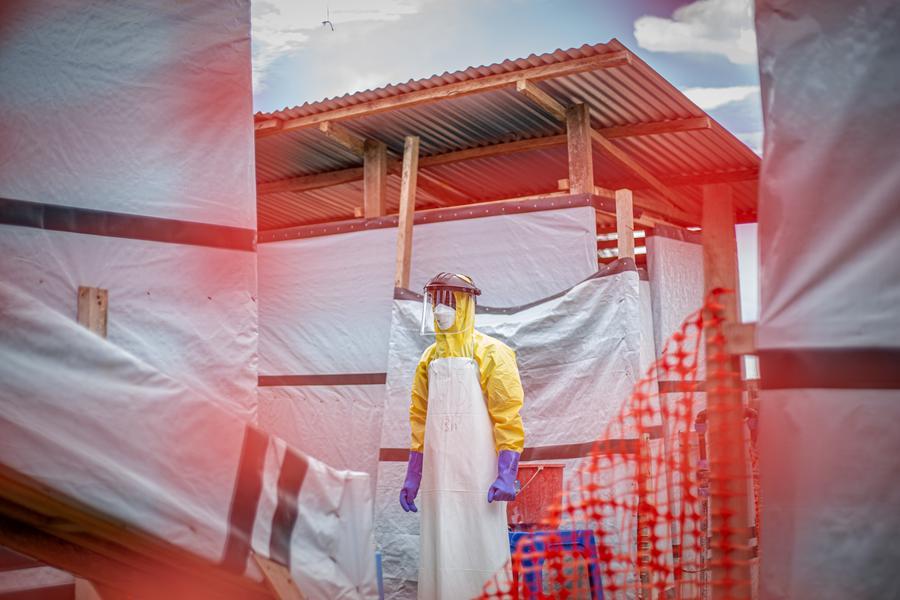
Africa is currently facing “the most geographically widespread Ebola outbreak in history,” with cases in the Democratic Republic of the Congo (DRC) nearing 10,000, according to the Africa Centres for Disease Control and Prevention (Africa CDC). The outbreak has raised alarms following new reports of infections in Kenya and Nigeria, indicating the virus’s potential for cross-border transmission.
As of October 19, the DRC reported 9,637 confirmed cases of Ebola, resulting in 4,646 deaths, yielding a case fatality rate of 48.2 percent. The outbreak, which began on May 15, has affected eight of the country’s 26 provinces, with the Ituri province being the epicenter, accounting for 72.7 percent of infections. Neighboring North Kivu has also emerged as a significant transmission hotspot.
Africa CDC Director-General Jean Kaseya emphasized the urgent need for international support, citing the outbreak’s impact on multiple countries across three regions. He warned that the geographical expansion of the outbreak poses an extremely serious public health threat, especially with a case fatality rate close to 50 percent in the DRC.
Nigeria confirmed its first case of Ebola caused by the Bundibugyo virus on October 20. The patient, a woman who had traveled through Uganda, sought medical attention after developing symptoms on October 7. Nigerian authorities are monitoring 44 contacts, and the patient remains isolated while receiving care.
In Uganda, where the virus has previously been reported, health officials stated that the woman traveled to the DRC for business before returning through Uganda. Although Uganda reported 20 confirmed cases and two deaths earlier, the country had been declared Ebola-free on August 27 after a 42-day monitoring period without new infections. Authorities reiterated that there are currently no confirmed active cases in Uganda and promised to enhance health surveillance at entry points.
Kenya has also seen an increase in cases, reporting its ninth confirmed Ebola case linked to an initial imported infection from the DRC. The latest patient was already in quarantine when symptoms appeared, and health authorities have placed most identified contacts under quarantine.
Concerns are growing that the outbreak may reach Kinshasa, the capital of the DRC, home to nearly 20 million people. Former health minister Jean-Jacques Mbungani Mbanda warned that recent detections in northern provinces heighten the risk of the virus spreading via various transport routes, including rivers and roads.
In response to the escalating situation, Kaseya announced that Africa CDC is mobilizing support for Nigeria while intensifying its response efforts in the DRC and Kenya. He called for comprehensive international assistance, including medical supplies and trained responders, to prevent further spread of the outbreak.
The World Health Organization (WHO) has recognized the outbreak as a public health emergency of international concern, marking the outbreak in the DRC as the largest and deadliest recorded there and the second-largest globally, following the epidemic in West Africa from 2014 to 2016.
