




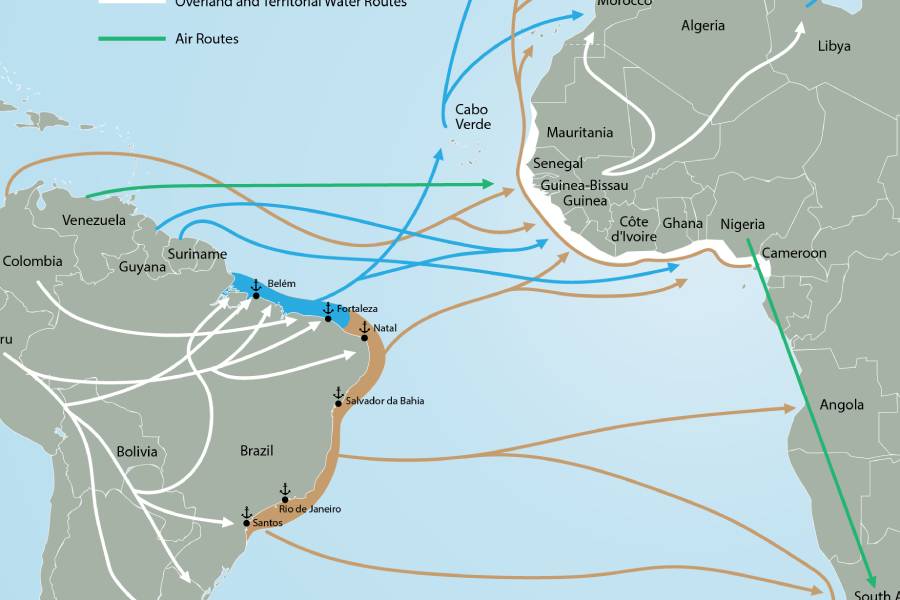
Africa is increasingly becoming a pivotal hub for Latin American drug cartels involved in cocaine and methamphetamine trafficking, according to recent observations from law enforcement and international authorities. The continent is now facilitating the production, transportation, and marketing of these illicit drugs, responding to a surge in demand for cocaine and synthetic stimulants while facing intensified interdiction efforts in the Western Hemisphere.
For decades, Africa has served as a transit point for cocaine originating from Colombia, Peru, and Bolivia, which are the primary producers of the drug. The global cocaine trade has reached unprecedented levels, with production estimated at 4,100 metric tons—marking a fourfold increase over the past decade. Interdiction successes against drug trafficking in the Americas have pushed cartel operations to expand into Africa, leading to more sophisticated smuggling methods that include smaller shipments and clandestine routes.
Africa and the Latin America-Europe Cocaine Supply Chain
The rise in cocaine trafficking through West Africa has been staggering, with seizure amounts climbing from around 1 metric ton in 2018 to approximately 30 metric tons in recent years. Cocaine is typically shipped from Brazil to West African ports along the Gulf of Guinea before making its way to Europe. Cartels have begun using small vessels, unmanned submarines, and other methods to minimize detection, with criminal organizations on the African coast playing a critical role in the operation.
Latin American cartels are also taking advantage of Africa’s relative lack of law enforcement in some regions, enabling them to expand their operations. The average price of a kilogram of cocaine in Europe is estimated at $44,000, compared to just $1,650 in the Andes, illustrating the high profits associated with trafficking across these regions.
Moreover, methamphetamine production is reportedly at a record high, with the global market for amphetamine-type stimulants valued between $17 billion and $29 billion. Latin American cartels have increasingly formed partnerships with African criminal networks to set up meth labs on the continent, with initial labs established in West Africa as early as the 2010s. Recently dismantled labs in South Africa, Nigeria, and Kenya underscore the growing trend of methamphetamine production in Africa.
Criminal organizations such as Mexico’s Sinaloa Cartel and Brazil’s First Capital Command (PCC) have established operations in multiple African countries, using the continent as a strategic location for drug manufacturing and trafficking. These networks often exploit local weaknesses, including political corruption, to facilitate their operations.
The proliferation of drug trafficking in Africa has serious implications for local communities and governance. Corruption, violence, and drug addiction are rising in several countries, with South Africa, Kenya, and Nigeria reporting spikes in drug-related crime. For example, in the first nine months of 2026, South Africa experienced 78 organized crime-related assassinations, indicating heightened violence linked to the drug trade.
As African nations attempt to combat these influences, countries such as Nigeria have ramped up their interdiction efforts, resulting in significant drug seizures and arrests. However, ongoing challenges remain due to the existing porous borders and political complexities that allow these criminal enterprises to thrive.
The evolving drug landscape suggests that without robust governance and effective law enforcement, Africa could continue to be exploited as a hub for international drug trafficking, exacerbating existing social and economic issues.
