




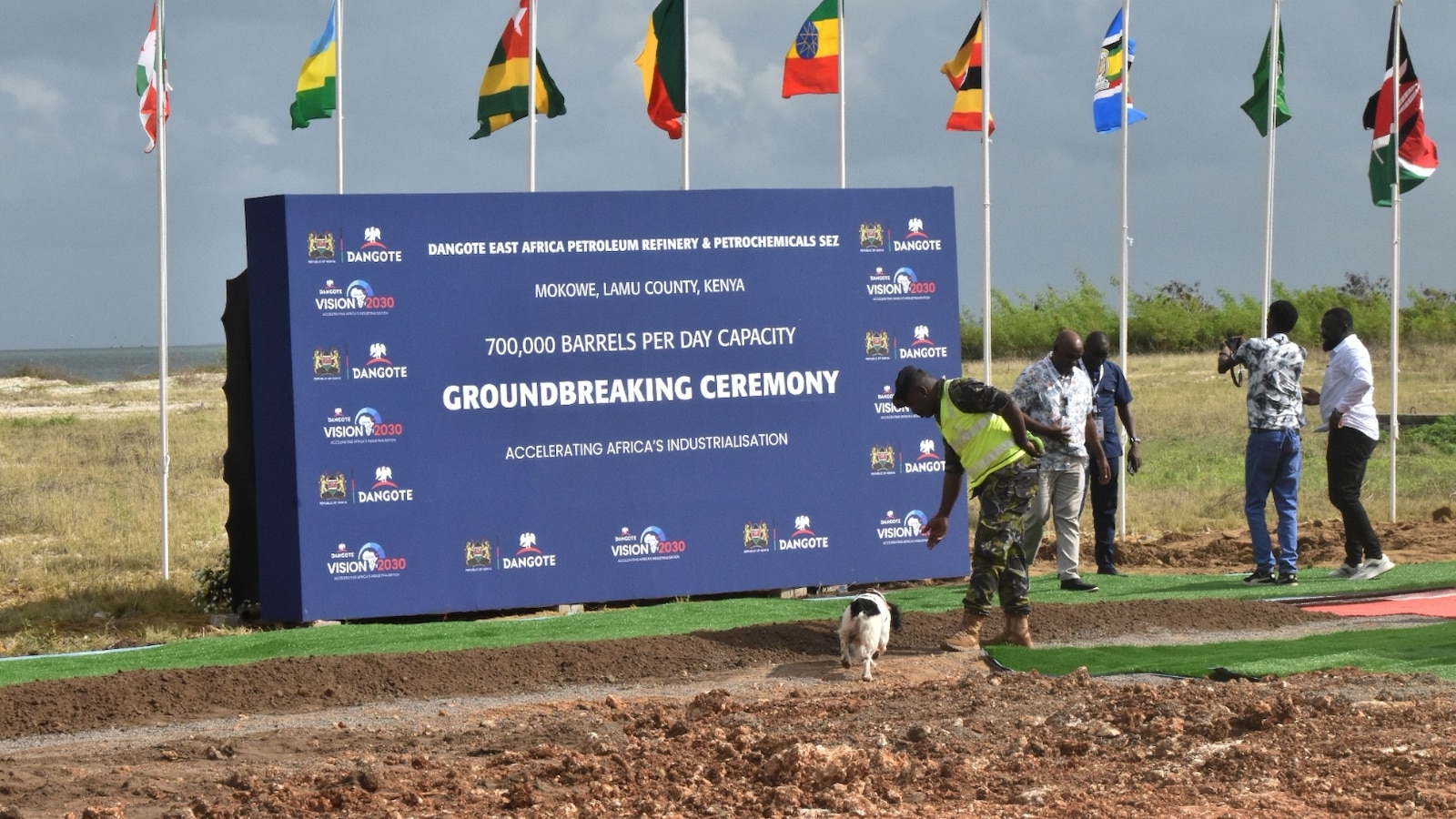
Five African heads of state participated in a groundbreaking ceremony on Wednesday for a $16 billion oil refinery project in East Africa. The ceremony took place in Lamu, Kenya, as part of broader efforts to enhance the continent’s capabilities in processing raw materials into finished products.
Details of the Refinery Project
Kenya’s President William Ruto was joined by his counterparts from Uganda, Ethiopia, Togo, and Benin, as well as former Nigerian President Olusegun Obasanjo, to mark the commencement of construction. The refinery, once completed in about 40 months, is expected to have the capacity to process up to 700,000 barrels of oil per day.
Nigerian billionaire Aliko Dangote, who is overseeing the project, emphasized the necessity for Africa to industrialize its own resources. He remarked that the continent should not continue to rely on external sources for its needs while exporting its resources. The refinery is designed to source crude oil primarily from neighboring countries like Uganda and South Sudan, both of which have plans to export oil through regional routes.
Dangote also highlighted the local market demand for refined oil in East Africa, suggesting that the region consumes significantly more than the projected daily output of the refinery. This local consumption underscores the strategic importance of the refinery in meeting the energy needs of East African countries.
The project was initially proposed for Tanzania’s coastal town of Tanga; however, Lamu was chosen for its deeper waters and solid ground, which are more suitable for heavy equipment and deep-sea access.
Representatives from other East African nations, including Rwanda, Burundi, South Sudan, and Tanzania, were present at the ceremony, signaling regional support and interest in the project.
Why It Matters
This oil refinery project represents a significant step towards improving energy self-sufficiency and industrial capacity in East Africa. By processing oil locally, the region aims to reduce its dependency on imported fuels and foster economic growth through job creation and enhanced energy security.
