




Shipping companies have revamped their Asia-Europe routes, partially in response to the EU Emissions Trading System (ETS), according to industry analyses. However, industry experts assert that these changes were influenced by various factors, rather than solely driven by the ETS.
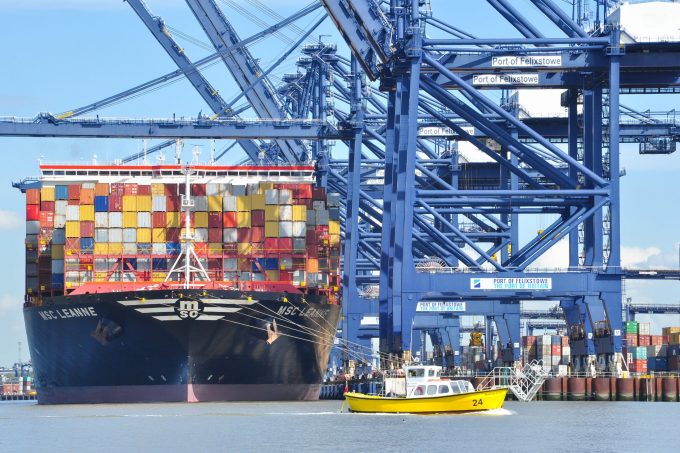
According to shipping analysts, the carriers’ network redesigns aim to minimize exposure to ETS costs. While the potential financial impact of the ETS is significant, it is not the sole factor guiding port selection. The choice of ports, such as Felixstowe and London Gateway, is largely determined by operational efficiencies and the physical capabilities of the vessels.
The EU ETS Observatory had released a report in recent months which suggested that an increase in UK shipping volumes was a direct result of companies trying to avoid ETS charges. However, analysts criticized this view, highlighting that UK trade experienced a 3% increase in 2025, while neighboring regions like North Europe experienced growth rates of 5% or higher.
Reducing exposure to ETS-related costs is more than just an operational strategy; it offers a competitive edge. Carriers prefer to present lower all-in freight charges to attract customers, as high carbon surcharges can deter business. As a result, port rotation decisions are made based on various criteria, including transit times, draught limitations, cargo volume, and inland connectivity, before operational costs are calculated.
Such considerations are particularly critical in North Europe, where the first port of call must accommodate large vessels arriving fully laden. Terminals like Felixstowe, London Gateway, and Rotterdam can service deep-draught ships without restrictions, making them favorable options.
A recent analysis from Sea-Intelligence Consulting indicated that shipping networks in 2026 could reduce distances subject to ETS charges by an additional 11%. This efficiency enhances operational effectiveness and incurs minimal additional costs for carriers. Hapag-Lloyd, for instance, has illustrated this improvement through its Gemini AE3 service, prioritizing London Gateway at the start and Southampton at the end of its route.
Additionally, the European Commission is considering changes that may qualify certain deep-sea container ports near the EU as part of the main voyage, potentially increasing the ETS cost for carriers. Despite these proposals, it is uncertain if the current port rotations will change significantly since vessel requirements largely dictate routing.
While the first-call strategy in the UK raises questions about the effectiveness of the ETS, it also highlights limitations in carbon reduction. Shipping emissions remain unchanged regardless of the port selection, meaning that while carriers may mitigate their ETS liability, the overall carbon output does not necessarily decrease.
Current data suggests that while the shipping industry pays substantial sums to comply with the ETS, only a small fraction of these revenues funds decarbonization projects. Notably, the European Commission’s proposals aim to bridge the financial spending gap for sustainable fuels in the shipping sector, but the support falls significantly short of the industry’s financial contributions.
With these developments, the future of the EU ETS and its impact on shipping operations will require close scrutiny, particularly as carriers continue to navigate a complex landscape of regulatory and operational challenges.
