




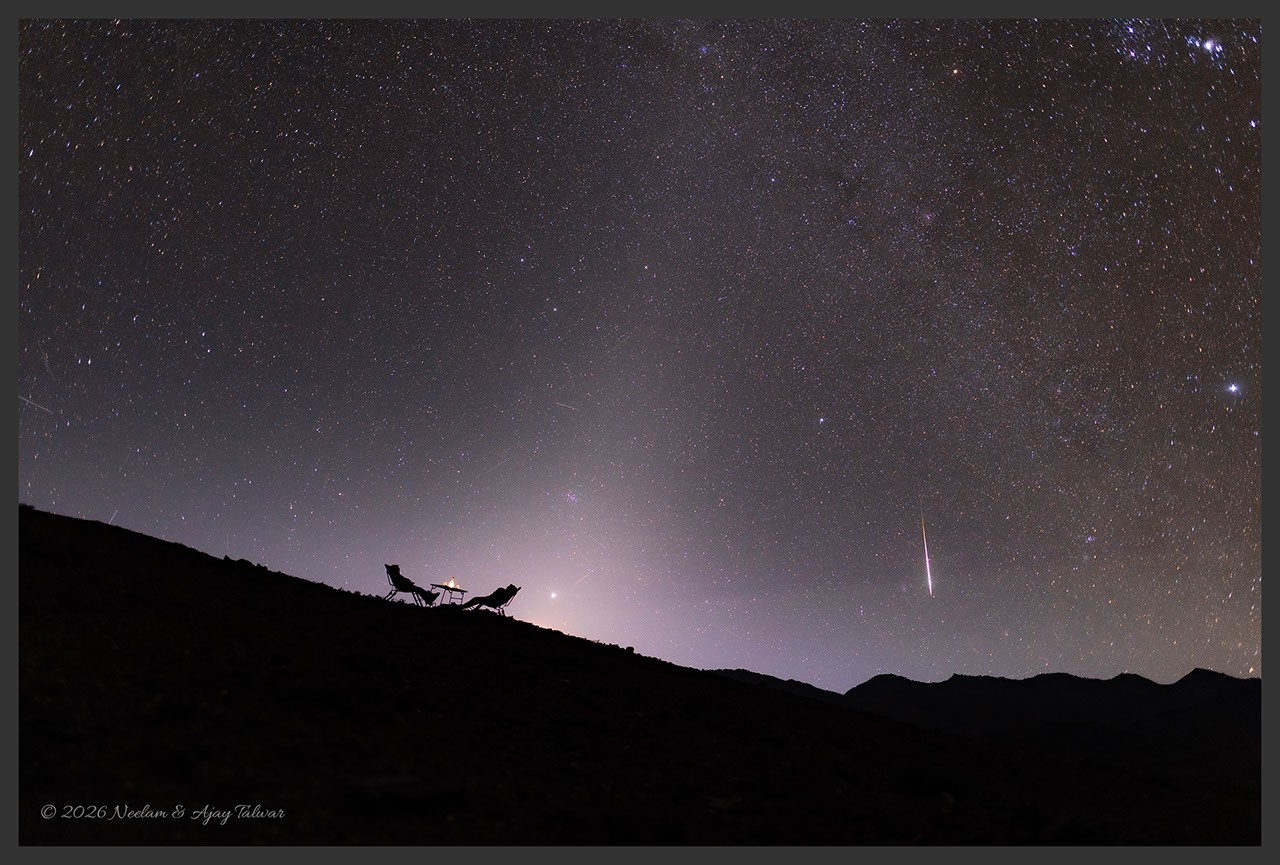
A stunning capture of zodiacal light has been shared as part of the Astronomy Picture of the Day for September 19, 2026, showcasing a luminous band of light in the night sky. This phenomenon, often referred to as the false dawn, was recorded at the Hanle Dark Sky Reserve in Ladakh, India, just before the start of astronomical twilight.
Stargazing in the Himalayas
Located at an elevation of approximately 4,500 meters, the Hanle Dark Sky Reserve is known as an ideal destination for stargazing and astrophotography enthusiasts. The serene, dark environment allows observers to clearly view celestial events, including the recent sighting of meteors and the bright planet Jupiter, which was seen near the eastern horizon amidst the faint zodiacal glow.
The photograph also highlights the open star cluster M44, often called the Beehive Cluster, along with the yellowish tint of the planet Mars located centrally in the frame. This view not only captivates astronomy enthusiasts but also connects them to recent scientific findings.
A study by NASA’s Juno spacecraft suggests that Mars is a significant source of interplanetary dust. This dust reflects sunlight and contributes to the creation of zodiacal light, making celestial observations like these even more intriguing. The intersection of visual beauty and scientific inquiry underscores the importance of such astrophotographic captures.
In addition to this spectacular image, the official Astronomy Picture of the Day site has recently transitioned from its previous URL to a new address, emphasizing the ongoing evolution of educational outreach in astronomy.
Why It Matters
Observations like the one captured in this photograph are crucial for both amateur astronomers and scientific researchers. They provide opportunities to deepen understanding of celestial phenomena and spark interest in astrophysics. The findings from missions such as Juno further illuminate the connections between planetary science and observable events in the night sky, reinforcing the importance of stargazing as both a leisure activity and a scientific pursuit.
