




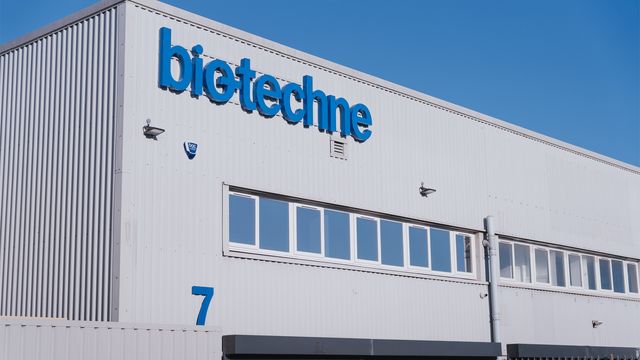
Bio-Techne has inaugurated a new manufacturing facility in Bristol, UK, aimed at enhancing the scalability and affordability of cell therapies, a sector poised for widespread commercialization. The 10,000-square-foot facility, located in one of the country’s rapidly growing life sciences regions, will produce Good Manufacturing Practice (GMP)-grade small molecules used as ancillary reagents in stem cell therapy development.
The facility includes five ISO-8 multifunctional cleanrooms and two ISO-7 cleanrooms dedicated to the manufacturing and handling of these small molecules. These substances are instrumental in the processes of stem cell reprogramming, expansion, and differentiation, though they are not included in the final therapeutic products.
During the facility’s opening ceremony, Bio-Techne showcased its commitment to supporting therapy developers in establishing scalable manufacturing processes. This development underscores the industry’s transition from experimental cell therapies to a focus on commercial execution, with over 40 cell and gene therapies currently approved by the U.S. Food and Drug Administration.
Kim Kelderman, CEO of Bio-Techne, noted the critical importance of scalability and cost-effectiveness in manufacturing these therapies. He remarked, “There is proof of principle that cell therapies can work, and certain treatments are now approved and commercialized in the market. However, scalability and affordability are hurdles that manufacturers face.” He emphasized that the new facility aims to address these challenges.
Cell therapies present unique manufacturing challenges, as they involve isolating, modifying, and expanding cells in controlled environments. Factors such as shear force, temperature, and pH fluctuations can impact the therapeutic properties of the cells, making consistent manufacturing essential.
Dr. Hannah Maple, senior director and site leader at Bio-Techne, stated that the facility is designed to grow alongside its customers, facilitating their journey from preclinical development to patient treatment. “We recognize that developers are at different stages of their development journey, and our facility provides the required quality materials to support their transition to the clinic,” she explained.
Bio-Techne’s new facility is part of a broader strategy to establish a comprehensive manufacturing network that includes operations in Minneapolis and St. Paul, Minnesota. In 2020, the company also partnered with Wilson Wolf, a leader in cell culture technology, enhancing its ability to offer a range of GMP proteins, small molecules, and custom manufacturing services.
As the cell therapy sector continues to evolve, Bio-Techne plans to adapt its offerings to meet new challenges. The company is particularly focused on developing methodologies such as new approach methodologies (NAMs) involving organoids, which provide advanced models for disease research and drug discovery.
The Bristol facility is now fully operational and aims to contribute to making cell therapies more reproducible and accessible, ultimately accelerating patient access to innovative treatments.
