




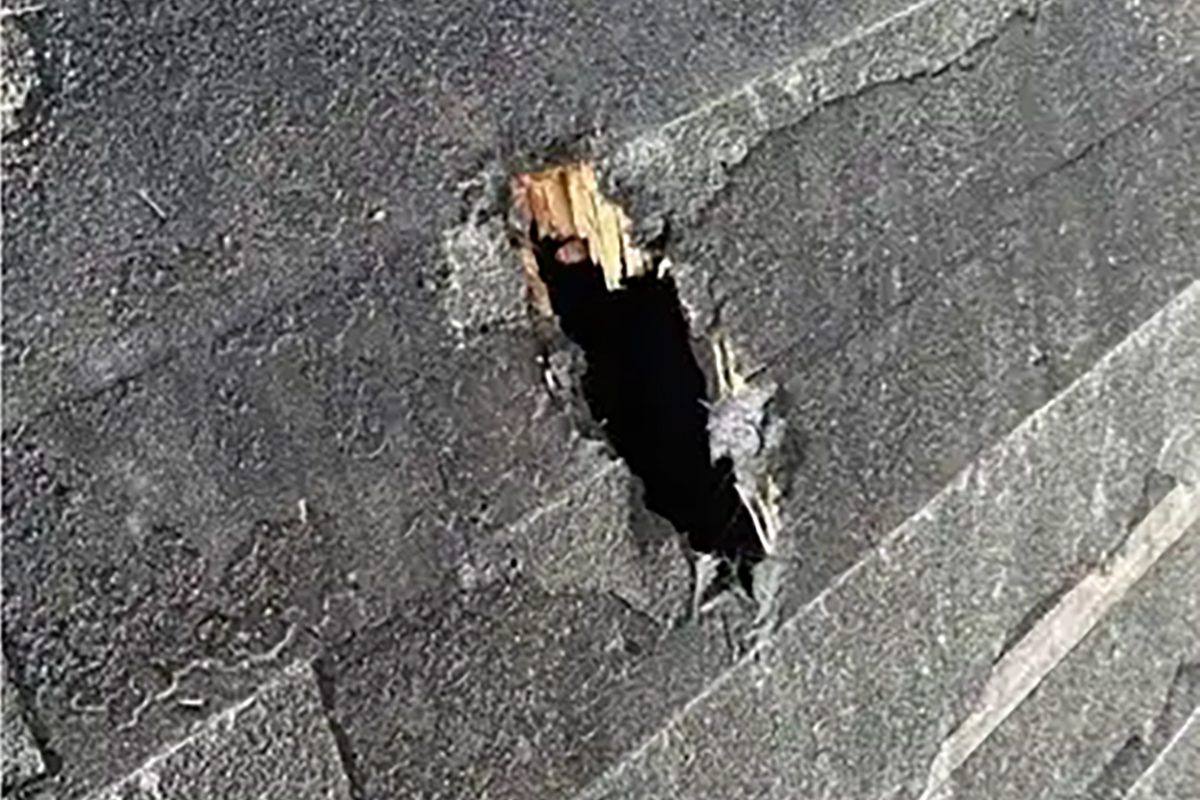
In a remarkable event on July 16, 2024, a sizable meteorite with potential implications for understanding the building blocks of life crashed through the roof of a home in Hillsborough, New Jersey. Dubbed the Hillsborough Meteorite, the object reportedly exhibits a rich composition of life-supporting chemicals.
The Meteor’s Journey
The meteor originated from a larger mass that entered Earth’s atmosphere at a speed of 14.4 kilometers per second (32,000 mph). Witnesses along the eastern seaboard observed the meteor streak across the daytime sky. Its visibility ended at an altitude of 35 kilometers (22 miles), where it fragmented into hundreds of smaller pieces.
While most of the fragments scattered over Staten Island and New Jersey, one sizeable chunk collided with a residence in Hillsborough. The homeowner described the incident, stating, “I heard a loud crash and found a hole in the ceiling of the master bedroom. I smelled a strong sulphur-like odour and saw many black fragments, along with debris and black dust that covered my bed, carpet, and surrounding areas.” The homeowner took immediate action to preserve the fragments, employing gloves and foil to collect them meticulously.
Peter Jenniskens, a researcher with the SETI Institute and NASA’s Ames Research Center, affirmed the significance of the samples collected by the homeowner. He characterized them as “the most pristine CM1/CM2 meteorites we know of.”
Scientific Implications
CM-type meteorites are among the most ancient and primitive space rocks, classified into CM1 and CM2 types based on mineral characteristics and water exposure. The Hillsborough Meteorite is unique, identified as CM1/CM2 due to its composition that mirrors elements of both categories. It shows signs of water interaction and is rich in salts and amino acids, indicating it may contain compounds essential for life.
This discovery offers insights into how such materials could have traveled to Earth from other parts of the Solar System. The evidence suggests that the meteorite’s parent asteroid contained liquid water beneath its surface, which evaporated to leave behind concentrated salts—the very building blocks that could support life.
Fragments of the Hillsborough Meteorite have been transferred to the American Museum of Natural History in New York. Curator Denton Ebel expressed excitement about the event, stating, “We are thrilled that nature delivered such a precious asteroid sample on our doorstep.”
Why It Matters
This meteorite offers a direct link between cosmic events and the origins of life on Earth. Its unique chemical composition could unlock new understanding about how vital organic materials arrive on our planet, contributing to the scientific exploration of life beyond Earth.
