




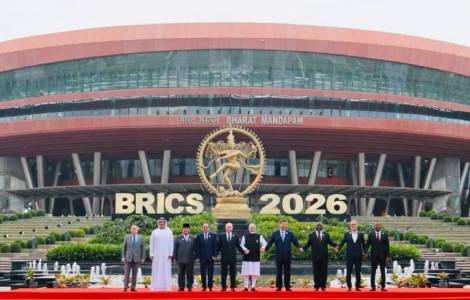
Summary of the 18th BRICS Summit in New Delhi
The 18th BRICS summit took place in New Delhi from September 13 to 14, 2026, with India’s leadership emphasized in the proceedings. The BRICS group, which includes Brazil, Russia, China, India, South Africa, Egypt, Ethiopia, Iran, the United Arab Emirates, Saudi Arabia, and Indonesia, now represents about 40% of the global GDP and nearly half of the world’s population. The summit reaffirmed calls for increased political influence for Global South nations and significant reform of international institutions.
This year’s summit centered on themes of resilience, innovation, cooperation, and sustainability, culminating in a final declaration that extends beyond general appeals for multilateralism. The declaration addresses immediate international issues, such as the ongoing conflict involving Iran, expressing grave concern over escalating tensions and urging restraint to prevent further deterioration.
The final document also tackled the situation in Palestine, voicing strong opposition against the displacement of its population and any alterations to the demographics or geography of the occupied territories. The use of sanctions was criticized as incompatible with international law and detrimental to trade and developing economies. This reference is specifically directed toward sanctions imposed by the United States on Iran and measures related to the conflict between Russia and Ukraine.
Although the conflict in Ukraine was mentioned, it received limited discussion; the statement called for resolution through dialogue and diplomacy. While BRICS leadership portrayed unity during the summit, challenges remain regarding the divergent interests of member states, particularly among Middle Eastern representatives.
Focus on African Nations
African participation was a notable aspect of this year’s summit. Ethiopia, a significant BRICS member, expressed its aspiration to advance its World Trade Organization membership, with Prime Minister Abiy Ahmed indicating readiness to host a regional office for the New Development Bank (NDB). South African President Cyril Ramaphosa emphasized the need for international regulation of artificial intelligence, pointing to its potential benefits and risks.
Nigeria and Uganda, as partners in BRICS, were represented by Vice President Kashim Shettima and Vice President Jessica Alupo, respectively. Shettima underscored the importance of reforming global governance and the UN Security Council, while Ugandan officials highlighted the potential of the NDB in bolstering trade with larger economies like China and India.
The future direction of BRICS may hinge on the aspirations of African nations for full membership, which could lead to the establishment of a significant “African pillar” within the organization. This could influence both trade relations and global governance initiatives moving forward.
Why It Matters
The outcomes of the BRICS summit reflect a shift towards greater inclusion of Global South countries in international discussions, particularly in addressing geopolitical tensions and governance reform. The increasing involvement of African countries also highlights the continent’s strategic importance in global economic and political landscapes.
