




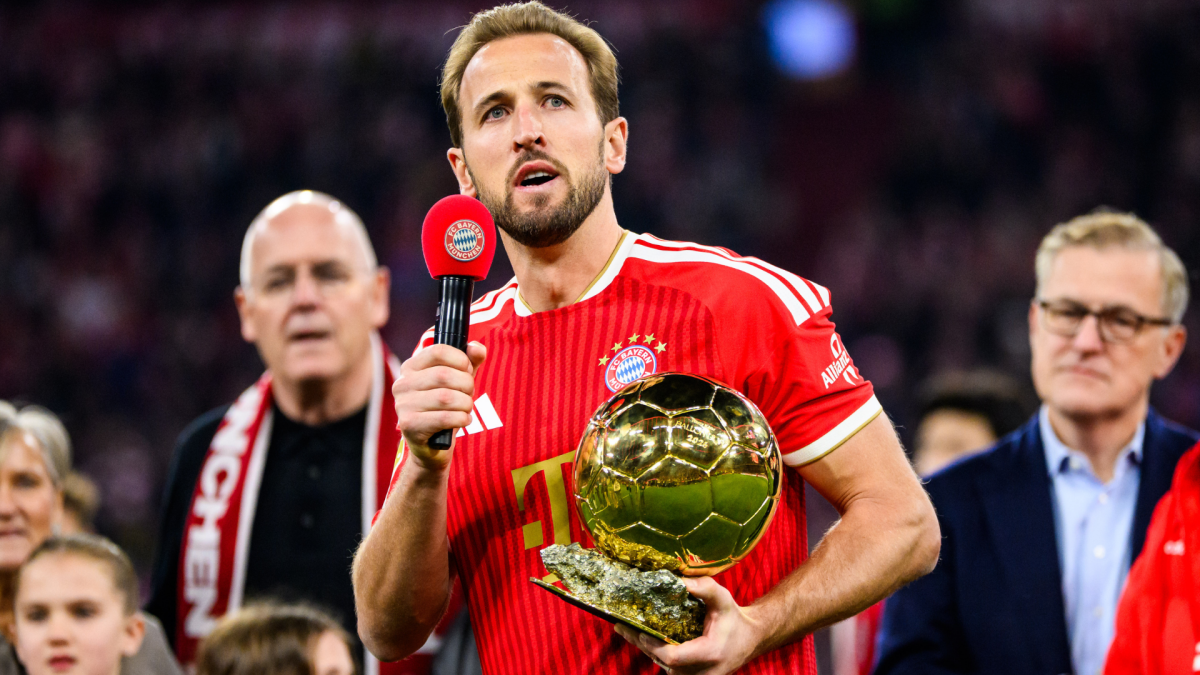
Philipp Lahm, the former World Cup-winning captain of Germany, expressed mixed feelings about Harry Kane’s recent Ballon d’Or victory, emphasizing the challenges faced by German players in achieving such recognition. Speaking days after Kane’s award, Lahm noted, “It helped Harry Kane and Michael Olise that they came from another country. I think it’s quite difficult for a German player playing in the Bundesliga to win the Ballon d’Or.”
This commentary highlights a notable trend: since Matthias Sammer’s victory in 1996, no German player has won the prestigious award while playing in the Bundesliga. Manuel Neuer last finished in the top three in 2014, illustrating the rarity of German representation in these rankings. Kane’s achievement as only the seventh Bundesliga player to make it to the top three since Sammer is significant in this context.
According to Lahm, Bayern Munich’s dominance in the Bundesliga, having won the title nearly every year since the 2012-13 season, contributes to the perceived lack of competitiveness in the league. This scenario may hinder German players’ chances of gaining international recognition. Lahm sees Kane as a potential catalyst for change in the league’s image, stating, “I do hope that the good players stay in the Bundesliga…because it’s possible to win and play here.”
Challenges Facing Bundesliga’s International Appeal
Sporting director Christoph Freund of Bayern Munich acknowledged that the team’s success — including winning the UEFA Champions League twice in the last 14 years — is a major selling point for attracting players. However, the financial might of Premier League clubs has shifted the balance of power, making it harder for Bundesliga teams to retain top talents. Freund remarked, “I think everybody knows the Premier League is the biggest league at the moment,” further stating that Bayern remains a strong and attractive option for international players.
Despite this, some Bundesliga executives express concern over the league’s visibility and market presence. Rouven Kasper, a member of Bayern’s board, pointed out that the league needs to enhance its international profile to stay competitive. “The league exists from the clubs,” he stated, underscoring the need for collective efforts to increase visibility in various markets.
Meanwhile, Borussia Dortmund’s CEO, Carsten Cramer, emphasized a different kind of appeal, noting that despite not winning the championship, the club’s global interest has continued to grow. “The interest in Dortmund is still increasing…that is our way,” he said, highlighting the club’s emphasis on community and supporter engagement.
The Bundesliga faces ongoing challenges in competing with more financially robust leagues. Patrick Owomoyela, a former defender for Dortmund, acknowledged the complexity of creating a team capable of dethroning Bayern, recognizing the necessity of team chemistry and solidarity among players, which he believes is hard to attain in today’s football landscape.
The recent 2-2 draw between Bayern Munich and Dortmund in Der Klassiker has sparked renewed interest in a potential title race, creating a glimmer of hope for a more competitive season. Owomoyela noted that Bayern has vulnerabilities, stating, “You can see that in almost every game they played…if you take a team with more quality, with the right kind of belief, there might be something possible.” This ongoing dialogue emphasizes the continual evolution and uncertainty in the Bundesliga as it strives for greater recognition and competitiveness on the world stage.
