




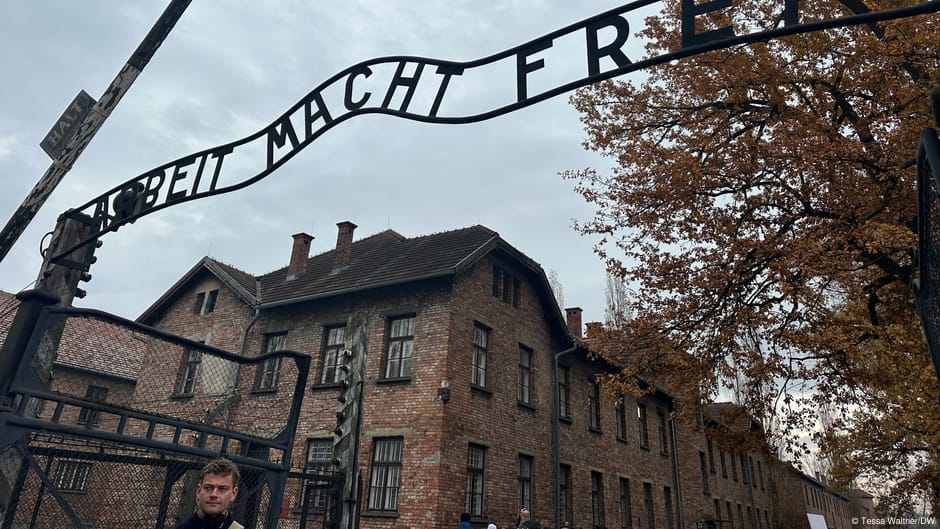
On November 9 and 10, members of the European Jewish Association (EJA) and other representatives gathered in Poland to honor the memory of the November Pogroms of 1938. The event took place at the Auschwitz concentration camp, a site synonymous with the Holocaust, where approximately 1.1 million people were murdered, including around one million Jews.
Regina Sluszny, an 87-year-old Holocaust survivor, attended the commemoration. She reflected on her family’s tragic history, noting that her husband lost seven relatives in the camp. Sluszny remarked, “Every time I come here, I think about my husband’s family. They were sent straight to the gas chambers and murdered.” For over four decades, she has shared her story with schoolchildren to ensure the Holocaust is not forgotten.
The gathering was designed to highlight the fading memory of the horrors of the Shoah, encapsulated in the event’s motto, “Honoring the past, securing the future.” Alongside Sluszny, Reza Pahlavi, the exiled son of Iran’s last shah, was recognized for his commitment to combating antisemitism.
Pahlavi emphasized the historic connections between Persian and Jewish peoples and called for united efforts among democratic nations against oppression and ideological extremism. However, attendees expressed concerns over a troubling rise in antisemitism across Europe, particularly since the October 7 Hamas-led attack that resulted in the deaths of approximately 1,200 people in Israel and the abduction of over 250 individuals to Gaza.
In France, authorities documented 1,320 antisemitic incidents in 2025, a significant increase compared to 2022, despite a decline from 2024. Germany reported a steep rise in antisemitic crimes, with figures climbing from 2,641 in 2022 to 6,548 in 2025. These alarming trends have heightened fears within Jewish communities throughout Europe.
Ellen van Praagh, chair of the Interprovincial Rabbinate in the Netherlands, described a dramatic shift in the atmosphere since the October attack. She shared her fears of rising hostility, saying, “My family has lived in the Netherlands since the 16th century. And now I’m being told to leave.” Van Praagh’s concerns are echoed by others who feel increasingly vulnerable, attributing growing antisemitism to political tensions surrounding Israel.
Rabbi Menachem Margolin, chairman of the EJA, urged European political leaders to enforce protections for Jewish communities more effectively, cautioning that complacency towards antisemitism can have dire consequences. “Auschwitz did not begin with gas chambers. It began with words,” he warned, emphasizing the importance of acknowledging and combating antisemitism in all its forms.
The memorial visit serves as a stark reminder of the past, as survivors like Sluszny grow increasingly rare. Reflecting on her vow to remember and educate, she insists, “Never Again” must remain a commitment to prevention rather than an empty promise.
